CPG-Retail

How On-Shelf Visibility Reflects Changing Consumer Preferences in the CPG Sector

Ankit Singh
February 13, 2026
8 min
mins read
Ready to get Started?
request A Demo

CPG brands are operating in an environment where even small gaps on the shelf can lead to lost opportunities. Stockouts, misplaced SKUs, and inconsistent displays directly affect whether a product is noticed, trusted, or picked up. As buying decisions continue to happen at the shelf, execution quality has become just as important as brand strategy.

This is why shelf-level visibility matters more than ever. When brands lack clear, real-time insight into what’s actually happening in stores, they’re forced to rely on delayed sales data or assumptions that don’t reflect on-ground realities. Shelf data brings those blind spots into focus by showing where products are missing, poorly positioned, or not executed as planned.

In fact, nearly 70% of consumers are willing to switch brands if they find better product quality or availability. In physical retail, these switches often happen because a product isn’t visible or available when expected. Shelf conditions provide the earliest and most reliable signals of whether execution is meeting demand.

Key Highlights

  • Shelf Availability Signals Demand Gaps: Consistent product presence on the shelf reflects how well brands are meeting real-world demand. Missing or misplaced SKUs often indicate execution gaps, not lack of interest.
  • Value Is Communicated at the Shelf: Price tags, promotions, and packaging visibility shape how value is perceived in-store. Accurate shelf execution reinforces trust and credibility.
  • Visibility Drives Purchase Decisions: Clear placement, correct facings, and planogram adherence make products easier to find and compare, directly influencing shelf-level performance.
  • Consistency Across Stores Matters: A recognizable and uniform shelf presence helps brands maintain familiarity and reliability across locations, reducing execution variability.

Why Do Shelf Execution Signals Matter for CPG Brands?

Shelf execution data helps CPG brands understand how well their strategies translate into real in-store conditions. It offers a clear, objective view of shelf performance without relying on inferred consumer behavior.

  • Improves on-shelf visibility: Tracking on-shelf availability and planogram compliance helps identify stockouts, misplaced SKUs, and reduced facings that impact sales.
  • Enables faster execution fixes: Real-time shelf data allows teams to spot and correct execution gaps quickly, keeping priority products available and correctly placed.
  • Protects share of shelf: Monitoring share of shelf reveals whether brands are maintaining visibility or losing space due to execution issues.
  • Supports better decisions: Accurate shelf insights help teams evaluate assortments, displays, and promotions based on what’s actually happening in stores.

Key Trends Shaping CPG Consumer Preferences

Consumer choices are influenced by a mix of economic pressures, social values, and practical convenience. Below are the key trends influencing today’s CPG sector.

1. Demand for Consistent Product Availability

Today’s consumers expect reliability. When they walk into a store, they want to find their preferred products right where they expect them. Frequent out-of-stocks not only frustrate consumers but also risk long-term brand loyalty. For CPGs, ensuring consistent shelf presence is now a top priority.

  • On-shelf visibility as a loyalty driver: Consumers view stocked shelves as a sign of brand reliability. Even a single empty spot can lead to brand switching.
  • Impact on sales and perception: Visibility gaps lead to missed opportunities and weaken brand recall at the point of sale.
  • Tracking shelf performance: ParallelDots’ visual data helps CPGs detect stockouts instantly, so teams can ensure shelves stay full and products stay visible.
  • Faster corrective action: With real-time shelf data, sales teams can act before a product goes completely out of sight.

In essence, consistent shelf availability directly influences how consumers perceive brand dependability and quality.

2. Value-Driven Purchasing and Price Sensitivity

Rising inflation has made shoppers more selective. They want products that justify their price through quality, packaging, or trust, not necessarily the lowest cost. This shift has pushed CPGs to refine their pricing and promotion execution to appeal to value-driven buyers.

  • Promotions that actually perform: ParallelDots helps track in-store promotion placement and execution accuracy, ensuring price offers reach the consumer as planned.
  • Balancing premium and affordable lines: Shelf data reveals which SKUs are getting more visibility, guiding CPGs in balancing their product mix by consumer demand.
  • Reduced waste in promotional spending: Real-time visibility helps prevent marketing budgets from being wasted on unexecuted or misplaced offers.
  • Transparency builds trust: Consistent on-shelf presence of value packs or combo offers reassures consumers during economic uncertainty.

When pricing and promotions align with consumer expectations, CPGs build trust without sacrificing profitability.

3. Preference for Convenience and Accessibility

Consumers increasingly expect products to appear in familiar locations on the shelf. When items are misplaced, missing, or inconsistently displayed, it disrupts purchase intent and increases the risk of brand switching.

  • Planogram accuracy improves accessibility: Visual shelf tracking ensures that every SKU is placed exactly as intended, making it easy for shoppers to locate products.
  • Category clarity drives faster decisions: When brands are correctly grouped, consumers spend less time choosing, improving conversion rates.
  • Reducing customer fatigue: Proper shelf execution helps maintain a seamless experience, especially for impulse or routine purchases.
  • Efficient execution at scale: ParallelDots enables CPGs to validate thousands of shelves in minutes, ensuring accessibility across all outlets.

Convenience isn’t just about speed. It’s about ensuring every shelf interaction stays smooth and consistent across stores.

4. Growing Preference for Local and Authentic Brands

Modern consumers increasingly favor brands that feel closer to their communities or reflect authenticity. This does not mean national brands are losing ground, but it does mean shelf space is becoming more competitive, especially against locally recognised alternatives.

For CPG brands, this shift is best understood through share of shelf, which acts as a measurable signal of visibility and relevance.

  • Share of shelf parity: Visual shelf insights help CPGs understand how much display space their products occupy compared to local brands.
  • Reacting to localised demand: Data reveals which regions or stores show higher traction for local alternatives, helping CPGs adjust retail execution strategies.
  • Planogram adaptability: CPGs can tailor shelf layouts to include locally resonant SKUs without losing national brand presence.
  • Sustaining consumer trust: Consistent shelf presence communicates reliability, countering the perception that big brands are disconnected from local needs.

Authenticity is now a shelf-level competition. CPGs that adapt their in-store visibility strategies can win it.

5. Preference for Promotions and Limited-Time Offers

Consumers are drawn to promotions and limited-time offers as ways to try new products or save on regular favorites. But visibility on the shelf is what truly drives actual conversion.

  • Tracking promotion execution accuracy: ParallelDots ensures displays, signage, and discount tags are properly implemented.
  • Improving ROI on trade spend: CPGs can identify which promotional placements are actually visible to shoppers.
  • Spotting execution gaps in real-time: Shelf insights help sales teams correct missing displays or incorrect setups quickly.
  • Data-backed promotion planning: Historical shelf data informs which promotions deliver the best in-store visibility outcomes.

When executed accurately, promotions don’t just drive sales; they strengthen consumer confidence in the brand’s reliability.

6. Preference for Visual Consistency Across Stores

Consumers subconsciously expect brands to “look the same” across every store they visit. Inconsistent shelf placement, incorrect SKU arrangement, or missing visuals can undermine brand recognition and influence buying choices.

  • Maintaining brand integrity: Planogram compliance ensures brand-blocking and visual elements appear consistently across locations.
  • Reducing confusion: Uniform shelf displays help consumers identify familiar products quickly, even in new retail environments.
  • Data-driven corrections: ParallelDots helps identify deviations from brand guidelines, allowing faster resolution.
  • Reinforcing familiarity: A consistent on-shelf look enhances trust and strengthens recall at the point of purchase.

Visual consistency turns shelves into a reliable brand experience, a key driver of effective retail execution.

How ParallelDots Empowers CPG Brands to Decode Consumer Preferences?

Understanding consumer preferences isn’t about tracking individual behavior. It’s about reading what the shelf reveals about product demand, visibility gaps, and execution consistency. ParallelDots supports CPG brands by providing accurate visual shelf data that helps teams interpret these signals clearly and in real time.

Here’s how we can help:

  • Enabling Real-Time On-Shelf Visibility: ParallelDots’ ShelfWatch uses image recognition to capture and analyze shelf images across physical retail stores. This gives CPG teams clear visibility into on-shelf stock presence and absence, helping them identify where SKUs are available, missing, or inconsistently displayed.
  • Maximizing Share of Shelf: ParallelDots enables brands to measure their share accurately across categories and outlets, helping them identify gaps against competitors. This data-driven approach helps ensure that brand visibility aligns with consumer demand and marketing intent.
  • Ensuring Planogram Compliance: ParallelDots automates planogram compliance checks by analyzing real-world shelf images and comparing them with the intended layout. This ensures that every SKU appears in its designated location, at the correct facings and orientation.
  • Tracking Promotion Execution: ParallelDots’ ShelfWatch helps brands verify that promotional displays, tags, and prices are implemented correctly across stores. By identifying execution discrepancies early, CPG teams can address compliance issues promptly and ensure that value-driven consumers experience the right offer at the right time. 
  • Generate Data-Driven Insights for Retail Execution: With all insights consolidated into one dashboard, sales and marketing teams can quickly identify execution gaps, prioritise corrective actions, and align store-level strategies with real consumer demand. This results in smarter, faster decisions based on real shelf visibility, not assumptions.

Request a demo to see how ParallelDots can help your brand decode shifting consumer preferences and strengthen retail execution with data you can trust.

Frequently Asked Questions

1. What are the most critical factors for maintaining high product visibility in the CPG sector?

Product visibility in the CPG sector is driven by consistent in-store execution. The most important factors include on-shelf stock availability, strict planogram compliance, and the accurate setup of promotional displays. When these execution standards are met, brands ensure their products are always positioned to be found and purchased in physical retail environments.

2. How do CPG brands effectively execute the rollout of new product variants across stores?

The success of a new product launch depends on ensuring the SKU occupies the correct share of shelf from day one. Brands must monitor shelf data to verify that new items are placed according to the planogram and that promotional signage is correctly implemented. Real-time visibility into these shelf conditions allows field teams to identify and fix execution gaps immediately, ensuring the launch maintains a strong presence.

3. In what ways are data analytics helping companies predict shifting consumer preferences?

Shelf data and image recognition tools allow CPG companies to monitor stock levels, planogram compliance, and promotional execution in real time. By analysing these metrics, brands can quickly identify gaps, correct misplaced or missing products, and adjust in-store execution strategies to align with what consumers expect to see on the shelves.

4. How do regional and store-level differences affect in-store CPG execution?

Regional and store-specific differences can impact product assortment, shelf placement, and promotional displays. Consistently monitoring planogram compliance and shelf availability across multiple locations ensures that every store reflects the brand’s intended presentation, maintaining a uniform customer experience and preventing stock gaps in different markets.

5. What role do shelf presentation and product placement play in influencing purchase decisions?

Shelf presentation is critical in guiding purchases in physical stores. Proper planogram compliance, clear facings, and optimal shelf share make it easier for consumers to find products and reinforce brand presence. Consistent shelf execution also supports promotional campaigns and ensures that products are visible and accessible to shoppers at the point of sale.
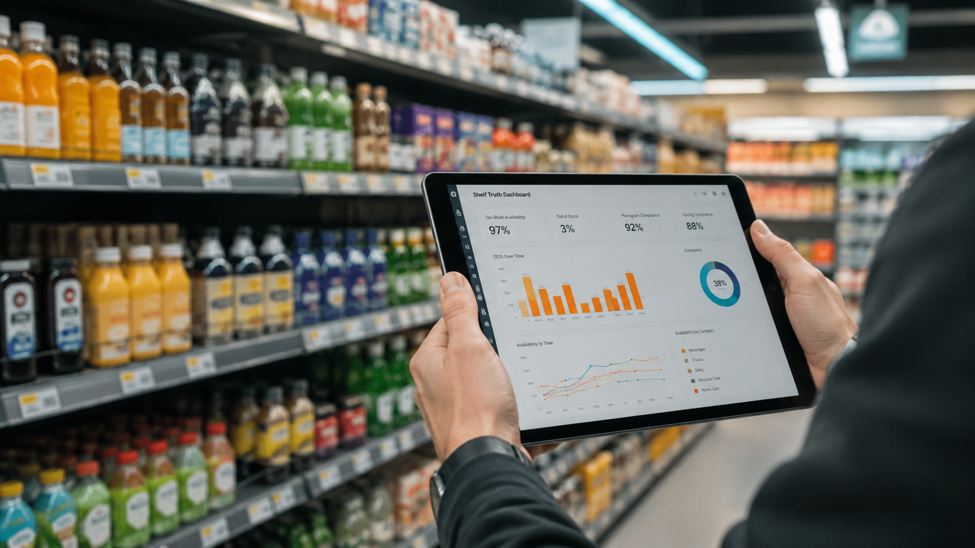
From Shelf Photos to Execution Intelligence

AI image recognition only creates value when it’s embedded into everyday execution workflows. ShelfWatch helps teams move from delayed audits to real-time shelf visibility across formats, regions, and SKUs.

Book a ShelfWatch Demo
 
Used by leading FMCG and retail teams across global markets

CPG brands are operating in an environment where even small gaps on the shelf can lead to lost opportunities. Stockouts, misplaced SKUs, and inconsistent displays directly affect whether a product is noticed, trusted, or picked up. As buying decisions continue to happen at the shelf, execution quality has become just as important as brand strategy.

This is why shelf-level visibility matters more than ever. When brands lack clear, real-time insight into what’s actually happening in stores, they’re forced to rely on delayed sales data or assumptions that don’t reflect on-ground realities. Shelf data brings those blind spots into focus by showing where products are missing, poorly positioned, or not executed as planned.

In fact, nearly 70% of consumers are willing to switch brands if they find better product quality or availability. In physical retail, these switches often happen because a product isn’t visible or available when expected. Shelf conditions provide the earliest and most reliable signals of whether execution is meeting demand.

Key Highlights

  • Shelf Availability Signals Demand Gaps: Consistent product presence on the shelf reflects how well brands are meeting real-world demand. Missing or misplaced SKUs often indicate execution gaps, not lack of interest.
  • Value Is Communicated at the Shelf: Price tags, promotions, and packaging visibility shape how value is perceived in-store. Accurate shelf execution reinforces trust and credibility.
  • Visibility Drives Purchase Decisions: Clear placement, correct facings, and planogram adherence make products easier to find and compare, directly influencing shelf-level performance.
  • Consistency Across Stores Matters: A recognizable and uniform shelf presence helps brands maintain familiarity and reliability across locations, reducing execution variability.

Why Do Shelf Execution Signals Matter for CPG Brands?

Shelf execution data helps CPG brands understand how well their strategies translate into real in-store conditions. It offers a clear, objective view of shelf performance without relying on inferred consumer behavior.

  • Improves on-shelf visibility: Tracking on-shelf availability and planogram compliance helps identify stockouts, misplaced SKUs, and reduced facings that impact sales.
  • Enables faster execution fixes: Real-time shelf data allows teams to spot and correct execution gaps quickly, keeping priority products available and correctly placed.
  • Protects share of shelf: Monitoring share of shelf reveals whether brands are maintaining visibility or losing space due to execution issues.
  • Supports better decisions: Accurate shelf insights help teams evaluate assortments, displays, and promotions based on what’s actually happening in stores.

Key Trends Shaping CPG Consumer Preferences

Consumer choices are influenced by a mix of economic pressures, social values, and practical convenience. Below are the key trends influencing today’s CPG sector.

1. Demand for Consistent Product Availability

Today’s consumers expect reliability. When they walk into a store, they want to find their preferred products right where they expect them. Frequent out-of-stocks not only frustrate consumers but also risk long-term brand loyalty. For CPGs, ensuring consistent shelf presence is now a top priority.

  • On-shelf visibility as a loyalty driver: Consumers view stocked shelves as a sign of brand reliability. Even a single empty spot can lead to brand switching.
  • Impact on sales and perception: Visibility gaps lead to missed opportunities and weaken brand recall at the point of sale.
  • Tracking shelf performance: ParallelDots’ visual data helps CPGs detect stockouts instantly, so teams can ensure shelves stay full and products stay visible.
  • Faster corrective action: With real-time shelf data, sales teams can act before a product goes completely out of sight.

In essence, consistent shelf availability directly influences how consumers perceive brand dependability and quality.

2. Value-Driven Purchasing and Price Sensitivity

Rising inflation has made shoppers more selective. They want products that justify their price through quality, packaging, or trust, not necessarily the lowest cost. This shift has pushed CPGs to refine their pricing and promotion execution to appeal to value-driven buyers.

  • Promotions that actually perform: ParallelDots helps track in-store promotion placement and execution accuracy, ensuring price offers reach the consumer as planned.
  • Balancing premium and affordable lines: Shelf data reveals which SKUs are getting more visibility, guiding CPGs in balancing their product mix by consumer demand.
  • Reduced waste in promotional spending: Real-time visibility helps prevent marketing budgets from being wasted on unexecuted or misplaced offers.
  • Transparency builds trust: Consistent on-shelf presence of value packs or combo offers reassures consumers during economic uncertainty.

When pricing and promotions align with consumer expectations, CPGs build trust without sacrificing profitability.

3. Preference for Convenience and Accessibility

Consumers increasingly expect products to appear in familiar locations on the shelf. When items are misplaced, missing, or inconsistently displayed, it disrupts purchase intent and increases the risk of brand switching.

  • Planogram accuracy improves accessibility: Visual shelf tracking ensures that every SKU is placed exactly as intended, making it easy for shoppers to locate products.
  • Category clarity drives faster decisions: When brands are correctly grouped, consumers spend less time choosing, improving conversion rates.
  • Reducing customer fatigue: Proper shelf execution helps maintain a seamless experience, especially for impulse or routine purchases.
  • Efficient execution at scale: ParallelDots enables CPGs to validate thousands of shelves in minutes, ensuring accessibility across all outlets.

Convenience isn’t just about speed. It’s about ensuring every shelf interaction stays smooth and consistent across stores.

4. Growing Preference for Local and Authentic Brands

Modern consumers increasingly favor brands that feel closer to their communities or reflect authenticity. This does not mean national brands are losing ground, but it does mean shelf space is becoming more competitive, especially against locally recognised alternatives.

For CPG brands, this shift is best understood through share of shelf, which acts as a measurable signal of visibility and relevance.

  • Share of shelf parity: Visual shelf insights help CPGs understand how much display space their products occupy compared to local brands.
  • Reacting to localised demand: Data reveals which regions or stores show higher traction for local alternatives, helping CPGs adjust retail execution strategies.
  • Planogram adaptability: CPGs can tailor shelf layouts to include locally resonant SKUs without losing national brand presence.
  • Sustaining consumer trust: Consistent shelf presence communicates reliability, countering the perception that big brands are disconnected from local needs.

Authenticity is now a shelf-level competition. CPGs that adapt their in-store visibility strategies can win it.

5. Preference for Promotions and Limited-Time Offers

Consumers are drawn to promotions and limited-time offers as ways to try new products or save on regular favorites. But visibility on the shelf is what truly drives actual conversion.

  • Tracking promotion execution accuracy: ParallelDots ensures displays, signage, and discount tags are properly implemented.
  • Improving ROI on trade spend: CPGs can identify which promotional placements are actually visible to shoppers.
  • Spotting execution gaps in real-time: Shelf insights help sales teams correct missing displays or incorrect setups quickly.
  • Data-backed promotion planning: Historical shelf data informs which promotions deliver the best in-store visibility outcomes.

When executed accurately, promotions don’t just drive sales; they strengthen consumer confidence in the brand’s reliability.

6. Preference for Visual Consistency Across Stores

Consumers subconsciously expect brands to “look the same” across every store they visit. Inconsistent shelf placement, incorrect SKU arrangement, or missing visuals can undermine brand recognition and influence buying choices.

  • Maintaining brand integrity: Planogram compliance ensures brand-blocking and visual elements appear consistently across locations.
  • Reducing confusion: Uniform shelf displays help consumers identify familiar products quickly, even in new retail environments.
  • Data-driven corrections: ParallelDots helps identify deviations from brand guidelines, allowing faster resolution.
  • Reinforcing familiarity: A consistent on-shelf look enhances trust and strengthens recall at the point of purchase.

Visual consistency turns shelves into a reliable brand experience, a key driver of effective retail execution.

How ParallelDots Empowers CPG Brands to Decode Consumer Preferences?

Understanding consumer preferences isn’t about tracking individual behavior. It’s about reading what the shelf reveals about product demand, visibility gaps, and execution consistency. ParallelDots supports CPG brands by providing accurate visual shelf data that helps teams interpret these signals clearly and in real time.

Here’s how we can help:

  • Enabling Real-Time On-Shelf Visibility: ParallelDots’ ShelfWatch uses image recognition to capture and analyze shelf images across physical retail stores. This gives CPG teams clear visibility into on-shelf stock presence and absence, helping them identify where SKUs are available, missing, or inconsistently displayed.
  • Maximizing Share of Shelf: ParallelDots enables brands to measure their share accurately across categories and outlets, helping them identify gaps against competitors. This data-driven approach helps ensure that brand visibility aligns with consumer demand and marketing intent.
  • Ensuring Planogram Compliance: ParallelDots automates planogram compliance checks by analyzing real-world shelf images and comparing them with the intended layout. This ensures that every SKU appears in its designated location, at the correct facings and orientation.
  • Tracking Promotion Execution: ParallelDots’ ShelfWatch helps brands verify that promotional displays, tags, and prices are implemented correctly across stores. By identifying execution discrepancies early, CPG teams can address compliance issues promptly and ensure that value-driven consumers experience the right offer at the right time. 
  • Generate Data-Driven Insights for Retail Execution: With all insights consolidated into one dashboard, sales and marketing teams can quickly identify execution gaps, prioritise corrective actions, and align store-level strategies with real consumer demand. This results in smarter, faster decisions based on real shelf visibility, not assumptions.

Request a demo to see how ParallelDots can help your brand decode shifting consumer preferences and strengthen retail execution with data you can trust.

Frequently Asked Questions

1. What are the most critical factors for maintaining high product visibility in the CPG sector?

Product visibility in the CPG sector is driven by consistent in-store execution. The most important factors include on-shelf stock availability, strict planogram compliance, and the accurate setup of promotional displays. When these execution standards are met, brands ensure their products are always positioned to be found and purchased in physical retail environments.

2. How do CPG brands effectively execute the rollout of new product variants across stores?

The success of a new product launch depends on ensuring the SKU occupies the correct share of shelf from day one. Brands must monitor shelf data to verify that new items are placed according to the planogram and that promotional signage is correctly implemented. Real-time visibility into these shelf conditions allows field teams to identify and fix execution gaps immediately, ensuring the launch maintains a strong presence.

3. In what ways are data analytics helping companies predict shifting consumer preferences?

Shelf data and image recognition tools allow CPG companies to monitor stock levels, planogram compliance, and promotional execution in real time. By analysing these metrics, brands can quickly identify gaps, correct misplaced or missing products, and adjust in-store execution strategies to align with what consumers expect to see on the shelves.

4. How do regional and store-level differences affect in-store CPG execution?

Regional and store-specific differences can impact product assortment, shelf placement, and promotional displays. Consistently monitoring planogram compliance and shelf availability across multiple locations ensures that every store reflects the brand’s intended presentation, maintaining a uniform customer experience and preventing stock gaps in different markets.

5. What role do shelf presentation and product placement play in influencing purchase decisions?

Shelf presentation is critical in guiding purchases in physical stores. Proper planogram compliance, clear facings, and optimal shelf share make it easier for consumers to find products and reinforce brand presence. Consistent shelf execution also supports promotional campaigns and ensures that products are visible and accessible to shoppers at the point of sale.