Share it with your network.


Consumer preferences vary widely across regions, and what sells in one city might not resonate in another. For CPG companies, this creates a challenge of ensuring that the right products are on the right shelves at the right time. A recent study revealed that when a product is out of stock, almost 29% of consumers delay their purchase and nearly 23% switch to a different brand.
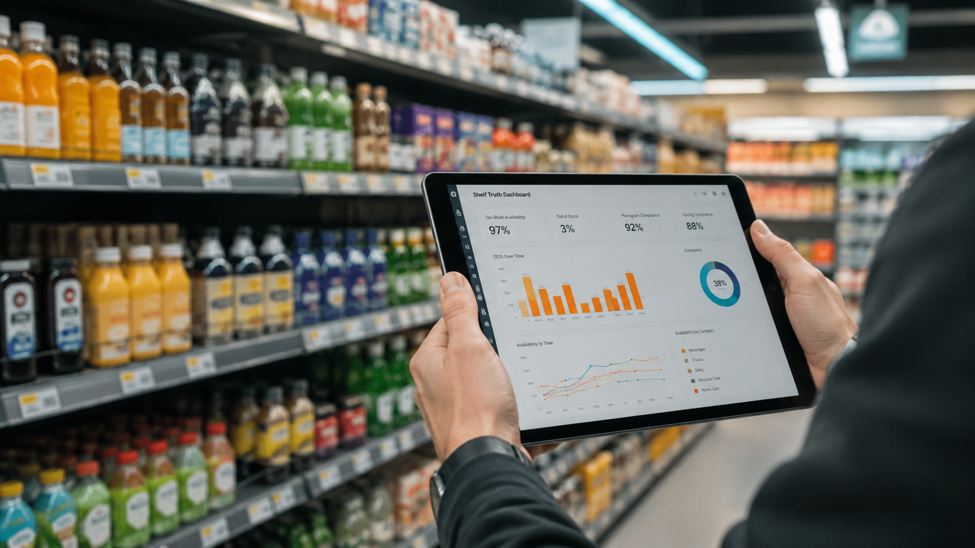
Today, shelf data is transforming how CPG brands approach assortment localization. By capturing real-time visual data from store shelves, brands can monitor stock levels, planogram compliance, and product visibility with unprecedented accuracy. Shelf data helps brands move beyond guesswork and ensures each store’s assortment aligns with local demand while maximizing sales potential.
Key Takeaways:
- Real-Time Shelf Visibility: Monitor SKU availability, detect stockouts, and verify product placement immediately to address execution gaps.
- Localized Assortment Insights: Identify high-performing SKUs at the store level and adjust assortments to match local demand.
- Consistent Planogram Compliance: Ensure SKUs are correctly placed across stores to maintain brand presence and shelf integrity.
- Actionable Shelf Signals: Uses on-shelf insights to guide SKU adjustments, prioritize high-impact products, and close execution gaps efficiently.
What is Assortment Localization for CPG Brands?
Assortment localization is the process of tailoring the mix of products offered at each store or region to meet local consumer preferences. This ensures that shelves carry items consumers are most likely to purchase in that specific market.
Here’s why it matters:
- Optimizing Shelf Presence: By aligning products with local demand, brands ensure high-performing products are always available on the shelf. This improves visibility and shelf share compared to competitors.
- Tailoring Products to Regional Preferences: CPG brands adapt their products based on local tastes, purchasing patterns, and seasonal trends. For example, a snack company may offer spicier variants in certain regions and sweeter options in others.
- Reducing Missed Sales Opportunities: Without localized assortments, popular SKUs run out while slower-moving items occupy shelf space. Shelf data allows brands to identify these gaps in real time.
- Ensuring Shelf Execution Consistency: Shelf analytics help brands verify that SKUs are placed correctly and consistently across stores in each region. This prevents gaps, misplacements, or planogram deviations that could affect product visibility and sales.
- Maintaining Accurate On-Shelf Stock: Localized assortments guided by shelf data make sure that high-demand SKUs occupy the right space and priority locations on the shelf. This maintains execution standards across regions and enhances overall product visibility.
Strategies CPG Leaders Use to Localize Assortments Using Shelf Data
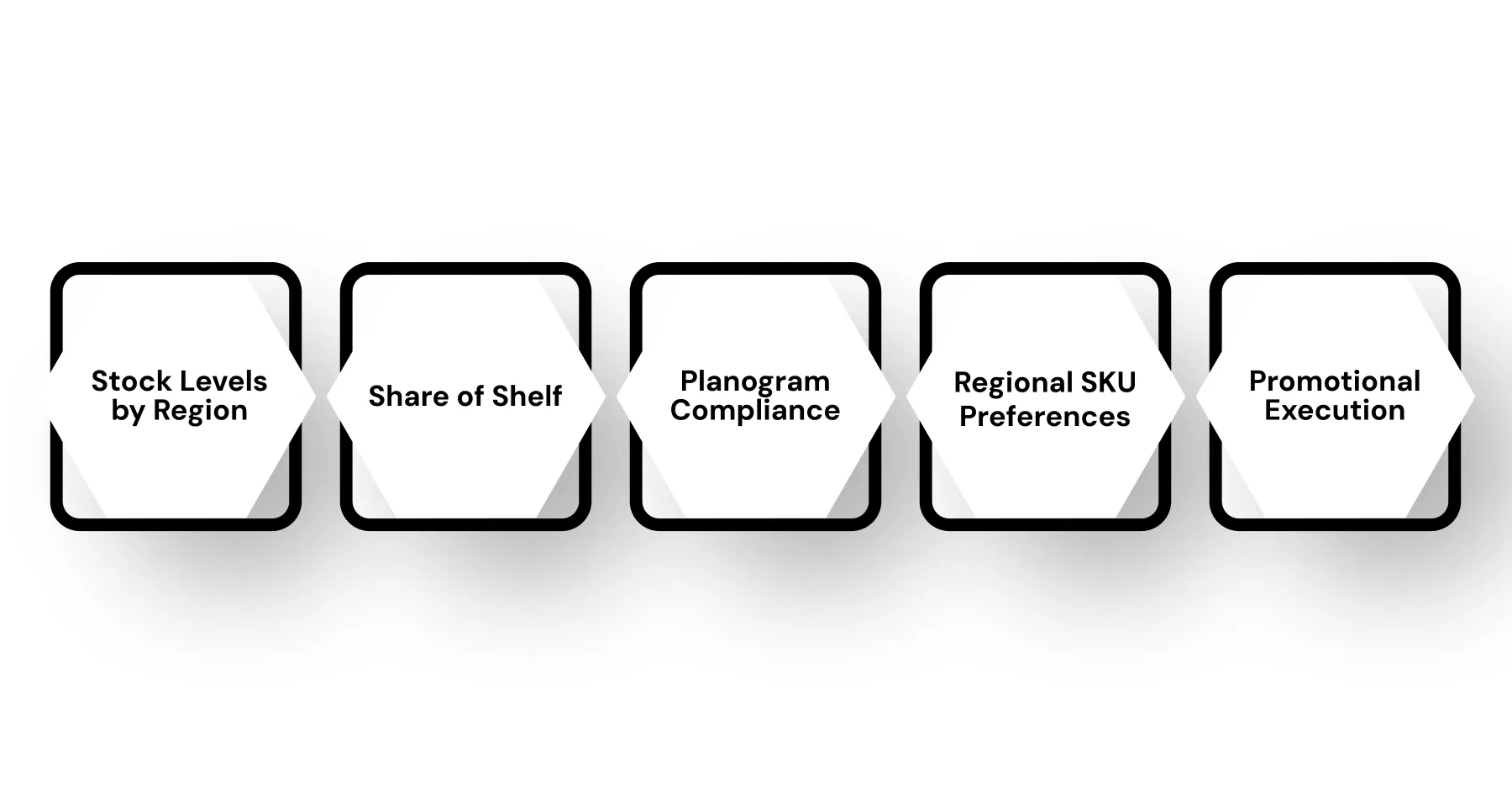
Leading CPG brands rely on shelf data to make informed decisions about assortments at the regional and store levels. With hundreds or even thousands of stores across multiple regions, manual audits and delayed reports are simply insufficient to keep pace with real-time demand.
Shelf data provides the scale needed to monitor on-shelf conditions accurately and act quickly. The following strategies highlight how shelf data drives localized retail execution decisions.
1. Monitoring On-Shelf Stock Levels by Region
Shelf data provides accurate, up-to-date visibility of what is actually on store shelves, helping brands respond to local demand quickly.
- Identify Stockouts Quickly: Real-time monitoring detects SKUs that are out of stock or running low, enabling timely replenishment and preventing lost sales.
- Allocate SKUs Effectively: Brands can identify stores with high demand for specific products and adjust stock levels, using resources efficiently.
- Regional Execution: Data guides decisions about regional SKU allocations based on actual consumption patterns instead of assumptions.
With better visibility into stock levels, CPG brands can maintain consistent availability of top-performing SKUs across regions.
2. Analyzing Share of Shelf
Share of shelf reflects the proportion of space a brand occupies on store shelves relative to competitors, and shelf data makes tracking this simple and precise.
- Visibility Insights: Brands can measure which products dominate shelf space and which are underrepresented, helping identify gaps in presence.
- Competitive Benchmarking: Comparing the share of shelf with competitors allows brands to adjust placement or promotional strategies to improve visibility.
- Regional Optimization: Data reveals stores or areas where certain SKUs may need more prominent placement to capture consumer attention.
Tracking the share of shelf ensures brands stay visible where it matters most, increasing the likelihood of purchase.
3. Ensuring Planogram Compliance
Proper product placement according to planograms maximizes visibility and keeps customers familiar with products.
- Deviation Detection: Automated shelf monitoring identifies misplacements instantly, allowing field teams to correct errors quickly.
- Consistency Across Stores: Brands can keep product placement uniform across regions, helping shoppers recognize products and trust the brand.
- Actionable Insights: Compliance data points out recurring issues or stores that need extra support, helping optimize execution.
This approach transforms planogram compliance from a routine check into actionable intelligence that directly supports local assortment strategies.
4. Identifying Regional SKU Preferences
Shelf data provides insight into which SKUs perform best in specific stores or regions, helping brands cater to local demand efficiently.
- Spot High-Performing SKUs: Brands can quickly identify products that resonate in different locations, ensuring the right SKUs are always in stock.
- Optimize Assortments by Region: Poorly performing SKUs can be reduced or replaced, while high-demand items are prioritized on shelves, preventing wasted space and lost sales.
- Support Product Launches: Insights reveal the most promising regions for new SKUs, improving the likelihood of successful launches and quicker adoption.
By understanding regional preferences, CPG brands ensure that the right products are in the right stores, reducing execution inefficiencies and maximizing local sales impact.
5. Optimizing Promotional Execution
Promotions only succeed if products are visible and available at the right time. Shelf data helps brands maintain consistent execution across all stores.
- Verify Display Compliance: Real-time insights confirm that promotional items are placed as intended, preventing visibility gaps.
- Prevent Stockouts During Promotions: Brands ensure sufficient stock during high-demand periods, minimizing lost promotional sales.
- Adapt Promotions to Regional Needs: Data shows which products or offers perform best in specific areas, allowing brands to tailor promotional efforts efficiently.
Using shelf data for promotions ensures marketing investments generate tangible results while reducing execution delays and shelf inefficiencies.
Together, these strategies make sure the right products reach the right stores, improving brand visibility and meeting regional shopper preferences efficiently.
Challenges CPG Brands Face in Getting Localization Right

Despite the availability of data, CPG brands encounter several challenges in effectively implementing localized assortments. Understanding these challenges helps clarify why real-time visibility at the store level is vital.
- Inconsistent Data Collection: Manual audits are often time-consuming and error-prone, leading to incomplete or outdated shelf information. Without accurate data, brands struggle to identify which SKUs are underperforming or missing in specific stores.
- Store-Level Execution Gaps: Even with established plans, stores may fail to stock or arrange products according to planograms. These execution gaps can disrupt localized assortments and result in lost sales opportunities.
- Rapidly Changing Consumer Preferences: Consumer demand can shift quickly due to seasonal trends, cultural events, or local conditions. Brands relying on outdated assumptions may misalign their assortments with actual regional preferences.
- Complexity Across Multi-Store Networks: Managing assortments at scale is challenging. What works in one store or city may not work in another. Tracking SKU performance across hundreds of locations requires detailed, real-time insights.
How ParallelDots Enables Shelf-Data-Driven Assortment Localization?
ParallelDots provides AI-powered shelf analytics that give CPG brands the real-time visibility they need to optimize assortments for each region and store.
Here’s how we can help you:
- Real-Time Shelf Monitoring: ParallelDots’ ShelfWatch enables CPG brands to monitor SKU availability across stores in real time. Brands can instantly detect stockouts, misplaced products, or gaps in planogram compliance, allowing them to take corrective action before lost sales occur.
- Optimizing Share of Shelf: By measuring the share of shelf space for each SKU, ParallelDots helps brands understand which products are underrepresented. This insight allows CPG leaders to adjust assortments by boosting visibility for high-demand SKUs and reducing space for low-performing ones.
- Ensuring Planogram Compliance Across Regions: ShelfWatch provides continuous verification of planogram adherence, ensuring that all SKUs are placed as intended. By maintaining compliance, brands guarantee that priority SKUs are consistently available and visually prominent.
- Data-Driven Local Assortment Decisions: With ParallelDots, brands can analyze shelf data to identify which SKUs perform best in specific regions. Insights from image recognition feed into assortment planning, allowing for data-backed decisions that reflect actual in-store conditions.
- Accelerating AI Model Training with Saarthi: ParallelDots’ Saarthi platform allows CPG brands to quickly train AI models to recognize new SKUs, ensuring that emerging products are accurately monitored on shelves. Within 48 hours, new products can be tracked across stores, providing real-time data for assortment localization and enabling faster decision-making.
With ParallelDots, CPG brands can confidently tailor assortments to local preferences and optimize shelf performance across stores. Request a demo today to see how ShelfWatch can transform your retail execution strategy.
Frequently Asked Questions
1. What types of shelf data are most valuable for localization strategies?
On-shelf stock levels, product placement, share of shelf, planogram compliance, and promotional execution are the most valuable. Insights from in-store and shelf audit data help CPG brands identify assortment gaps, ensure priority SKUs are visible, and maintain consistent shelf execution across stores.
2. What role does AI or machine learning play in assortment localization?
AI and machine learning analyze shelf data from multiple stores to detect patterns in product availability, planogram compliance, and space allocation. They highlight execution gaps and suggest adjustments to optimize assortments on shelves, enabling brands to make faster, data-driven decisions for accurate and consistent local execution.
3. How do CPG firms measure ROI from their assortment localization efforts?
Brands track metrics like sales lift, category growth, and profit margins. Comparing performance across regions and pre- and post-localization periods helps quantify the financial impact of tailored assortments and guides future strategy adjustments.
4. What best practices help ensure that localized assortments remain profitable?
Regularly review sales data, monitor shelf stock levels, and update assortments based on shifting local preferences. Combine consumer insights with competitive analysis and predictive tools to optimize shelf space, reduce waste, and maintain profitability while meeting regional demand.
.png)
.png)