Share it with your network.


Retail execution in the consumer packaged goods (CPG) sector has become increasingly challenging. Many brands still rely on manual store audits, which are time-consuming, inconsistent, and prone to human error. Field teams often struggle with delayed shelf visibility, fragmented data across multiple stores, and inconsistent execution of planograms.
These operational gaps make it difficult for CPG brands to ensure that products are always on the right shelf, in the correct quantity, and displayed as intended. In fact, research shows that in the US, up to 7.4% of sales are not realised because of out‑of‑shelf conditions. For CPG brands, every missed opportunity on the shelf affects brand presence and market positioning, making timely action critical.
This is where AI Ops, or AI-driven operational intelligence, is becoming a key tool for CPG brands. By combining automation, machine learning, and real-time data analysis, AI Ops provides accurate, timely shelf insights that help teams make smarter, faster decisions and improve retail execution.
In a nutshell:
- Automated Shelf Monitoring at Scale: AI Ops uses shelf images captured in physical stores to automatically assess product placement, reducing dependence on manual store audits.
- Real-Time Insights for Faster Action: Continuous analysis of shelf images helps detect on-shelf stock gaps and misplaced SKUs, allowing teams to act on execution issues without delay.
- Consistent Planogram Compliance Tracking: AI Ops validates actual shelf layouts against approved planograms, highlighting compliance gaps that affect brand visibility and shelf consistency.
- Actionable Shelf-Level Data for Retail Execution: By structuring shelf data around KPIs like on-shelf availability and share of shelf, AI Ops supports clearer, faster decisions for in-store execution teams.
What are AI Ops for CPG Brands?
AI Ops, in the context of CPG retail execution, refers to the use of artificial intelligence and automation technologies to monitor and optimize in-store operations. For CPG brands, AI Ops isn’t about IT infrastructure; it’s about using AI-driven insights to gather real-time shelf data, detect discrepancies, and provide actionable recommendations to improve execution.
Here’s why it matters:
- Automates Retail Operations: AI Ops monitors shelves and tracks product placement. It ensures planogram compliance without manual audits, giving CPG teams faster, more accurate insights.
- Tracks Key Shelf Metrics: AI Ops continuously monitors on-shelf stock levels, share of shelf, and promotional execution, helping brands maintain visibility and consistency across stores.
- Enables Data-Driven Decisions: Real-time visual shelf data allows sales and marketing teams to act immediately on gaps, misplacements, or compliance issues, reducing errors and improving retail execution efficiency.
- Reduces Reliance on Manual Processes: Field teams spend less time collecting data and more time implementing corrective actions, increasing productivity and operational accuracy.
- Scalable Operations Across Stores: AI Ops platforms can monitor hundreds or thousands of stores simultaneously, helping CPG brands maintain consistent retail execution without extra manual effort.
How AI Ops Transforms Retail Execution?
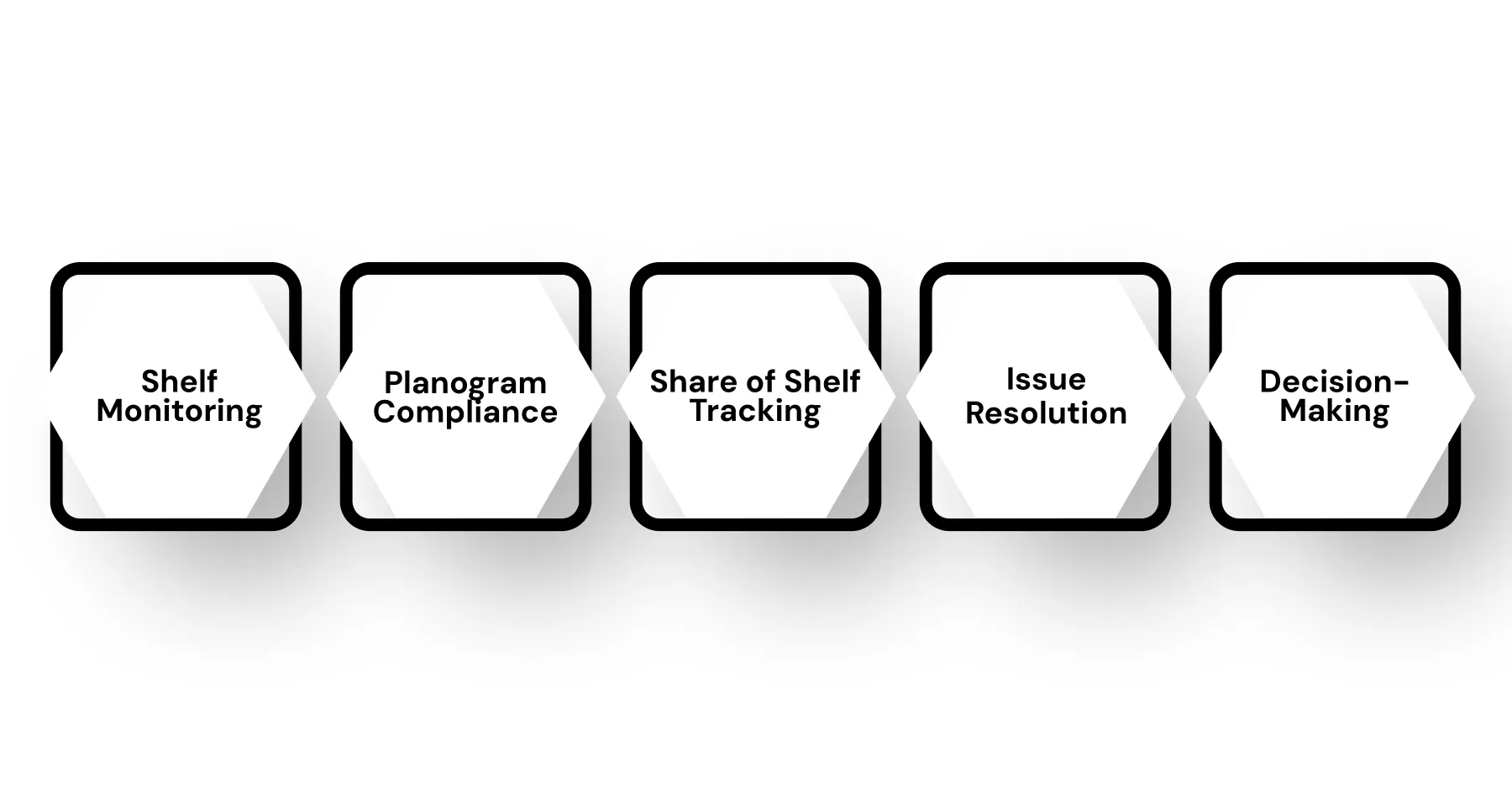
AI Ops revolutionizes the way CPG brands manage in-store execution. By combining AI, image recognition, and real-time analytics, it replaces manual processes with automated, accurate insights.
Here are key ways AI Ops enhances retail execution:
1. Automated Shelf Monitoring
AI Ops eliminates the need for manual shelf checks, allowing brands to continuously monitor product placement and availability across stores.
- Consistent Shelf Oversight: Computer vision models analyze shelf images to track SKUs across stores, ensuring continuous visibility into shelf conditions.
- Quick Issue Detection: Image-based analysis identifies missing or misplaced products as soon as shelf images are captured, allowing teams to spot execution gaps early.
- Field Team Focus: Automated image analysis reduces the need for repetitive audits, enabling field teams to concentrate on fixing identified issues rather than collecting data.
By automating shelf monitoring, brands gain a reliable and scalable way to maintain in-store execution standards consistently.
2. Real-Time Planogram Compliance
Correct product placement drives visibility and sales, but manual checks are slow and often inaccurate. AI Ops ensures compliance with planograms as products are displayed.
- Instant Compliance Checks: Detects deviations from planned layouts the moment they occur.
- Proactive Issue Management: Highlights stores or shelves that require adjustment, preventing prolonged non-compliance.
- Standardized Store Presentation: Maintains uniformity across multiple locations, ensuring shoppers see products as intended.
Real-time planogram monitoring strengthens brand consistency and allows for immediate corrections, ensuring execution quality is never compromised.
3. Share of Shelf Tracking
Understanding the proportion of shelf space your products occupy is crucial in competitive categories. AI Ops provides precise insights into the share of shelf at every store.
- Competitive Benchmarking: Identifies where competitors dominate shelf space, enabling targeted adjustments.
- Category Optimization: Helps prioritize high-value SKUs to maximize visibility within a category.
- Actionable Insights: Data-driven insights enable adjustments to shelf layouts and promotional displays.
Share-of-shelf tracking ensures brands maintain strong visibility, helping products stand out in crowded store environments.
4. Faster Issue Resolution
Delays in identifying shelf gaps or misplacements can lead to lost opportunities. AI Ops speeds up issue detection and resolution.
- Immediate Alerts: Notifies teams of stockouts, misplaced items, or promotion errors as they happen.
- Focussed Actions: Suggests corrective steps based on visual insights to restore compliance quickly.
- Reduced Response Time: Minimizes the window between identifying and fixing issues, keeping shelves optimized consistently.
Faster issue resolution reduces downtime on shelves and ensures that brands can maintain operational standards consistently.
5. Enhanced Decision-Making with Actionable Insights
Beyond monitoring, AI Ops converts shelf data into actionable insights to guide strategic decisions.
- Data-Driven Guidance: Provides clear metrics such as stock levels, planogram compliance, and shelf share for informed decision-making.
- Trend Analysis: Tracks recurring patterns, enabling proactive adjustments and preventive measures.
- Prioritized Focus: Helps teams concentrate on stores or SKUs that need immediate attention, making resource allocation more effective.
By turning visual shelf data into actionable intelligence, AI Ops empowers CPG brands to make smarter, faster, and more precise decisions at every level of retail execution.
How to Implement AI Ops in CPG?
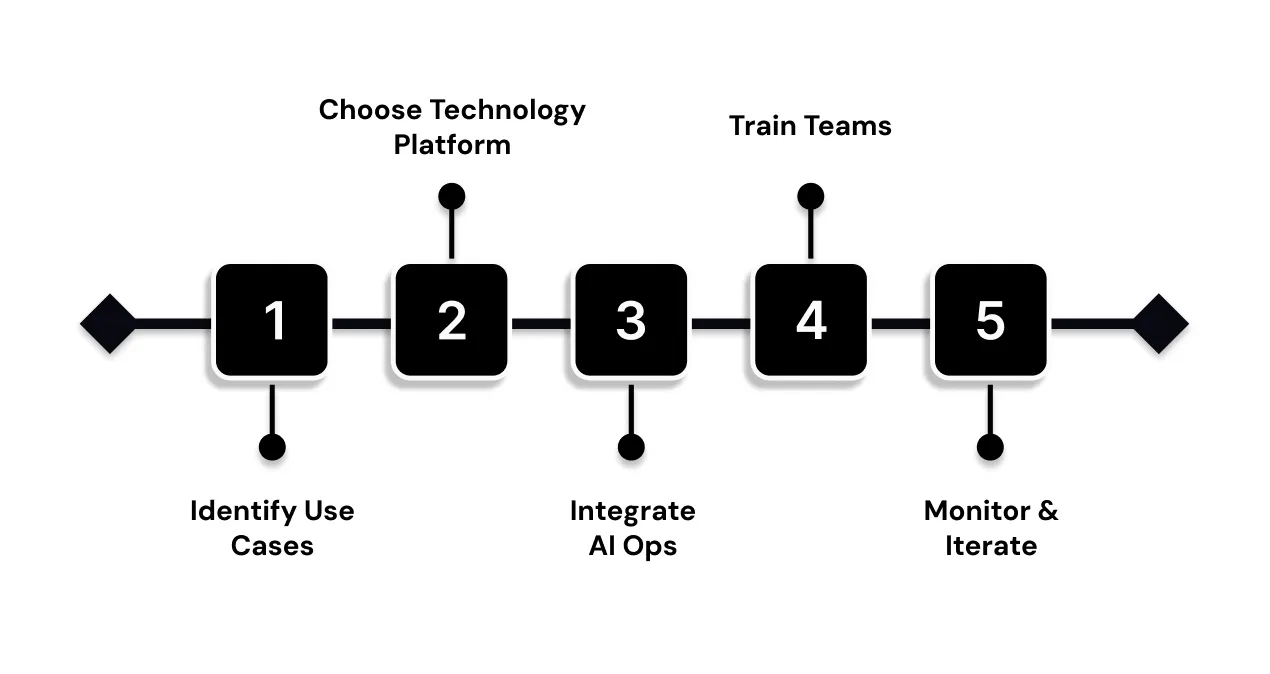
Successfully adopting AI Ops in CPG retail execution involves a combination of technology integration, process adaptation, and team training. Here’s how CPG brands can implement AI Ops effectively:
Step 1: Identify Key Use Cases
CPG brands should first define which aspects of retail execution require automation. Common use cases include:
- On-shelf stock visibility
- Planogram compliance
- Share of shelf monitoring
- Promotion execution
By focusing on specific KPIs, brands can ensure that AI Ops tools deliver targeted, actionable insights.
Step 2: Evaluate Technology Capabilities Before Selection
Before choosing an AI Ops platform, CPG brands should assess whether the solution can consistently capture and analyze shelf-level data at scale. Key evaluation criteria include:
- Accuracy of image recognition across different store formats
- Ability to process shelf images in near real time
- Consistency of data across regions and store types
- Ease of deployment for field teams
- Solutions like ParallelDots’ ShelfWatch use advanced image recognition to provide real-time visual insights into store shelves. The platform automates monitoring, reduces manual work, and collects consistent, reliable data across multiple stores.
Step 3: Integrate AI Ops into Existing Workflows
AI Ops should enhance, not disrupt, existing retail execution processes. This involves:
- Integrating with field team reporting systems
- Providing easy access to insights for sales and trade marketing teams
- Establishing protocols for responding to alerts or deviations detected by AI
Proper integration makes AI Ops a natural part of retail execution workflows. It improves accuracy and efficiency without overwhelming teams.
Step 4: Train Teams and Standardize Processes
For AI Ops to work on the ground, field teams need clarity on how to act on shelf insights. Training should focus on helping field agents and sales leaders:
- Recognize AI-generated alerts and understand what they indicate at the shelf
- Take defined corrective actions during store visits, such as addressing stockouts or placement gaps
- Use recurring shelf insights to improve future retail execution planning
Standardizing how field teams respond to shelf-level issues ensures that AI Ops insights translate into consistent execution across stores.
Step 5: Monitor Performance and Iterate
Finally, brands should continuously monitor AI Ops performance. Track accuracy of shelf detection, frequency of alerts, and compliance rates. Regularly improving models and processes helps AI Ops deliver reliable insights and stay aligned with changing retail execution needs.
Challenges in Implementing AI Ops in CPG
While AI Ops offers significant benefits, CPG brands may encounter implementation challenges. Awareness of these hurdles allows brands to plan proactively:
- Data Fragmentation: Stores generate vast amounts of visual and operational data. Without proper standardization, it can be difficult to consolidate information across multiple locations. Ensure AI Ops platforms deliver consistent data to provide reliable insights.
- Change Management and Team Adoption: Field teams may resist new technology if it seems too complex. Training and clear communication help teams adopt AI Ops and use it effectively.
- Integration Complexity: AI Ops platforms must fit smoothly with existing retail execution systems and reporting tools. Complex integration projects can slow adoption, especially if legacy systems are outdated.
- Data Accuracy and Trust: AI Ops relies on precise visual data. Poor image quality, inconsistent store layouts, or irregular shelf setups can affect data accuracy. Regular monitoring and calibration keep insights reliable.
- Cost and Resource Allocation: Implementing AI Ops involves investment in technology and training. CPG brands must evaluate the ROI, focusing on measurable improvements in retail execution and better decisions supported by accurate shelf data.
How ParallelDots Empowers CPG Brands with Smarter AI Ops?
ParallelDots helps CPG brands implement AI Ops effectively by providing real-time, actionable shelf insights. Its AI-powered platform is designed to address the core challenges of in-store execution, ensuring that decisions are data-driven and timely.
Here’s how we can support you:
- On-Shelf Stock Visibility: ShelfWatch identifies stockouts and low-stock situations at the SKU level, providing accurate insights into on-shelf availability. Field teams can act quickly to replenish products and prevent lost sales opportunities.
- Planogram Compliance Monitoring: The platform automatically detects planogram deviations, ensuring products are correctly placed according to the brand’s guidelines. This maintains brand consistency and maximizes shelf presence across stores.
- Share of Shelf Tracking: ParallelDots enables continuous monitoring of the share of shelf, helping brands understand their competitive positioning within each store. Insights allow for fine-tuned interventions to optimize product visibility.
- Promotion Execution Monitoring: ShelfWatch tracks whether promotions are executed correctly in-store. Brands can identify gaps in promotional displays and take corrective action immediately, ensuring campaigns achieve their intended impact.
- Real-Time Data, Faster Decisions: By providing real-time shelf insights, ParallelDots reduces the lag between observation and action. Sales leaders and trade marketing teams can respond promptly to execution issues, ensuring stores always reflect the brand’s plan.
- Scalability Across Store Networks: ParallelDots supports large-scale deployment, enabling brands to monitor thousands of stores simultaneously. Automation reduces the burden on field teams while maintaining consistent execution standards.
With ParallelDots, CPG brands gain the clarity and control they need to make retail execution smarter, faster, and more accurate. Request a demo to see how ShelfWatch can transform your in-store operations.
Frequently Asked Questions
1. How can AI Ops improve retail execution for CPG brands?
AI Ops streamlines retail execution by automating shelf-level monitoring, identifying misplacements, and tracking planogram compliance. This helps CPG brands optimize product placement, reduce gaps, and make faster, data-driven decisions, improving sales performance and consistency across stores.
2. What types of AI technologies are commonly used in AI Ops for CPG companies?
CPG brands use computer vision for shelf monitoring, machine learning for detecting misplaced products, and natural language processing for analyzing visual or textual store reports. Together, these AI technologies enable smarter, faster, and more precise retail execution.
3. What data sources are essential for effective AI Ops in the CPG ecosystem?
Key data sources include in-store shelf images, planogram layouts, share-of-shelf measurements, competitor display observations, and promotional placement data. Combining these allows AI Ops to provide actionable insights for optimizing shelf execution and ensuring products are consistently visible to customers.
4. How can CPG companies measure ROI from AI Ops implementation?
ROI can be measured through increased sales, improved shelf compliance, reduced out-of-stock incidents, lower operational costs, and faster decision-making. Tracking key performance metrics before and after AI Ops deployment helps quantify financial benefits and operational efficiencies.
5. How can smaller or emerging CPG brands benefit from AI Ops without high infrastructure costs?
Smaller brands can adopt cloud-based AI Ops platforms or SaaS solutions that require minimal IT investment. These options provide shelf monitoring, planogram compliance checks, and actionable visual insights, enabling efficient retail execution without the need for expensive hardware or extensive technical teams.
.png)
.png)