CPG Industry Challenges

Why Smarter Data Management is Now a Competitive Advantage for CPG Brands

Ankit Singh
November 25, 2025
11
mins read
Ready to get Started?
request A Demo

For today’s CPG brands, data management in CPG has become closely tied to how well products perform inside physical stores. With thousands of SKUs competing for limited shelf space, staying visible and keeping products placed correctly is harder than it looks. The real struggle faced by CPG brands that often goes unnoticed is managing the vast amount of retail execution data scattered across multiple channels and systems.

Fragmented data, outdated manual audits, and slow reporting cycles make it difficult for CPG leaders to act on time. This is where smarter data management CPG becomes a competitive advantage. In fact, a 2023 industry survey found that 92% of CPG leaders rely on data-driven insights to fuel profitable growth.

By consolidating and organizing in-store execution data, CPG brands gain visibility into what’s happening at the shelf level in real time. They can spot stockouts faster, identify non-compliant stores, and measure the true impact of their promotional strategies. In a market where every inch of shelf space matters, data-driven visibility has become a powerful differentiator.

In a nutshell:

  • Unified Shelf Data: Combines information from multiple channels into one view, giving clear insights into stock, visibility, and promotions. This helps CPG teams understand where gaps are causing lost sales.
  • Real-Time Insights: Provides instant shelf-level data so teams can act quickly before out-of-stocks or misplaced items impact revenue.
  • Consistent Retail Execution: Standardizes monitoring across stores, ensuring products are placed correctly and displays stay consistent, even as store coverage scales.
  • Enhanced Collaboration and Insights: Gives every team the same clear view of on-shelf performance, making it easier to fix issues that limit product availability and overall brand presence.

What is Data Management in CPG?

Data management in the CPG industry involves collecting, organizing, and analyzing in-store data to help brands make informed decisions about product visibility, compliance, and execution quality. It’s about replacing guesswork with real-time insights that reflect what’s actually happening on shelves.

In simpler terms, smarter data management helps CPG teams answer crucial questions like:

  • Are our key SKUs clearly visible and available on the shelf when customers look for them?
  • Are our products placed as per the planogram?
  • How much shelf share do we command compared to competitors?
  • Are promotional displays being executed correctly?

Without a strong data management system, CPG teams struggle to answer these questions accurately and quickly.

Core Features of a Data Management System in the CPG Industry
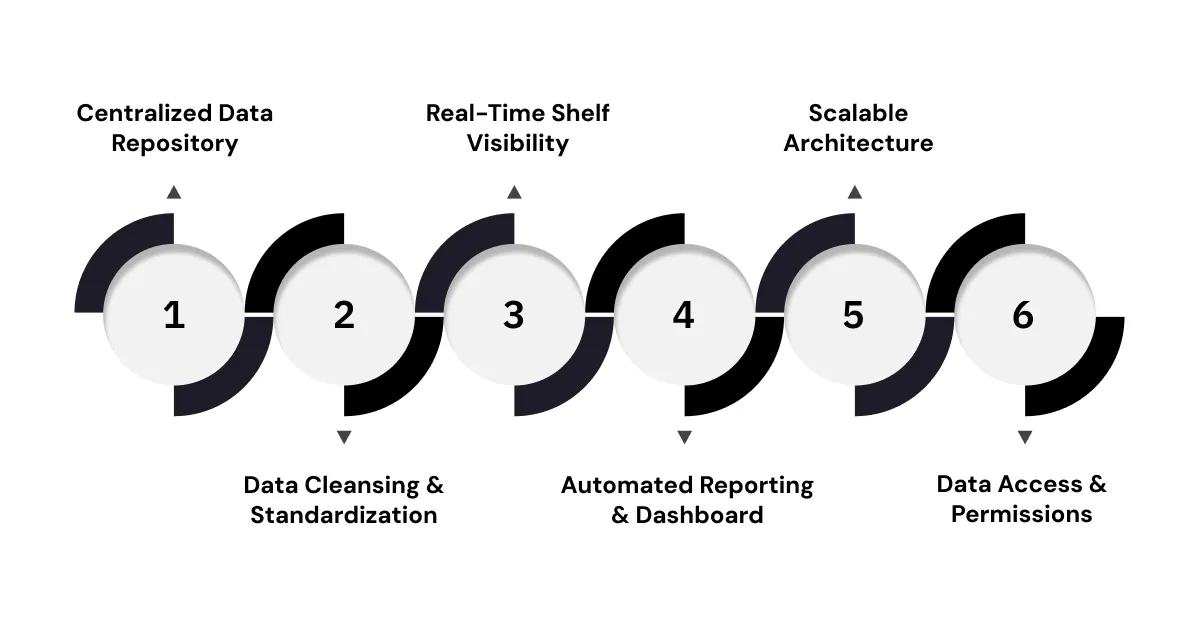
Core Features of a Data Management System in the CPG Industry

A smarter data management system helps CPG brands bring structure and clarity to their vast amounts of in-store execution data. Below are the core features that define an effective system in this space:

  • Centralized Data Repository: A unified system that brings together data from multiple stores, regional markets, and store audits. It eliminates the chaos of fragmented spreadsheets and helps CPG teams access consistent shelf data across all markets.
  • Data Cleansing and Standardization: Ensures information from different field teams follows consistent formats. Clean, standardized data helps brand managers compare products, categories, and stores easily.
  • Real-Time Shelf Visibility: Provides instant access to shelf conditions as part of stronger CPG data management. It tracks planogram compliance, share of shelf, and on-shelf stock availability. This level of visibility helps teams act faster on shelf gaps before they spread across stores.
  • Automated Reporting and Dashboard: Interactive dashboards display key performance indicators such as on-shelf stock availability and planogram compliance rates. Automated reporting reduces manual effort and gives decision-makers a clear snapshot of execution quality across stores.
  • Scalable Architecture: The system should be flexible enough to handle growing data volumes as a brand expands its product lines. Scalability ensures that the same level of accuracy and speed is maintained even as data sources multiply.
  • Secure Data Access and Permissions: Role-based access ensures each team member views the shelf-level information they need for execution tasks, helping field teams act faster while keeping sensitive data controlled.

When CPG brands adopt these features, they create a foundation for improved in-store performance and better collaboration across teams.

How Smarter Data Management Drives Competitive Advantage?

In a market where speed, accuracy, and visibility define success, smarter data management gives CPG brands an edge. It transforms shelf-level insights into actionable intelligence that helps your team act quickly and execute better.

Here’s how smarter data management gives your brand a competitive edge:

1. Enables Faster Decision-Making

When all retail execution data is unified and accessible in real time, CPG teams can make faster, more informed choices. Rather than relying on delayed reports or manual audits, decision-makers can respond immediately to shelf-level changes.

  • Real-time shelf insights: With accurate visual shelf data, CPG teams can identify stockouts, misplaced SKUs, or incorrect shelf displays the moment they occur. This immediacy allows corrective action before sales are lost.
  • Reduced reporting lag: When multiple data sources are consolidated, insights reach field teams and managers faster, reducing decision cycles from days to hours.
  • Better alignment with market dynamics: Quick visibility into shelf performance helps brands respond effectively to competitor promotions or in-store placement issues.

With faster decision-making powered by reliable data, CPG brands can react to market conditions quickly, protecting both shelf presence and brand visibility.

2. Strengthens Retail Execution Consistency

When data is fragmented across different systems or collected manually, maintaining execution consistency across thousands of stores is difficult. Smarter data management fixes this by standardizing how performance is measured and reported.

  • Unified shelf monitoring: Centralized shelf data allows teams to evaluate performance across all stores, identifying where compliance falls short.
  • Accurate visual validation: AI-driven image recognition tools help teams ensure every store layout and display follows brand guidelines without relying on manual checks.
  • Actionable store-level insights: Teams can focus on underperforming stores or regions, standardizing execution across markets.

With unified shelf intelligence, CPG brands deliver the same quality of execution everywhere, from high-traffic stores to smaller suburban locations.

3. Enhances Shelf Availability and Visibility

Availability and visibility are non-negotiable in retail execution. When products fall out of view on the shelf, CPG brands lose out on sales that could have been captured. Smarter data management reduces the chances of these gaps going unnoticed.

  • Automated out-of-stock detection: AI-powered shelf audits identify empty spots instantly, helping field teams replenish shelves before they impact sales.
  • Visibility tracking for key SKUs: Brands can monitor whether priority products and new launches are displayed in prime shelf zones according to planograms.
  • Improved promotional visibility: Data-driven visibility checks confirm that promotional displays are executed correctly, maximizing campaign ROI.

When shelf availability is backed by accurate, real-time data, CPG brands can fix visibility gaps before they turn into lost opportunities.

4. Improves Cross-Functional Collaboration

Smarter data management also breaks silos between departments, ensuring sales, marketing, and field operations work from the same reliable shelf data.

  • Shared performance dashboards: Visual shelf data accessible across departments lets teams collaborate based on common metrics and insights.
  • Faster feedback loops: Visual data from store audits can be shared instantly, enabling marketing teams to validate promotions and sales teams to adjust strategies quickly.
  • Better alignment of goals: Unified shelf insights let different teams measure success using the same KPIs, improving coordination and reducing friction.

Collaboration powered by accurate shelf data leads to faster decisions, fewer errors, and stronger outcomes.

5. Competitive Benchmarking Through Shelf Data

Knowing how your brand performs against competitors is critical. Smarter data management makes benchmarking precise and actionable.

  • Competitor shelf tracking: By capturing real-time data on share of shelf and promotional displays, brands can measure where they stand relative to rivals.
  • Performance trend analysis: Continuous shelf data allows teams to identify emerging trends, such as competitors gaining space or executing stronger promotions.
  • Strategic reallocation: Insights from benchmarking guide smarter investments, like which stores or regions need more promotional focus.

By turning shelf data into a benchmarking tool, CPG brands gain insights to refine strategies and defend market share effectively.

In essence, smarter data management transforms disconnected data into a single, reliable ecosystem that helps CPG teams make faster and better shelf execution decisions.

How to Implement a Data Management System in CPG?
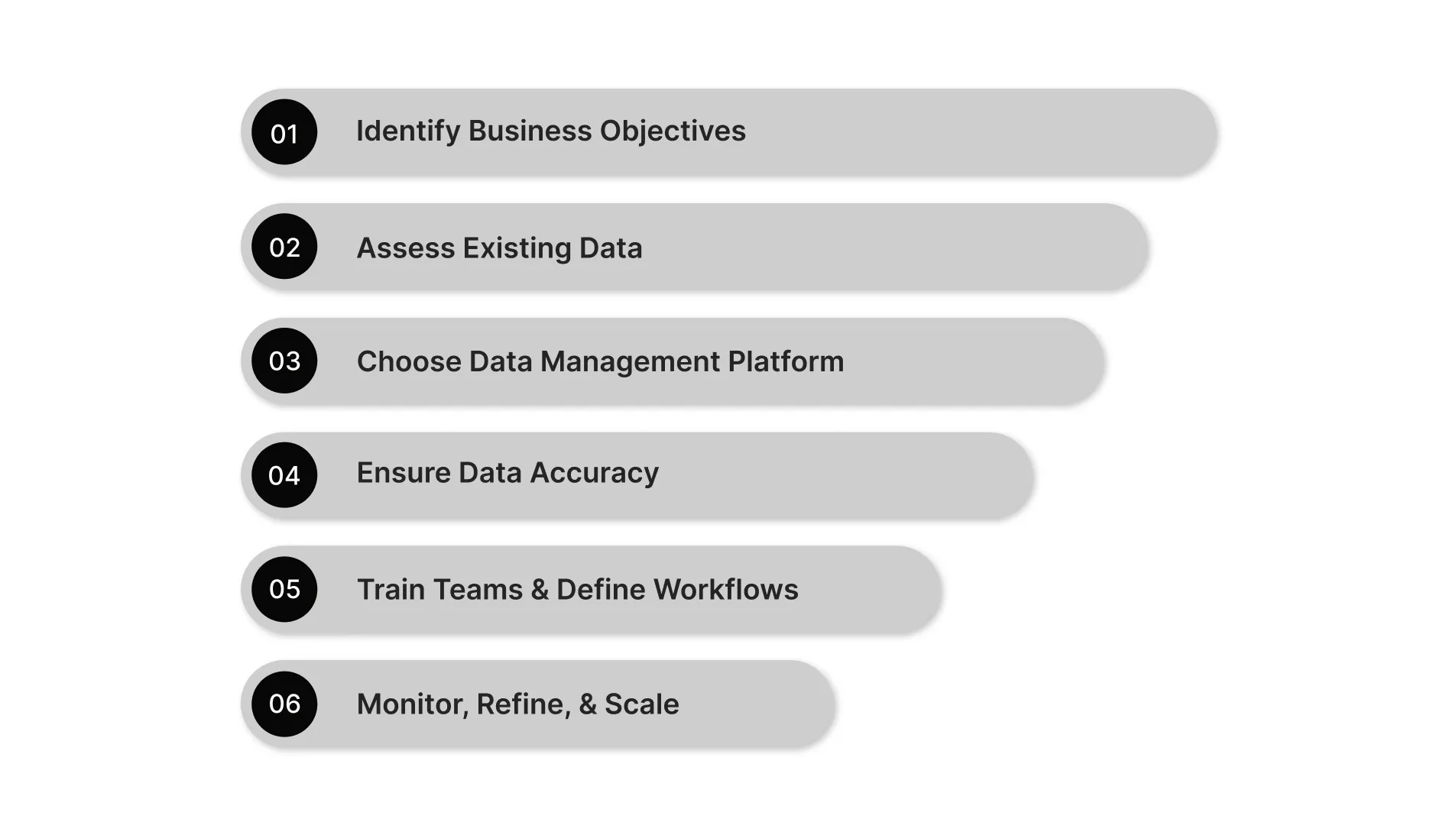
How to Implement a Data Management System in CPG?

Implementing smarter data management requires more than adopting new software; it’s about aligning processes, people, and technology to work toward better in-store execution outcomes.

Below are key steps to help CPG companies successfully roll out an effective data management framework.

Step 1: Identify Business Objectives and Data Needs

Every CPG brand has unique data priorities; some want to improve planogram compliance visibility, others want to monitor shelf presence, or detect missing products quickly.

 Start by defining your business goals: what kind of insights do you want to extract from your shelf data? This clarity helps you pick the right data sources and KPIs, and makes sure your data system provides useful intelligence, not just reports.

Step 2: Assess Existing Data Sources and Infrastructure

Before introducing a new system, take stock of what data you already have and where it resides. Your existing systems, whether ERP, POS data feeds, or manual audit reports, hold valuable information. 

This data is often fragmented or outdated. Reviewing your infrastructure highlights integration gaps, such as missing real-time shelf data or visual insights from stores.

Step 3: Choose the Right Data Management Platform

A data management platform should centralize multiple data streams, support automation, and provide high-quality, real-time visibility.

For CPGs, this means choosing a solution that integrates visual recognition technology, like ParallelDots, to capture on-shelf product information accurately. The platform should make it easy for teams to access and analyze shelf data, enabling faster and more confident decision-making.

Step 4: Ensure Data Accuracy and Integration

Once the platform is chosen, ensure all incoming data is clean, consistent, and integrated correctly.

Duplicate or inconsistent entries distort performance metrics. Set up validation rules and automated checks to maintain quality. Integration with visual shelf data keeps your in-store information current, letting teams see exactly what is happening at the shelf level.

Step 5: Train Teams and Define Workflows

Even the best data systems fail if users aren’t comfortable. Train sales, trade marketing, and retail execution teams to use the platform, interpret shelf data, and act on insights.

Define clear workflows, for example, what happens when a stockout is detected or a display isn’t compliant. This ensures consistent use and fast response to on-shelf issues.

Step 6: Monitor, Refine, and Scale

Once your data management system is live, treat it as a dynamic tool, not a one-time setup. Monitor performance, gather user feedback, and refine dashboards and data rules over time. 

Scale the system across more teams and categories as it matures. Continuous improvement keeps the system aligned with the changing retail environment and brand priorities.

By following these steps systematically, you embed smarter data management into your in-store execution approach.

Challenges in CPG Data Management

While smarter data management delivers clear benefits, many CPG companies struggle with challenges during implementation and scaling. These challenges often translate into lost sales and missed opportunities to maximize on-shelf visibility. Recognizing these CPG data management challenges helps brands prepare for them effectively.

  • Fragmented Data Sources: Data comes from multiple channels, including field teams and distributors, often in different formats. Consolidating this data on a single platform is challenging without a proper system.
  • Legacy Systems and Manual Processes: Many CPG brands still depend on outdated reporting systems or spreadsheets. These systems are slow, error-prone, and cannot keep up with real-time retail environments. Transitioning to automated systems is crucial but requires a clear roadmap.
  • Inconsistent Data Quality: Without standardized inputs, the same SKU might appear differently across systems, causing reporting errors. Inconsistent data leads to misinformed decisions and misaligned teams.
  • Delayed Reporting Cycles: Traditional data collection often takes days or weeks, creating a gap in actionable insights. In a competitive environment, this delay can prevent CPG teams from acting on shelf data quickly.
  • Limited Team Adoption: A well-designed system is only as strong as the team using it. Resistance to change, lack of training, or unclear processes can slow adoption. 

Addressing these challenges requires both technological innovation and strong process discipline, a combination that modern solutions like ParallelDots enable.

How ParallelDots Can Help CPG Brands Harness Data?

ParallelDots empowers CPG brands with real-time, accurate shelf data that drives smarter decision-making. Through its advanced image recognition platform, ShelfWatch, CPGs gain clear visibility into what’s happening in every store, every day.

Here’s how we can assist you:

  • Gain Real-Time Visibility into Shelf Conditions: ParallelDots uses computer vision to instantly identify what’s happening on the shelf,  from stock availability to product placement accuracy. This gives CPG teams immediate insight into whether their products are available, correctly placed, and compliant with planograms across multiple stores.
  • Planogram Compliance Monitoring: With automated shelf monitoring, CPGs can verify if every SKU is displayed as per the agreed planogram. ParallelDots flags discrepancies such as misplaced products, missing SKUs, or incorrect facings, allowing teams to take corrective action quickly without relying on manual audits.
  • Share of Shelf Measurement: The platform quantifies how much space each brand or SKU occupies compared to competitors. This enables sales and trade marketing teams to negotiate better shelf space and ensure that brand presence matches investment.
  • Ensure Effective Promotion Execution: ParallelDots helps brands confirm whether promotional displays are implemented correctly and on time. This enables teams to assess the true impact of promotions by ensuring execution aligns with the marketing plan.
  • Centralize Shelf Data for Smarter Decision-Making: Instead of scattered photos or inconsistent reports, all shelf data captured by ParallelDots is processed and visualized in an easy-to-use dashboard. This creates a single source of truth for sales and marketing leaders to identify recurring issues and measure performance across geographies.

ParallelDots empowers teams to see what’s happening in-store in near real time, so they can make smarter, faster decisions that improve execution and brand visibility.

Ready to see how smarter shelf data can empower your retail execution? Request a demo today.

Frequently Asked Questions

1. Why is data quality more important than data quantity for competitive advantage?

High-quality data ensures accuracy, relevance, and actionable insights. While large volumes of data are useful, poor-quality data can mislead decisions, slow operations, and harm store execution. Quality drives smarter strategies, better predictions, and ultimately a stronger competitive edge.

2. How does effective data governance contribute to brand trust and regulatory compliance?

Effective data governance establishes clear policies, controls, and accountability for data usage. It ensures data accuracy, privacy, and security, building consumer trust. Additionally, it helps organizations comply with regulations like GDPR or CCPA, reducing legal risks and safeguarding the brand’s reputation.

3. What metrics indicate successful data management transformation in CPG organizations?

Key metrics include improved data accuracy and completeness, faster data access, reduced operational costs, increased decision-making speed, higher customer satisfaction, and measurable ROI from data-driven initiatives. Monitoring these helps assess how effectively data management drives business value.

4. Why is collaboration between IT and marketing teams essential for data success?

IT provides the infrastructure and analytics capabilities, while marketing defines business goals and customer insights. Collaboration ensures data is effectively collected, analysed, and applied to improve in-store retail execution, optimize product availability, and drive sales performance.

5. How do cloud-based solutions enable more agile data management strategies for CPGs?

Cloud solutions offer scalable storage, real-time data access, and advanced analytics tools. They allow CPG organizations to integrate multiple data sources, adapt quickly to market changes, and streamline operations, enabling faster insights and more agile, data-driven decision-making.
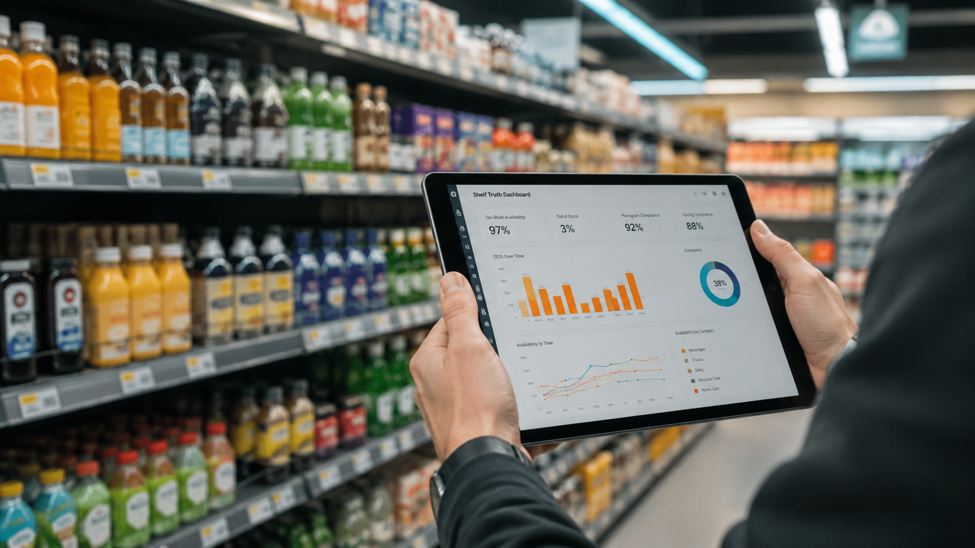
From Shelf Photos to Execution Intelligence

AI image recognition only creates value when it’s embedded into everyday execution workflows. ShelfWatch helps teams move from delayed audits to real-time shelf visibility across formats, regions, and SKUs.

Book a ShelfWatch Demo
 
Used by leading FMCG and retail teams across global markets

For today’s CPG brands, data management in CPG has become closely tied to how well products perform inside physical stores. With thousands of SKUs competing for limited shelf space, staying visible and keeping products placed correctly is harder than it looks. The real struggle faced by CPG brands that often goes unnoticed is managing the vast amount of retail execution data scattered across multiple channels and systems.

Fragmented data, outdated manual audits, and slow reporting cycles make it difficult for CPG leaders to act on time. This is where smarter data management CPG becomes a competitive advantage. In fact, a 2023 industry survey found that 92% of CPG leaders rely on data-driven insights to fuel profitable growth.

By consolidating and organizing in-store execution data, CPG brands gain visibility into what’s happening at the shelf level in real time. They can spot stockouts faster, identify non-compliant stores, and measure the true impact of their promotional strategies. In a market where every inch of shelf space matters, data-driven visibility has become a powerful differentiator.

In a nutshell:

  • Unified Shelf Data: Combines information from multiple channels into one view, giving clear insights into stock, visibility, and promotions. This helps CPG teams understand where gaps are causing lost sales.
  • Real-Time Insights: Provides instant shelf-level data so teams can act quickly before out-of-stocks or misplaced items impact revenue.
  • Consistent Retail Execution: Standardizes monitoring across stores, ensuring products are placed correctly and displays stay consistent, even as store coverage scales.
  • Enhanced Collaboration and Insights: Gives every team the same clear view of on-shelf performance, making it easier to fix issues that limit product availability and overall brand presence.

What is Data Management in CPG?

Data management in the CPG industry involves collecting, organizing, and analyzing in-store data to help brands make informed decisions about product visibility, compliance, and execution quality. It’s about replacing guesswork with real-time insights that reflect what’s actually happening on shelves.

In simpler terms, smarter data management helps CPG teams answer crucial questions like:

  • Are our key SKUs clearly visible and available on the shelf when customers look for them?
  • Are our products placed as per the planogram?
  • How much shelf share do we command compared to competitors?
  • Are promotional displays being executed correctly?

Without a strong data management system, CPG teams struggle to answer these questions accurately and quickly.

Core Features of a Data Management System in the CPG Industry

Core Features of a Data Management System in the CPG Industry

A smarter data management system helps CPG brands bring structure and clarity to their vast amounts of in-store execution data. Below are the core features that define an effective system in this space:

  • Centralized Data Repository: A unified system that brings together data from multiple stores, regional markets, and store audits. It eliminates the chaos of fragmented spreadsheets and helps CPG teams access consistent shelf data across all markets.
  • Data Cleansing and Standardization: Ensures information from different field teams follows consistent formats. Clean, standardized data helps brand managers compare products, categories, and stores easily.
  • Real-Time Shelf Visibility: Provides instant access to shelf conditions as part of stronger CPG data management. It tracks planogram compliance, share of shelf, and on-shelf stock availability. This level of visibility helps teams act faster on shelf gaps before they spread across stores.
  • Automated Reporting and Dashboard: Interactive dashboards display key performance indicators such as on-shelf stock availability and planogram compliance rates. Automated reporting reduces manual effort and gives decision-makers a clear snapshot of execution quality across stores.
  • Scalable Architecture: The system should be flexible enough to handle growing data volumes as a brand expands its product lines. Scalability ensures that the same level of accuracy and speed is maintained even as data sources multiply.
  • Secure Data Access and Permissions: Role-based access ensures each team member views the shelf-level information they need for execution tasks, helping field teams act faster while keeping sensitive data controlled.

When CPG brands adopt these features, they create a foundation for improved in-store performance and better collaboration across teams.

How Smarter Data Management Drives Competitive Advantage?

In a market where speed, accuracy, and visibility define success, smarter data management gives CPG brands an edge. It transforms shelf-level insights into actionable intelligence that helps your team act quickly and execute better.

Here’s how smarter data management gives your brand a competitive edge:

1. Enables Faster Decision-Making

When all retail execution data is unified and accessible in real time, CPG teams can make faster, more informed choices. Rather than relying on delayed reports or manual audits, decision-makers can respond immediately to shelf-level changes.

  • Real-time shelf insights: With accurate visual shelf data, CPG teams can identify stockouts, misplaced SKUs, or incorrect shelf displays the moment they occur. This immediacy allows corrective action before sales are lost.
  • Reduced reporting lag: When multiple data sources are consolidated, insights reach field teams and managers faster, reducing decision cycles from days to hours.
  • Better alignment with market dynamics: Quick visibility into shelf performance helps brands respond effectively to competitor promotions or in-store placement issues.

With faster decision-making powered by reliable data, CPG brands can react to market conditions quickly, protecting both shelf presence and brand visibility.

2. Strengthens Retail Execution Consistency

When data is fragmented across different systems or collected manually, maintaining execution consistency across thousands of stores is difficult. Smarter data management fixes this by standardizing how performance is measured and reported.

  • Unified shelf monitoring: Centralized shelf data allows teams to evaluate performance across all stores, identifying where compliance falls short.
  • Accurate visual validation: AI-driven image recognition tools help teams ensure every store layout and display follows brand guidelines without relying on manual checks.
  • Actionable store-level insights: Teams can focus on underperforming stores or regions, standardizing execution across markets.

With unified shelf intelligence, CPG brands deliver the same quality of execution everywhere, from high-traffic stores to smaller suburban locations.

3. Enhances Shelf Availability and Visibility

Availability and visibility are non-negotiable in retail execution. When products fall out of view on the shelf, CPG brands lose out on sales that could have been captured. Smarter data management reduces the chances of these gaps going unnoticed.

  • Automated out-of-stock detection: AI-powered shelf audits identify empty spots instantly, helping field teams replenish shelves before they impact sales.
  • Visibility tracking for key SKUs: Brands can monitor whether priority products and new launches are displayed in prime shelf zones according to planograms.
  • Improved promotional visibility: Data-driven visibility checks confirm that promotional displays are executed correctly, maximizing campaign ROI.

When shelf availability is backed by accurate, real-time data, CPG brands can fix visibility gaps before they turn into lost opportunities.

4. Improves Cross-Functional Collaboration

Smarter data management also breaks silos between departments, ensuring sales, marketing, and field operations work from the same reliable shelf data.

  • Shared performance dashboards: Visual shelf data accessible across departments lets teams collaborate based on common metrics and insights.
  • Faster feedback loops: Visual data from store audits can be shared instantly, enabling marketing teams to validate promotions and sales teams to adjust strategies quickly.
  • Better alignment of goals: Unified shelf insights let different teams measure success using the same KPIs, improving coordination and reducing friction.

Collaboration powered by accurate shelf data leads to faster decisions, fewer errors, and stronger outcomes.

5. Competitive Benchmarking Through Shelf Data

Knowing how your brand performs against competitors is critical. Smarter data management makes benchmarking precise and actionable.

  • Competitor shelf tracking: By capturing real-time data on share of shelf and promotional displays, brands can measure where they stand relative to rivals.
  • Performance trend analysis: Continuous shelf data allows teams to identify emerging trends, such as competitors gaining space or executing stronger promotions.
  • Strategic reallocation: Insights from benchmarking guide smarter investments, like which stores or regions need more promotional focus.

By turning shelf data into a benchmarking tool, CPG brands gain insights to refine strategies and defend market share effectively.

In essence, smarter data management transforms disconnected data into a single, reliable ecosystem that helps CPG teams make faster and better shelf execution decisions.

How to Implement a Data Management System in CPG?

How to Implement a Data Management System in CPG?

Implementing smarter data management requires more than adopting new software; it’s about aligning processes, people, and technology to work toward better in-store execution outcomes.

Below are key steps to help CPG companies successfully roll out an effective data management framework.

Step 1: Identify Business Objectives and Data Needs

Every CPG brand has unique data priorities; some want to improve planogram compliance visibility, others want to monitor shelf presence, or detect missing products quickly.

 Start by defining your business goals: what kind of insights do you want to extract from your shelf data? This clarity helps you pick the right data sources and KPIs, and makes sure your data system provides useful intelligence, not just reports.

Step 2: Assess Existing Data Sources and Infrastructure

Before introducing a new system, take stock of what data you already have and where it resides. Your existing systems, whether ERP, POS data feeds, or manual audit reports, hold valuable information. 

This data is often fragmented or outdated. Reviewing your infrastructure highlights integration gaps, such as missing real-time shelf data or visual insights from stores.

Step 3: Choose the Right Data Management Platform

A data management platform should centralize multiple data streams, support automation, and provide high-quality, real-time visibility.

For CPGs, this means choosing a solution that integrates visual recognition technology, like ParallelDots, to capture on-shelf product information accurately. The platform should make it easy for teams to access and analyze shelf data, enabling faster and more confident decision-making.

Step 4: Ensure Data Accuracy and Integration

Once the platform is chosen, ensure all incoming data is clean, consistent, and integrated correctly.

Duplicate or inconsistent entries distort performance metrics. Set up validation rules and automated checks to maintain quality. Integration with visual shelf data keeps your in-store information current, letting teams see exactly what is happening at the shelf level.

Step 5: Train Teams and Define Workflows

Even the best data systems fail if users aren’t comfortable. Train sales, trade marketing, and retail execution teams to use the platform, interpret shelf data, and act on insights.

Define clear workflows, for example, what happens when a stockout is detected or a display isn’t compliant. This ensures consistent use and fast response to on-shelf issues.

Step 6: Monitor, Refine, and Scale

Once your data management system is live, treat it as a dynamic tool, not a one-time setup. Monitor performance, gather user feedback, and refine dashboards and data rules over time. 

Scale the system across more teams and categories as it matures. Continuous improvement keeps the system aligned with the changing retail environment and brand priorities.

By following these steps systematically, you embed smarter data management into your in-store execution approach.

Challenges in CPG Data Management

While smarter data management delivers clear benefits, many CPG companies struggle with challenges during implementation and scaling. These challenges often translate into lost sales and missed opportunities to maximize on-shelf visibility. Recognizing these CPG data management challenges helps brands prepare for them effectively.

  • Fragmented Data Sources: Data comes from multiple channels, including field teams and distributors, often in different formats. Consolidating this data on a single platform is challenging without a proper system.
  • Legacy Systems and Manual Processes: Many CPG brands still depend on outdated reporting systems or spreadsheets. These systems are slow, error-prone, and cannot keep up with real-time retail environments. Transitioning to automated systems is crucial but requires a clear roadmap.
  • Inconsistent Data Quality: Without standardized inputs, the same SKU might appear differently across systems, causing reporting errors. Inconsistent data leads to misinformed decisions and misaligned teams.
  • Delayed Reporting Cycles: Traditional data collection often takes days or weeks, creating a gap in actionable insights. In a competitive environment, this delay can prevent CPG teams from acting on shelf data quickly.
  • Limited Team Adoption: A well-designed system is only as strong as the team using it. Resistance to change, lack of training, or unclear processes can slow adoption. 

Addressing these challenges requires both technological innovation and strong process discipline, a combination that modern solutions like ParallelDots enable.

How ParallelDots Can Help CPG Brands Harness Data?

ParallelDots empowers CPG brands with real-time, accurate shelf data that drives smarter decision-making. Through its advanced image recognition platform, ShelfWatch, CPGs gain clear visibility into what’s happening in every store, every day.

Here’s how we can assist you:

  • Gain Real-Time Visibility into Shelf Conditions: ParallelDots uses computer vision to instantly identify what’s happening on the shelf,  from stock availability to product placement accuracy. This gives CPG teams immediate insight into whether their products are available, correctly placed, and compliant with planograms across multiple stores.
  • Planogram Compliance Monitoring: With automated shelf monitoring, CPGs can verify if every SKU is displayed as per the agreed planogram. ParallelDots flags discrepancies such as misplaced products, missing SKUs, or incorrect facings, allowing teams to take corrective action quickly without relying on manual audits.
  • Share of Shelf Measurement: The platform quantifies how much space each brand or SKU occupies compared to competitors. This enables sales and trade marketing teams to negotiate better shelf space and ensure that brand presence matches investment.
  • Ensure Effective Promotion Execution: ParallelDots helps brands confirm whether promotional displays are implemented correctly and on time. This enables teams to assess the true impact of promotions by ensuring execution aligns with the marketing plan.
  • Centralize Shelf Data for Smarter Decision-Making: Instead of scattered photos or inconsistent reports, all shelf data captured by ParallelDots is processed and visualized in an easy-to-use dashboard. This creates a single source of truth for sales and marketing leaders to identify recurring issues and measure performance across geographies.

ParallelDots empowers teams to see what’s happening in-store in near real time, so they can make smarter, faster decisions that improve execution and brand visibility.

Ready to see how smarter shelf data can empower your retail execution? Request a demo today.

Frequently Asked Questions

1. Why is data quality more important than data quantity for competitive advantage?

High-quality data ensures accuracy, relevance, and actionable insights. While large volumes of data are useful, poor-quality data can mislead decisions, slow operations, and harm store execution. Quality drives smarter strategies, better predictions, and ultimately a stronger competitive edge.

2. How does effective data governance contribute to brand trust and regulatory compliance?

Effective data governance establishes clear policies, controls, and accountability for data usage. It ensures data accuracy, privacy, and security, building consumer trust. Additionally, it helps organizations comply with regulations like GDPR or CCPA, reducing legal risks and safeguarding the brand’s reputation.

3. What metrics indicate successful data management transformation in CPG organizations?

Key metrics include improved data accuracy and completeness, faster data access, reduced operational costs, increased decision-making speed, higher customer satisfaction, and measurable ROI from data-driven initiatives. Monitoring these helps assess how effectively data management drives business value.

4. Why is collaboration between IT and marketing teams essential for data success?

IT provides the infrastructure and analytics capabilities, while marketing defines business goals and customer insights. Collaboration ensures data is effectively collected, analysed, and applied to improve in-store retail execution, optimize product availability, and drive sales performance.

5. How do cloud-based solutions enable more agile data management strategies for CPGs?

Cloud solutions offer scalable storage, real-time data access, and advanced analytics tools. They allow CPG organizations to integrate multiple data sources, adapt quickly to market changes, and streamline operations, enabling faster insights and more agile, data-driven decision-making.