Share it with your network.


The retail execution landscape is facing a critical challenge for CPG brands. Out-of-stock products, misplaced SKUs, and gaps in promotional compliance result in significant lost sales and missed opportunities at the store shelf. Traditional manual audits are time-consuming, prone to errors, and often cover only a fraction of stores, leaving brands with incomplete visibility across their retail footprint.
According to a 2024 NVIDIA survey of over 400 professionals, nearly 69% of CPG brands using AI reported higher annual revenue. At the same time, adopting these technologies comes with challenges. Brands need to manage data accuracy, integration issues, and train field teams for AI adoption.
Implementing these technologies requires careful planning, infrastructure alignment, and consideration of operational and human factors. Understanding both the benefits and risks is vital for brands seeking to maintain a competitive edge while maximizing efficiency in the retail environment.
Key Takeaways:
- Enhanced On-Shelf Stock Visibility: AI ensures products are correctly placed and available on shelves, reducing stock gaps and minimizing lost sales at the store level.
- Improved Shelf and Promotion Compliance: Automation tracks planogram adherence and promotional displays, helping maintain brand standards and effective execution across stores.
- Scalable, Store-Level Execution: AI monitors more stores efficiently, identifying execution gaps on shelves while freeing field teams to focus on corrective actions.
- Data-Driven Shelf Insights: Real-time shelf data highlights compliance deviations and stock issues, guiding corrective actions and supporting continuous improvement in retail execution.
What is Automation in Retail Execution for CPG Brands?
Automation in retail execution uses technology to monitor and optimize how products are displayed in stores. Unlike traditional audits or spreadsheet-based tracking, which are time-consuming and error-prone, AI and computer vision provide real-time, accurate insights into on-shelf availability, share of shelf, planogram compliance, and promotional execution.
This approach supports field teams and sales personnel with actionable data, helping them address in-store gaps quickly and make informed decisions.
Key Benefits of AI and Automation for CPG Retail Execution
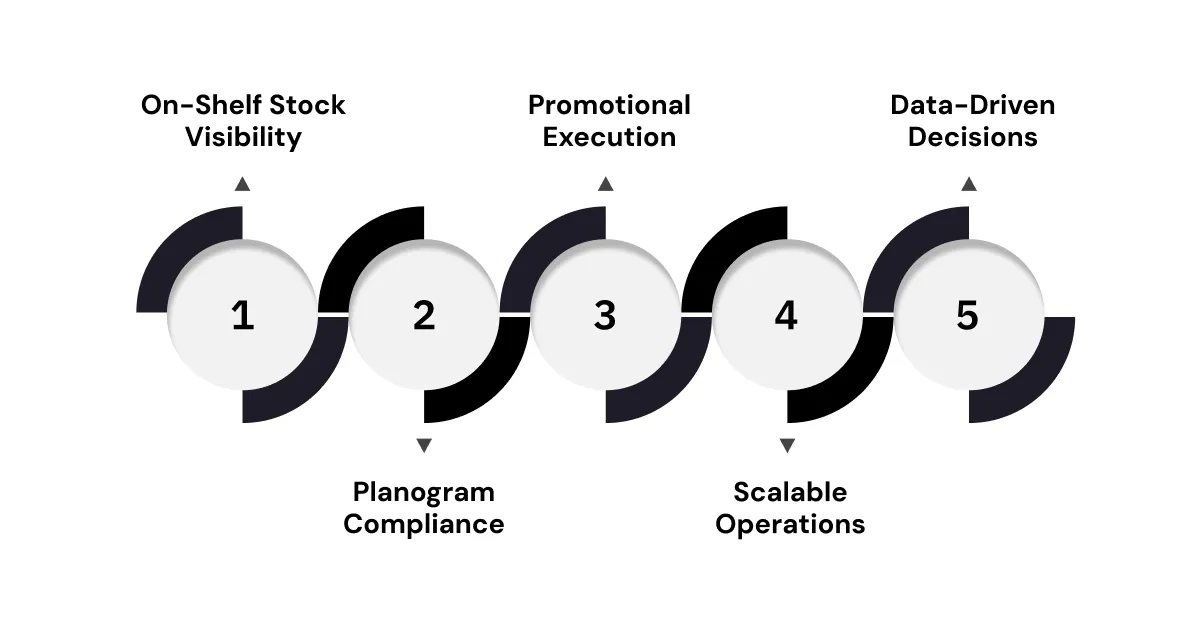
AI and automation offer several advantages to CPG retail execution, especially for accuracy, speed, and scalability. These benefits help brands capture every selling opportunity in-store.
Here are the key benefits of using AI and Automation in retail execution:
1. Accurate On-Shelf Stock Visibility
Ensuring the right products are physically available on store shelves at all times is a persistent challenge for CPG brands. AI-powered automation monitors the shelves directly, rather than tracking backroom inventory or warehouse stock, giving brands a clear view of what customers can actually see and buy.
- Real-time shelf detection: AI identifies missing or low-stock SKUs immediately on the shelf, enabling fast corrective action.
- Comprehensive store coverage: Automation allows brands to monitor more stores daily than traditional manual audits.
- Prioritized interventions: Insights guide sales teams to focus on high-impact stores where shelf gaps are most critical.
Maintaining accurate on-shelf stock visibility ensures brands meet demand consistently and minimize lost sales from missing or misplaced products.
2. Improved Planogram Compliance
Maintaining consistent shelf layouts is vital for maximizing product visibility and meeting brand standards. Non-compliance can lead to lost visibility, misplaced products, and reduced impact of promotions, which may affect customer attention and in-store performance. AI tools track planogram compliance at scale and detect misplacements or deviations in real time.
- Deviation alerts: Automated systems pinpoint products that are out of place or misaligned, helping brands act quickly.
- Guided corrections: Field teams receive actionable instructions to fix discrepancies efficiently.
- Uniformity across stores: Ensures all locations adhere to brand-defined shelf standards, reinforcing consistency and maintaining optimal product exposure.
By maintaining planogram compliance, brands strengthen their on-shelf impact, reduce execution gaps, and ensure products are presented effectively to customers.
3. Optimized Promotional Execution
Promotions drive in-store sales, but incorrect implementation can undermine their effectiveness. Automation ensures every discount, display, and offer is implemented as planned. Brands get a clear picture of promotion success across locations.
- Promotion monitoring: Detects whether promotional materials, pricing tags, and displays are implemented accurately.
- Compliance tracking: Identifies gaps in promotional execution to prevent missed opportunities.
- Implementation verification: Confirms that promotions are visible and positioned correctly in every store.
Better promotional execution helps brands protect marketing investments and get the intended campaign results.
4. Scalable Operations and Efficiency
Manual audits are time-consuming, error-prone, and difficult to scale across multi-region or enterprise-scale store networks. AI and automation allow brands to monitor more stores, reduce manual workload, and standardize reporting.
- Automated data capture: AI collects and processes shelf data rapidly, reducing manual effort.
- Expanded store coverage: Enables oversight of larger store networks without additional field resources.
- Enhanced productivity: Field teams can focus on solving critical issues rather than routine checks.
Scalable operations help brands keep consistent execution standards across regions while freeing up resources for higher-priority tasks.
5. Data-Driven Decision Making
AI and automation do more than report shelf conditions—they provide actionable insights that guide strategic decisions. Brands gain the intelligence needed to proactively address gaps and plan effective interventions.
- Actionable insights: Provides clear guidance on stock, compliance, and promotional gaps.
- Pattern identification: AI highlights recurring issues and helps predict potential compliance challenges.
- Continuous feedback loop: Real-time reporting enables teams to act quickly and refine execution strategies.
Data-driven decision-making strengthens accountability, reduces errors, and helps brands continuously optimize in-store performance.
All these benefits help CPG brands focus on the right retail execution metrics in stores, supporting better sales outcomes.
Challenges of Adopting AI and Automation for CPG Retail Execution
While AI and automation bring many benefits, CPG brands face several challenges when implementing these technologies. Understanding these risks helps organizations plan better and adopt AI successfully.
1. Data Accuracy and Quality
AI insights are only as good as the data captured. Variations in shelf layouts, poor-quality images, or crowded displays can reduce reliability.
- Image consistency: Different store setups can affect recognition.
- Environmental factors: Lighting and reflections may reduce data quality.
- Ongoing calibration: AI models need regular updates to maintain precision.
2. Integration with Existing Workflows
Introducing AI requires adjusting operational processes. Field teams must learn new tools and interpret insights effectively.
- Workflow adaptation: Teams need guidance to use AI dashboards correctly.
- Data compatibility: Ensuring AI outputs integrate with reporting systems smoothly.
- User adoption: Structured training and reinforcement help drive consistent usage.
3. Cost and Resource Considerations
Deploying AI involves investment in technology, training, and support.
- Implementation costs: Hardware, software, and deployment.
- Maintenance: Ongoing updates and model tuning are needed.
- ROI assessment: Brands must track the tangible value of automation.
4. Change Management and Training
Shifting from manual audits to AI-driven processes requires cultural and operational changes.
- Upskilling teams: Employees must learn to interpret and act on insights.
- Data-driven mindset: Teams need support to adopt AI as part of daily operations.
- Continuous learning: Ongoing education ensures teams and AI models stay aligned.
5. Balancing Automation with Human Oversight
Automation helps, but human judgment is still critical for context-specific issues.
- Over-dependence: Excessive reliance on AI may miss nuanced shelf conditions.
- Decision gaps: Some placements or promotions need human interpretation.
- Workflow alignment: Integrating human checks without slowing processes is key.
Best Practices for CPGs to Implement AI and Automation in Retail Execution
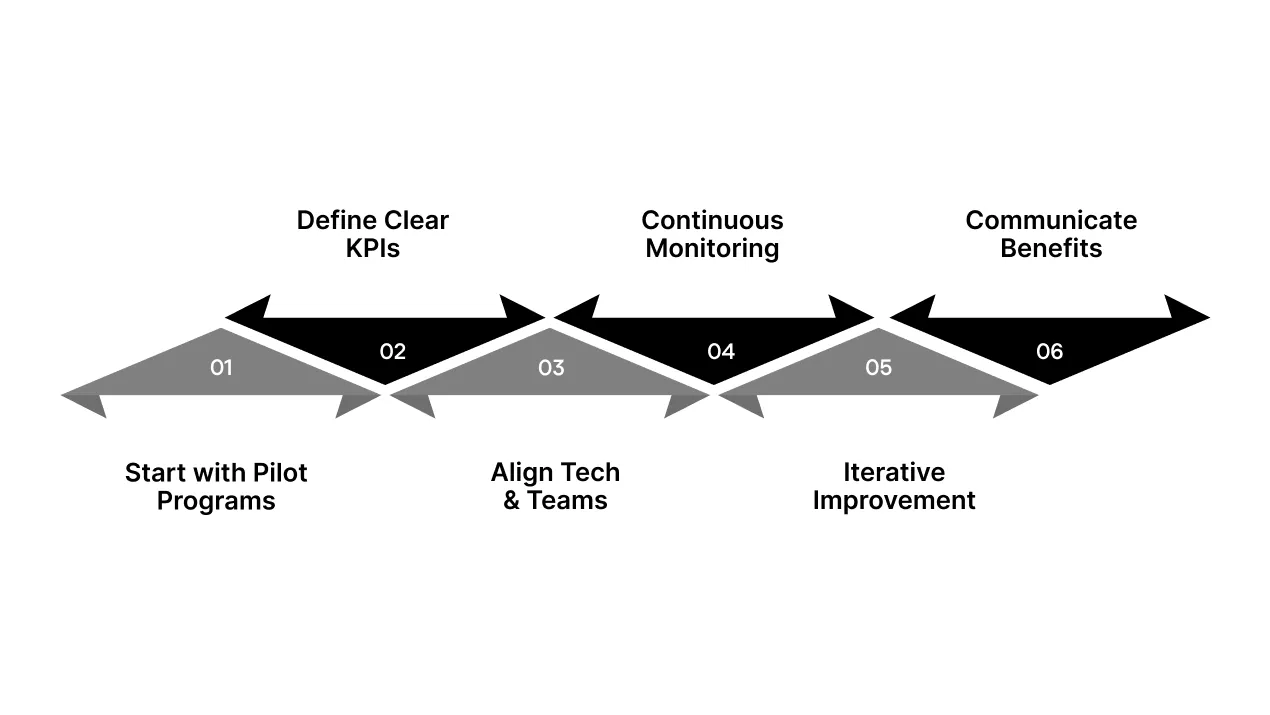
Successfully adopting AI and automation in retail execution requires a structured approach focused on in-store shelf performance. Following these best practices helps CPG brands maximize the accuracy of shelf data, ensure planogram compliance, and monitor promotions effectively.
- Start with Pilot Programs: Begin by testing AI in a small set of stores to monitor on-shelf stock levels and planogram adherence. Pilots allow brands to detect shelf gaps, identify recurring compliance issues, and refine processes before rolling out across all locations.
- Define Clear KPIs: Focus on measurable in-store execution metrics such as on-shelf availability (OSA), planogram compliance, and promotional implementation. Clear KPIs provide benchmarks for each store and enable teams to prioritize corrective actions where gaps in shelf coverage or promotion execution are most critical.
- Align Technology with Field Teams: Ensure sales and execution teams can easily interpret AI insights related to stock shortages, misaligned SKUs, and missing promotional displays. Proper training and workflow integration help teams act on the data quickly, correcting shelf gaps and ensuring products are placed according to planograms.
- Maintain Continuous Monitoring: Regularly review AI performance to track real-time on-shelf stock visibility and planogram compliance. Frequent monitoring helps brands respond to changes in shelf layouts, SKU rotations, or promotional displays, ensuring consistent execution across all stores.
- Encourage Iterative Improvement: Use feedback from field teams to fine-tune processes for better shelf compliance and promotion accuracy. Iterative adjustments based on observed shelf conditions improve planogram adherence and enhance the reliability of AI insights over time.
- Communicate Benefits Across Teams: Highlight how AI reduces manual shelf checks, identifies missing SKUs, and ensures promotions are executed correctly. Clear communication emphasizes the practical benefits for in-store execution, encouraging adoption, team buy-in, and a data-driven approach to retail execution.
How ParallelDots Helps CPG Brands Realize the Full Potential of AI-Driven Retail Execution?
ParallelDots empowers CPG brands to unlock the benefits of AI and automation in retail execution by delivering accurate, real-time shelf visibility that guides in-store decision-making.
Here’s how we can assist you:
- On-Shelf Stock Availability: ShelfWatch captures images of store shelves and identifies missing or low-stock SKUs instantly. Brands can respond quickly to stock gaps, ensuring products remain consistently available for shoppers and minimizing missed sales opportunities.
- Planogram Compliance: Misaligned or misplaced products are detected automatically against the predefined planogram. Field teams receive actionable insights, enabling fast corrections to maintain brand standards and optimize product placement across stores.
- Share of Shelf Tracking: Shelf visibility insights show the proportion of shelf space each SKU occupies, helping category and sales leaders ensure top-selling products maintain prominent placement. This data supports decisions that maximize visibility and influence in-store performance.
- Promotion Execution Compliance: The platform verifies that discounts, displays, and promotional offers are correctly executed across all stores. This ensures campaigns deliver the expected visibility and performance, while reducing manual audit efforts.
- Rapid SKU Model Training with Saarthi: With Saarthi, new or unknown SKUs are trained in AI models within 48 hours. This keeps shelf metrics accurate and up-to-date, enabling fast adaptation during product launches or promotional updates.
By combining these capabilities, ParallelDots provides scalable, actionable shelf data that allows CPG brands to maintain consistent execution, maximize visibility, and respond quickly to in-store issues, ensuring their products are always in the right place at the right time.
Request a demo today to see how ParallelDots can transform your retail execution strategy.
Frequently Asked Questions
1. How can companies evaluate the ROI of AI-driven retail execution tools?
Companies can measure ROI by tracking improvements in shelf compliance, sales lift, and execution accuracy. Comparing pre- and post-implementation performance, along with cost savings and increased revenue, helps quantify the financial impact of AI-driven tools.
2. What are the cybersecurity risks associated with AI in retail environments?
AI systems can be vulnerable to data breaches, model manipulation, and unauthorized access to sensitive customer or operational data. CPG brands must safeguard AI platforms with encryption, access controls, continuous monitoring, and regular security audits to mitigate cyber threats.
3. How do CPG brands manage job displacement risks due to automation?
Brands address displacement by reskilling and upskilling employees, redeploying staff to strategic roles, and improving human-AI collaboration. Transparent communication about automation plans and workforce planning helps maintain morale while leveraging AI for efficiency.
4. How can CPG brands ensure AI transparency and accountability in decision-making?
Brands should use explainable AI models, maintain audit trails, and clearly document algorithms and data sources. Regular reviews, bias checks, and compliance with regulatory guidelines ensure AI decisions are understandable, fair, and accountable.
5. What steps should brands take to balance automation with human oversight?
Brands can implement hybrid models where AI handles repetitive tasks while humans oversee exceptions and strategic decisions. Clear monitoring protocols, regular performance reviews, and feedback loops ensure automation complements human expertise without compromising quality or judgment.
6. How does AI support retail execution in physical stores for CPG brands?
AI supports retail execution by providing visual visibility into what is happening on the shelf inside physical retail stores. It helps CPG brands track on-shelf stock availability, planogram compliance, share of shelf, and promotional execution using shelf images captured in-store.
.png)
.png)