Share it with your network.


CPG brands are under constant pressure to stay visible, relevant, and profitable in a market that shifts faster than ever. With tighter margins, rising competition, and rapidly shifting consumer expectations, traditional ways of managing retail execution are no longer enough.
In fact, industry studies consistently show that out-of-stocks, poor shelf placement, and planogram non-compliance account for billions of dollars in lost sales each year. As a result, CPG leaders increasingly rely on artificial intelligence (AI) to make smarter, faster, and more data-driven decisions.
AI is emerging as the key enabler, helping teams understand what’s happening on the shelf in real time. From optimizing product availability to ensuring every SKU is perfectly placed on the shelf, AI is reshaping how CPG companies plan, execute, and measure their in-store performance.
A 2024 McKinsey survey revealed that 71% of CPG leaders have already adopted AI in at least one business function, with many using it specifically to improve in-store execution. It’s no longer just about keeping up with the market, but about building intelligent systems that improve shelf visibility, reduce execution errors, and strengthen brand presence.
A quick overview:
- AI Driving Smarter Retail Execution: The future of AI in retail is giving CPG brands real-time shelf visibility, helping them track stock, verify planogram compliance, and make informed in-store decisions.
- Core Technologies Powering AI: Image recognition, machine learning, and computer vision turn shelf images into actionable insights, while AI agents streamline audits and support sales teams.
- Trends Shaping the Future of AI in Retail: From AI-powered recommendations and intelligent assistants to dynamic pricing and improved in-store execution, AI is redefining how brands optimize product placement and promotions.
- Overcoming Challenges for AI Success: High-quality data, integration, and skilled teams are key to realizing the future of AI in retail, enabling proactive strategies, consistent brand visibility, and better in-store performance.
Why Does AI Matter in the CPG Industry?
AI has become the foundation for modern CPG success. It’s helping brands not only keep pace with rapidly changing market conditions but also anticipate challenges and respond proactively. Here’s why it matters:
- Improving in-store visibility and shelf compliance: AI enables CPG brands to quickly identify stockouts, misplaced products, or planogram deviations across hundreds or thousands of stores. By providing real-time insights, teams can take immediate action to correct on-shelf issues and maintain a consistent brand presence.
- Enhancing Promotion and Pricing Strategies: Machine learning models evaluate historical performance and market trends to recommend optimal price points and promotional mixes. CPG leaders can maximize ROI while staying competitive across regions and channels.
- Strengthening retail execution: With AI-powered image recognition, brands gain real-time visibility into on-shelf availability, share of shelf, and planogram compliance, helping ensure every store execution aligns with strategy.
- Improving decision-making: By analyzing shelf-level data,s uch as images of product placement, stock availability, and planogram adherence, AI delivers actionable insights that help teams prioritize corrective actions, maintain on-shelf presence, and make informed decisions about in-store execution.
Key Components of AI in the CPG Industry
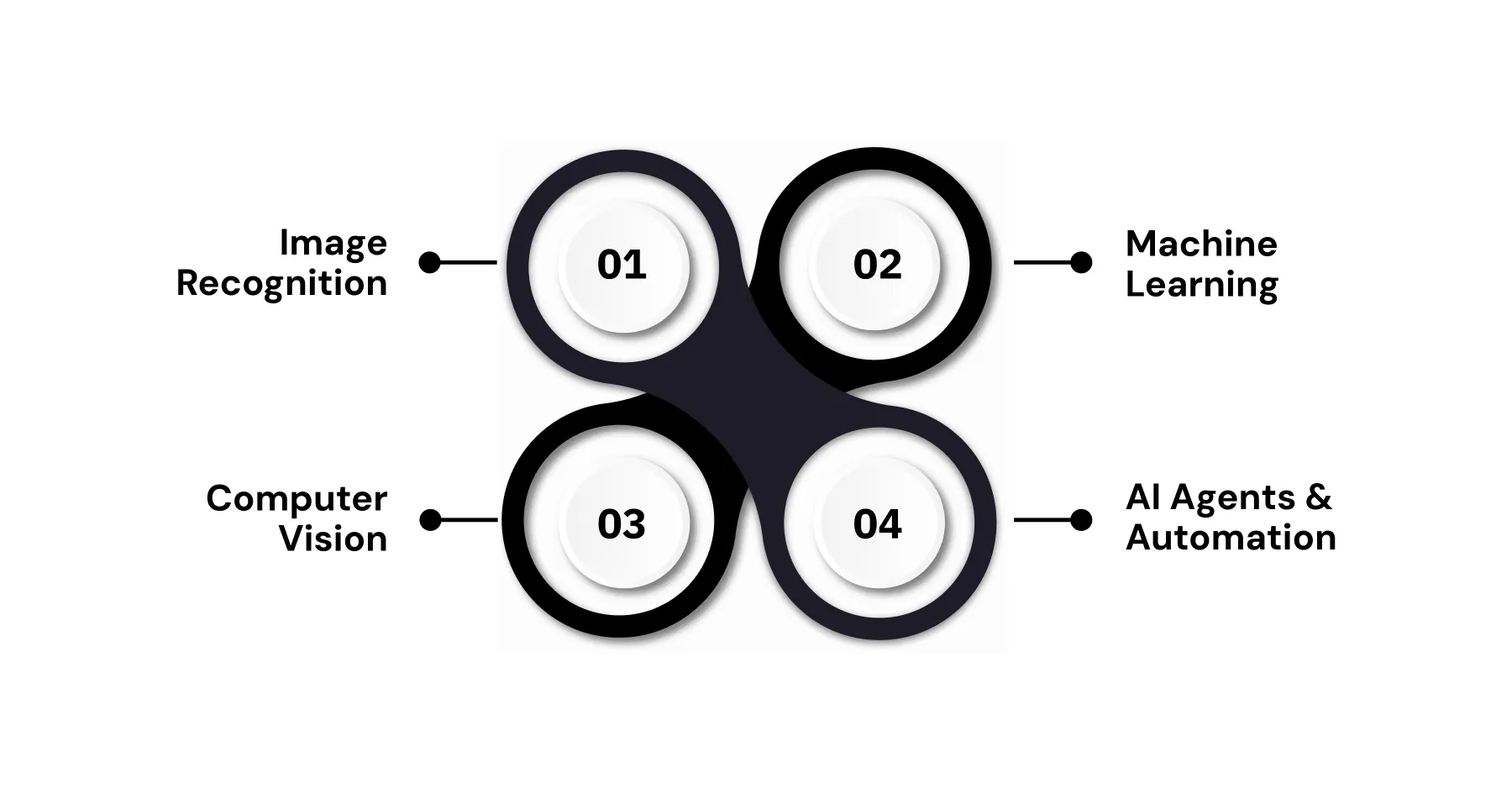
AI’s role in CPG extends far beyond automation. It brings intelligence to every aspect of retail execution through a few core components:
- Image Recognition (IR): The foundation of visual data collection. IR captures live images of store shelves and detects product placement, stock levels, and planogram compliance.
- Machine Learning (ML): The analytical backbone that processes visual data to identify trends, anomalies, and insights at scale.
- Computer Vision (CV): This technology helps systems interpret shelf images, identify SKUs, and calculate the share of shelf with high accuracy.
- AI Agents and Automation: These streamline repetitive audit tasks, freeing up human resources to focus on strategy and relationship-building with consumers.
Each of these components contributes to creating a “smart shelf” ecosystem where brands can see, analyze, and act instantly. By converting raw shelf images into actionable data, CPG teams can directly monitor on
-shelf availability, track share of shelf, and ensure planogram compliance, giving them measurable insights to improve in-store performance continuously.
7 Key AI Trends Redefining the Future of CPG
AI is no longer experimental in the CPG industry; it’s becoming the foundation of how brands execute, measure, and adapt. Below are key trends shaping this transformation.
1. AI-Powered Recommendations
AI-powered systems now allow CPG brands to make decisions based on data rather than assumptions. By analyzing shelf performance, share of shelf, and category trends, brands can improve visibility and ensure consistent product presence.
- Shelf Placement Guidance: AI interprets historical shelf data and sales trends to highlight optimal product positions.
- Promotion Compliance: Insights from visual data help verify that promotions are implemented correctly across stores.
- Stock Prioritization: Brands can identify which SKUs need immediate attention to prevent out-of-stock situations.
These insights improve daily execution by giving field teams clear, actionable guidance on what needs attention in each store.
2. Shopping Assistants and AI Agents
AI agents are becoming essential partners for CPG field teams, helping sales reps and merchandisers operate more efficiently in-store. Rather than replacing human roles, they act as intelligent assistants that analyze shelf data and provide actionable insights in seconds.
- Real-Time Shelf Insights: AI agents instantly detect out-of-stock or misplaced products, enabling field reps to address issues immediately instead of waiting for traditional manual audits.
- Task Prioritization: These assistants highlight which stores or SKUs require urgent attention, allowing merchandisers to focus their time where it matters most.
- Error Reduction: By automating compliance checks, AI agents reduce human oversight errors and ensure greater accuracy in shelf reporting.
By integrating AI agents into daily field workflows, CPG companies equip their teams with reliable tools to resolve in-store execution challenges quickly, maintain planogram compliance, and keep shelves optimally stocked.
3. Dynamic Pricing and Promotion Optimization
AI helps CPG brands monitor in-store promotions and pricing displays to ensure accurate execution and maintain planogram compliance.
- Promotion Compliance Tracking: AI evaluates whether promotions are displayed correctly on the shelf and if promotional signage is present, helping teams confirm that campaigns are implemented as intended.
- Competitor Benchmarking: Image recognition identifies discrepancies in product placement or competitive brand adjacency that could affect share of shelf, ensuring CPG brands maintain visibility in stores.
- Scenario Verification: Predictive models can simulate different shelving or promotional layouts to check compliance and visibility outcomes before rollout, ensuring that execution aligns with brand guidelines.
By focusing on visibility and compliance, AI enables CPG teams to track promotions accurately and maintain consistent shelf presence without making pricing decisions or managing budgets.
4. Enhanced In-Store Experiences
AI tools are redefining how CPG brands maintain their in-store presence by ensuring that every product is available, correctly placed, and visually appealing.
- Visual Compliance Tracking: AI validates whether each product is positioned according to planograms, identifying non-compliant shelves instantly.
- On-Shelf Availability Monitoring: Real-time image recognition detects stockouts, ensuring prompt restocking to avoid missed sales opportunities.
- Display Effectiveness Analysis: AI compares the visibility and placement of branded displays to competitor ones for better retail execution planning.
These insights help CPGs improve their in-store execution precision, leading to a smoother and more reliable brand experience.
5. Fraud Prevention and Security Improvements
AI helps safeguard CPG operations by identifying anomalies in retail execution, sales reporting, or promotional performance data that could signal potential fraud or errors.
- Verification of Field Reports: AI cross-verifies manual inputs with real-time visual data to ensure the accuracy of shelf audits.
- Data Integrity: Advanced image recognition safeguards against manipulated images or duplicate submissions from field teams.
- Process Transparency: Automated audit trails provide a clear record of compliance and changes, ensuring accountability.
With AI-driven verification, CPGs can rely on trustworthy data, building greater confidence in decision-making and performance reporting.
6. Generative AI for Internal Operations
Generative AI is helping CPG marketing teams streamline internal workflows by creating product descriptions, promotional visuals, and campaign concepts faster. However, it supports internal brand operations rather than direct consumer targeting.
- Marketing Content Creation: Generative models help produce marketing copy or design concepts aligned with brand guidelines.
- Campaign Adaptation: AI assists in localizing campaigns for different regions or store formats using existing brand data.
- Knowledge Base Support: Teams use generative AI to summarize reports, spot trends, or create training content for field teams.
When used responsibly, generative AI enhances communication and speed across the retail execution ecosystem without replacing human decision-making.
7. Data-Driven Decision Making and Strategic Planning
Data is the backbone of every AI initiative in CPG. By consolidating visual shelf data, sales reports, and market intelligence, AI empowers brands to make timely and strategic choices.
- Performance Analytics: AI identifies patterns across shelf data, promotions, and sales to pinpoint what drives results.
- Predictive Insights: Algorithms forecast where compliance issues or out-of-stock events are most likely to occur.
- Strategic Alignment: Data visualization tools make it easier for executives to align teams around real-time insights.
By embedding AI into their decision-making processes, CPG brands can move from reactive corrections to proactive retail execution strategies.
Challenges CPG Brands Must Overcome to Realize AI’s Full Potential
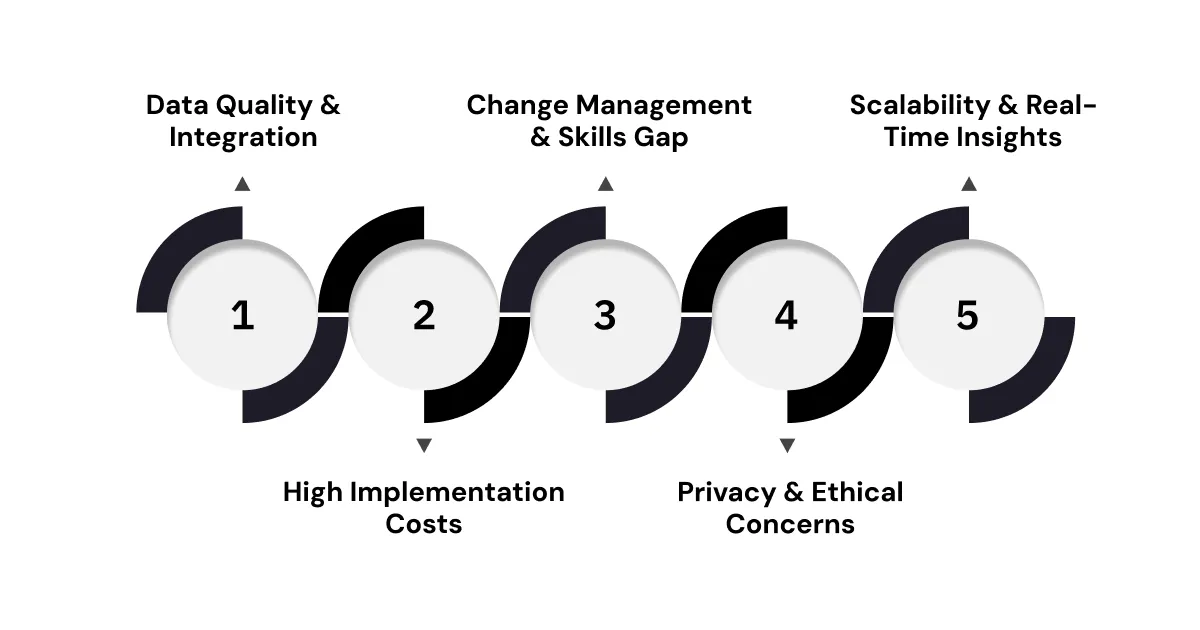
While AI offers transformative opportunities for CPG companies, several barriers still stand in the way of large-scale adoption.
Here are the key obstacles that CPG companies must address:
- Data Quality and Integration: Many CPG brands still operate with fragmented or incomplete in-store execution data. Without unified, high-quality shelf and display-level insights, AI models can’t deliver reliable outputs.
- High Implementation Costs: Building AI systems and integrating them into existing CPG workflows requires a significant investment in technology, infrastructure, and skilled professionals. Smaller brands often struggle to justify the upfront costs.
- Change Management and Skills Gap: AI adoption demands new skill sets across teams. Many CPG sales and marketing professionals find it challenging to interpret AI outputs or adapt existing workflows to data-driven systems.
- Privacy and Ethical Concerns: AI systems must comply with strict data privacy regulations. Ensuring transparency in how data is collected and used is essential for maintaining trust with partners and consumers.
- Scalability and Real-Time Insights: Deploying AI at scale across thousands of stores and SKUs requires robust systems capable of real-time shelf analysis. Maintaining consistency across such deployments remains a major technical and operational challenge.
Overcoming these challenges requires a focused approach that balances technology adoption with data integrity, employee training, and strong collaboration across retail networks, ensuring CPG brands can minimize lost sales, close compliance gaps, and improve execution efficiency.
How ParallelDots Is Enabling the AI-Driven Future of CPG?
As AI continues to redefine the CPG industry, real success depends on how accurately brands can interpret what’s happening at the shelf. ParallelDots bridges this gap by providing AI-powered visual intelligence that helps CPGs improve retail execution with confidence and precision.
Here’s how we can support you:
- Real-Time On-Shelf Stock Visibility: By detecting stockouts directly from shelf images, CPGs gain immediate visibility into missing or misplaced SKUs. This real-time insight enables faster replenishment decisions and reduces lost sales opportunities caused by empty shelves.
- Share of Shelf Tracking: The platform quantifies how much space each brand or SKU occupies on the shelf compared to competitors. This metric helps sales and trade marketing teams ensure brands maintain fair share and optimal visibility across stores.
- Planogram Compliance Monitoring: Instead of relying on manual checks, ParallelDots automates planogram verification using AI. It compares the actual shelf display with the intended layout, flagging deviations instantly so CPG reps can take corrective action during store visits.
- Promotion Execution Insights: The solution detects whether promotional materials, displays, or secondary placements are implemented as planned. This helps CPG teams ensure that marketing investments translate into in-store visibility and consumer impact.
- Data Integration for Smarter Decision-Making: ParallelDots integrates its visual shelf data into existing dashboards or BI systems, allowing category managers and sales teams to align shelf-level insights with their broader retail execution strategies. The result is a unified, data-backed approach to in-store excellence.
- Scalable, AI-Driven Retail Execution: With deep learning models trained on millions of CPG shelf images, ParallelDots delivers a scalable, consistent solution across global markets. This enables brands to maintain retail execution quality whether auditing a few stores or thousands worldwide.
ParallelDots enables brands to stay proactive, competitive, and future-ready in an evolving market. See how ParallelDots can transform your retail execution strategy, request a demo today.
Frequently Asked Questions
1. What are the key AI technologies driving innovation in CPG companies today?
Machine learning, computer vision, and natural language processing are the top AI technologies driving innovation in CPG. They help brands automate shelf monitoring, improve planogram compliance, and optimize in-store visibility through real-time insights.
2. How can small and mid-sized CPG enterprises adopt AI cost-effectively?
Smaller CPG enterprises can adopt AI affordably by using cloud-based tools, partnering with AI solution providers, and focusing on scalable retail execution applications such as image recognition audits or share-of-shelf analysis.
3. What types of consumer data are essential for AI-driven decision-making in CPG?
Key data types include in-store shelf images, product display data, and promotion compliance records. These insights enable AI systems to help sales and marketing teams track retail execution performance and drive execution accuracy.
4. How is AI transforming in-store retail execution for CPG brands?
AI improves in-store shelf visibility by detecting misplaced products, identifying stockouts, and verifying that promotions are displayed correctly. This enables CPG brands to maintain planogram compliance, ensure on-shelf availability, and strengthen their presence across stores, ultimately supporting more effective retail execution.
5. How will generative AI influence product design and marketing content creation?
Generative AI enables faster POSM (Point of Sale Material) design, communication templates, and training content for field teams. It allows CPG brands to simulate shelf layouts and test campaign visuals virtually, accelerating in-store innovation while reducing creative costs.
.png)
.png)