CPG-Retail

CPG In-Store Analytics Trends 2025: How Computer Vision is Reshaping Shelf Execution?

Ankit Singh
December 9, 2025
##
mins read
Ready to get Started?
request Demo

In 2025, CPG brands continue to face challenges in ensuring that their products are correctly placed, fully stocked, and compliant with planograms in physical stores. Traditional manual audits and sample-based data collection no longer deliver the speed or accuracy needed to compete in a dynamic retail environment.

That’s where AI, particularly Computer Vision, comes into play. The adoption of AI by CPGs is accelerating, with the market expected to reach around USD 62.64 billion by 2034, growing at a CAGR of 18.14%

By turning every shelf image into actionable data, CPG teams can now see exactly what’s happening in stores, every single day. These insights are enabling faster decisions, more accurate reporting, and better collaboration between sales, category, and trade marketing teams.

At a Glance:

  • Real-Time On-Shelf Availability Monitoring: AI-driven systems provide instant visibility into stock levels, misplaced SKUs, and planogram deviations, enabling real-time retail execution and faster, more accurate in-store decisions.
  • Predictive Planogram Compliance: AI detects deviations and forecasts potential non-compliance, allowing teams to act proactively before issues escalate.
  • Granular Share of Shelf Tracking: Brands get precise SKU-level shelf data to optimise placement and make smarter execution choices.
  • AI-Driven Promotion Monitoring: AI tracks promotional displays to ensure correct implementation and consistent visibility during campaigns.

Why AI in In-Store Execution Matters for CPG Brands?

 AI has become an operational backbone for CPG brands aiming to enhance in-store execution. It gives brands the visibility, accuracy, and speed needed to manage thousands of stores.

With AI-powered computer vision, CPG teams can automate many aspects of in-store retail execution. It identifies stock gaps, detects misplaced SKUs, and flags deviations from planograms in real time. By turning shelf images into actionable insights, it enables field teams to address issues quickly and efficiently, reducing reliance on manual audits.

Here’s why it matters:

  • Drives Planogram Compliance: Instead of relying on manual checks, AI verifies whether products are placed according to planograms. This ensures consistent execution across all stores and regions.
  • Supports Data-Driven Decisions: Computer vision transforms shelf images into structured, actionable data. This allows leaders to evaluate display performance, monitor promotions, and track compliance trends across stores.
  • Improves Execution Efficiency: AI reduces the time sales reps spend on manual audits. Faster insights give more time for execution and building relationships at the store level.

In short, AI doesn’t replace human expertise. It helps CPG brands move from reactive audits to proactive, data-driven in-store execution.

Key Trends in 2025: How Computer Vision Is Reshaping In-Store Execution

As AI continues to evolve, CPG companies are using computer vision to get clearer, faster, and more reliable views of store shelves. In 2025, the focus has shifted from just automating audits to making shelf data a central part of everyday store decisions.

Let’s explore the key trends driving this change.

1. Real-Time Shelf Visibility Becomes the New Standard

Computer vision has made it possible for CPG teams to see exactly what’s happening on the shelf, in real time. This instant visibility allows brands to identify stockouts, misplaced SKUs, and compliance issues the moment they occur.

  • Instant Shelf Data: Computer vision systems capture shelf images and convert them into high-accuracy data, often exceeding a 95 percent identification rate. This helps CPG teams spot stockouts or misplaced products within minutes instead of waiting for periodic audits or manual updates.
  • Data Consistency Across Markets: Automating shelf checks gives brands consistent visibility across stores and regions, reducing discrepancies from manual reporting.
  • Improved Decision Timing: Sales and marketing teams can act faster on replenishment or promotional changes, keeping products visible when demand peaks.

In 2025, this shift from periodic audits to real-time shelf intelligence helps CPGs maintain a clear view of every store.

2. Planogram Compliance Monitoring Goes Predictive

Planogram compliance is no longer about post-audit correction; it’s about proactive validation. AI now not only detects non-compliance but also predicts where and when it might occur next.

  • Automated Image Recognition: Computer Vision identifies deviations from approved layouts instantly, flagging misplaced products or missing SKUs without manual input.
  • Predictive Alerts: Historical shelf data helps forecast compliance risks in certain stores or regions, allowing teams to intervene before execution gaps widen.
  • Faster Execution Feedback: Brand teams receive automated compliance reports, helping them verify promotions and shelf layouts within hours of store visits.

This change makes compliance tracking ongoing, predictive, and much less dependent on manual checks.

3. Share of Shelf Tracking Becomes Granular

Tracking a brand’s “share of shelf” has always been key to understanding visibility. In 2025, CPGs are using Computer Vision to quantify this metric with near-perfect accuracy, helping them assess how their products compete at the point of sale.

  • SKU-Level Shelf Measurement: Computer vision tools accurately measure the shelf space each SKU occupies, giving CPGs detailed visibility
  • Dynamic Benchmarking: Continuous tracking identifies underperforming regions, helping local sales teams negotiate better placement or visibility.
  • Execution-Driven Adjustments: Insights into shelf share drive more informed field decisions, from rearranging SKUs to optimizing in-store promotions.

This detailed view of shelf share helps brands make informed decisions on promotions and product placement..

4. AI-Driven Promotion Tracking Enhances Campaign Accuracy

Monitoring promotional displays across thousands of stores is challenging. In 2025, CPGs will use AI and computer vision to check if campaign materials are correctly implemented and remain active throughout the promotion.

  • Display Recognition: AI automatically detects promotional elements such as standees, shelf talkers, and product bundles, verifying if campaigns match approved guidelines.
  • Duration Monitoring: Instead of one-time checks, computer vision tracks display longevity, showing whether materials stayed up during the promotion.
  • ROI Validation: Accurate execution data helps marketing teams evaluate how well in-store promotions were carried out.

This helps CPGs bridge the gap between trade marketing plans and actual in-store outcomes.

5. Seamless Field Team Integration for Faster Execution

Integrating computer vision data into field team workflows makes in-store reporting faster and more reliable. Mobile-friendly AI tools let sales reps capture shelf photos and get instant performance feedback.

  • Simplified Photo Audits: Field teams use smartphone apps to capture shelf images, which AI analyses within seconds, saving time on manual checklists.
  • Unified Dashboards: Data from multiple store visits flows into a single platform, giving brand managers an up-to-date view of in-store execution.
  • Training & Accountability: Automated feedback loops help teams identify recurring issues and refine execution strategies faster than before.

This smooth field integration helps CPGs link data capture, reporting, and action more efficiently.

6. Cloud-Based Analytics Simplify Global Rollouts

Global CPGs work across markets with different execution standards. In 2025, cloud-based computer vision platforms will let brands standardise and scale in-store monitoring worldwide.

  • Centralised Data Access: Shelf data from different geographies syncs to a unified cloud dashboard, ensuring global visibility for brand leaders.
  • Localised Adaptation: AI systems adjust for store formats, lighting, and regional planogram variations, ensuring accuracy across diverse markets.
  • Faster Global Reporting: Aggregated shelf data helps teams identify regional gaps quickly. For example, a global beverage brand can compare compliance levels across the US, Mexico, and Brazil and spot where stockouts or misplaced facings are more frequent, without relying on manual reporting from each market.

This capability allows large CPGs to maintain consistent in-store execution standards worldwide, without overburdening local teams.

7. Integration with Data Platforms Fuels Decision Intelligence

In 2025, Computer Vision data feeds directly into CPG data systems, from BI dashboards to in-store execution tools. This helps decision-makers link shelf visibility with broader commercial goals.

  • API-Ready Architecture: Modern platforms easily integrate Computer Vision outputs with sales, ERP, or analytics systems for unified insights.
  • Custom KPI Dashboards: CPG teams can view metrics like on-shelf availability and compliance in real-time, tailored to their specific workflows.
  • Enhanced Forecast Accuracy: When combined with sales data, shelf visibility trends help brands identify areas where product placement or promotional attention is needed.

This interconnected data setup ensures shelf insights guide clear, data-backed decisions.

8. AI-Assisted Auditing Reduces Human Error

Manual auditing remains a challenge for many CPGs due to the scale of operations. In 2025, AI-assisted audits are helping standardise shelf evaluations and eliminate inconsistencies.

  • Automated Validation: Computer Vision cross-verifies shelf photos with defined brand standards, reducing subjective errors in manual audits.
  • Objective Scoring: Each shelf gets a data-backed compliance score, improving reliability and transparency in performance reporting.
  • Scalable Audits: Brands can expand their auditing coverage across stores without increasing manpower or time investment.

This automation ensures consistent in-store evaluation standards, regardless of geography or team size.

In short, computer vision isn’t just improving data collection; it’s changing how CPG brands measure and manage in-store execution.

Technologies Powering AI in In-Store Execution

AI in in-store execution isn’t limited to one tool or platform; it’s an ecosystem of connected technologies that help CPG brands see what’s happening on the shelf, interpret it in real time, and act faster.

Here’s a look at the key technologies shaping this transformation in 2025.

1. Image Recognition and Deep Learning

Image recognition forms the core of AI-powered in-store execution. Deep learning models analyze millions of shelf images to identify SKUs, product placement, and brand presence.

 This allows CPG brands to automatically detect missing or misplaced items, ensuring planogram compliance and accurate share of shelf tracking. The more images the system processes, the smarter and more accurate it becomes over time.

2. Edge AI and Cloud Integration

Edge AI processes images directly on mobile devices or local systems, giving instant feedback to field teams during store visits. Cloud integration stores all data securely and makes it accessible across teams. 

CPG brands benefit from real-time insights at the store level and can scale analytics across their retail network.

3. Automated AI Model Training

With frequent product launches and packaging changes, AI models need to be updated quickly. Platforms like ParallelDots’ Saarthi train AI models on new SKUs within 48 hours, achieving over 95% accuracy. 

This rapid onboarding allows brands to track new products immediately without delaying shelf monitoring or audits.

4. Real-Time Data Visualization

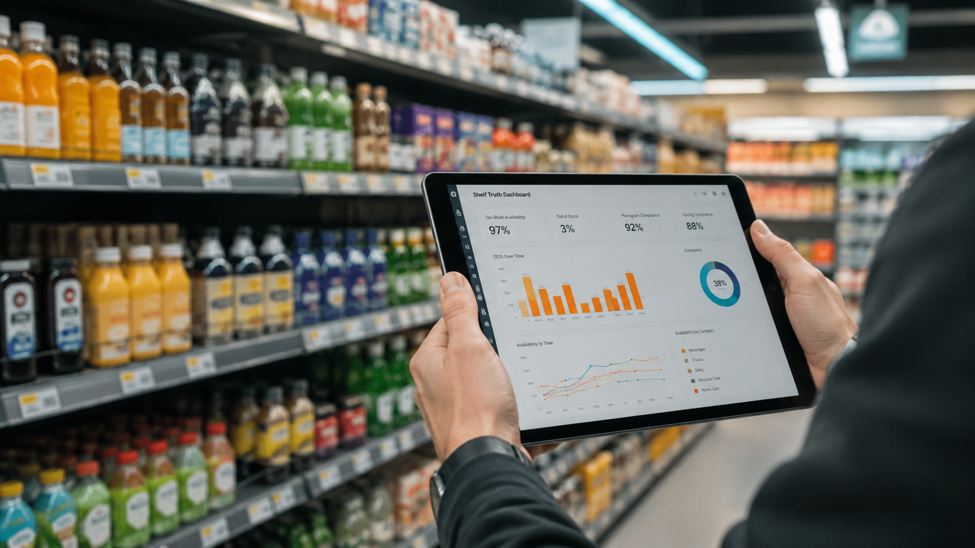
AI-powered dashboards simplify complex shelf data into easy-to-read visual reports. Brands can monitor KPIs like on-shelf stock availability, share of shelf, and planogram compliance in real time. 

These visual insights help sales and marketing leaders act quickly and maintain consistent execution across stores.

5. API-Based System Integration

API-based integration allows visual shelf data to flow directly into existing CPG systems like CRM, BI, or field management tools. This keeps teams working with consistent, actionable data without switching platforms. 

Integrating AI insights into familiar workflows speeds adoption and improves decision-making.

Together, these technologies form the foundation of a smarter, faster, and more transparent in-store execution ecosystem.

Challenges for Adopting AI in CPG In-Store Execution

While the benefits of AI-driven shelf monitoring are clear, implementation can be challenging. Knowing these barriers helps CPG brands plan better and adopt AI in a way that delivers sustained growth.

  • Data Integration with Legacy Systems: Many CPG companies operate on legacy ERP and CRM systems that weren’t designed to handle visual data. Integrating AI-driven shelf insights into these systems can be complex, often requiring technical upgrades and API-based data pipelines.
  • Ensuring Accuracy at Scale: Accuracy depends on how well the AI model handles the everyday variability inside physical stores. Changes in lighting, shelf design, and packaging formats can affect recognition quality. The most effective mitigation strategy is continuous model refinement using updated shelf images across regions, formats, and store conditions.
  • Change Management and Adoption: Field teams need clear, simple processes when capturing shelf images and reviewing the results. If the workflow feels complicated or inconsistent, adoption drops quickly. Short, focused training sessions and easy-to-follow steps help teams use AI tools with confidence.
  • Data Privacy and Compliance: Since AI involves capturing photos of retail shelves, responsible deployment is essential. Platforms must only collect product-facing data, not customer details. This includes using image anonymization techniques that automatically blur or exclude any incidental human presence, ensuring that no personal or identifiable information is captured or stored.
  • Cost and ROI Considerations: AI adoption involves upfront investment in tools, training, and infrastructure. Industry reports show that stockouts cost CPG brands 1 trillion in lost sales each year. While the long-term benefits in visibility and compliance are clear, brands often need to justify short-term costs.

How ParallelDots Can Accelerate Your In-Store Execution?

ParallelDots empowers CPG brands to track every shelf accurately and act on insights in real time. Its AI-powered solutions help field teams and sales leaders achieve consistent execution across stores.

Here’s how we can help you:

  • On-Shelf Stock Availability: ParallelDots provides real-time visibility into which SKUs are present or missing on the shelf. Field teams can instantly identify stockouts during store visits and take corrective actions on the spot. 
  • Planogram Compliance: ParallelDots monitors every shelf image to detect deviations from the set planogram, flagging misplacements or missing facings. Sales and category leaders receive real-time alerts, enabling quick interventions to maintain brand consistency and optimize shelf layouts without manual audits.
  • Share of Shelf Tracking: ParallelDots quantifies the share of shelf for all SKUs, allowing teams to identify where their brand is underrepresented compared to competitors. This insight helps prioritize corrective actions, improve visibility, and ensure premium shelf placement across multiple outlets.
  • Promotion Implementation Compliance: ParallelDots ensures that promotional displays, pricing signage, and offers are executed correctly in every store. By analyzing shelf images for promotional compliance, the platform highlights missed or incorrectly placed promotions.
  • Rapid SKU Onboarding with Saarthi: Saarthi accelerates AI model training for new SKUs, enabling detection within 48 hours with over 95% accuracy. This ensures that every new product or variant is monitored from day one, allowing brands to maintain perfect store execution and avoid delays in identifying compliance gaps.

With ParallelDots, CPG brands gain real-time, actionable shelf data to improve execution, maintain consistency, and make smarter decisions in every store.

Request a demo today to see how ShelfWatch can transform your in-store execution strategy.

Frequently Asked Questions

1. What types of data can computer vision systems capture to optimize in-store execution performance?

Computer vision systems capture shelf placement, planogram compliance, promotional displays, and product visibility patterns. This data helps CPG brands monitor in-store execution, identify gaps, and make informed decisions to enhance in-store execution performance.

2. What measurable ROI can CPG companies expect from computer vision solutions?

Computer vision helps CPG companies track shelf conditions with greater accuracy, which directly supports higher on-shelf stock availability, better planogram compliance, and more reliable promotional execution. The ROI comes from clearer visibility into what is happening on the shelf, allowing sales and field teams to correct issues faster and reduce missed sales caused by out-of-stock or misplaced products.

3. What are the best practices for CPG brands adopting computer vision as part of AI retail trends?

CPG brands should start by defining clear KPIs like on-shelf stock visibility and planogram compliance. Begin with pilot tests in selected stores, integrate AI insights into sales and trade workflows, and train teams on using the data. Continuously refine models, monitor results, and use examples like automated shelf audits and real-time promotion checks to ensure actionable insights.

4. How do partnerships between CPG brands and technology providers accelerate AI adoption?

Partnerships bring technical expertise, AI tools, and industry insights to CPG brands, enabling faster deployment and more accurate data-driven decisions. For example, a beverage company working with a Computer Vision provider can quickly identify out-of-stock SKUs across hundreds of stores, ensuring planogram compliance without relying on manual audits. Collaboration allows brands to focus on execution strategy while adopting AI solutions efficiently, reducing implementation risk and improving in-store visibility.

5. What skills and training are required for store teams to work with computer vision tools?

Store teams undergo hands-on training to use the AI dashboard effectively. They learn how to capture shelf images correctly, identify missing or misplaced SKUs, monitor planogram compliance, and spot promotion or pricing discrepancies in real time. Training also covers interpreting visual insights from the platform to make immediate in-store adjustments, ensuring accurate execution without disrupting store operations.
In 2025, CPG brands continue to face challenges in ensuring that their products are correctly placed, fully stocked, and compliant with planograms in physical stores. Traditional manual audits and sample-based data collection no longer deliver the speed or accuracy needed to compete in a dynamic retail environment.

That’s where AI, particularly Computer Vision, comes into play. The adoption of AI by CPGs is accelerating, with the market expected to reach around USD 62.64 billion by 2034, growing at a CAGR of 18.14%

By turning every shelf image into actionable data, CPG teams can now see exactly what’s happening in stores, every single day. These insights are enabling faster decisions, more accurate reporting, and better collaboration between sales, category, and trade marketing teams.

At a Glance:

  • Real-Time On-Shelf Availability Monitoring: AI-driven systems provide instant visibility into stock levels, misplaced SKUs, and planogram deviations, enabling real-time retail execution and faster, more accurate in-store decisions.
  • Predictive Planogram Compliance: AI detects deviations and forecasts potential non-compliance, allowing teams to act proactively before issues escalate.
  • Granular Share of Shelf Tracking: Brands get precise SKU-level shelf data to optimise placement and make smarter execution choices.
  • AI-Driven Promotion Monitoring: AI tracks promotional displays to ensure correct implementation and consistent visibility during campaigns.

Why AI in In-Store Execution Matters for CPG Brands?

 AI has become an operational backbone for CPG brands aiming to enhance in-store execution. It gives brands the visibility, accuracy, and speed needed to manage thousands of stores.

With AI-powered computer vision, CPG teams can automate many aspects of in-store retail execution. It identifies stock gaps, detects misplaced SKUs, and flags deviations from planograms in real time. By turning shelf images into actionable insights, it enables field teams to address issues quickly and efficiently, reducing reliance on manual audits.

Here’s why it matters:

  • Drives Planogram Compliance: Instead of relying on manual checks, AI verifies whether products are placed according to planograms. This ensures consistent execution across all stores and regions.
  • Supports Data-Driven Decisions: Computer vision transforms shelf images into structured, actionable data. This allows leaders to evaluate display performance, monitor promotions, and track compliance trends across stores.
  • Improves Execution Efficiency: AI reduces the time sales reps spend on manual audits. Faster insights give more time for execution and building relationships at the store level.

In short, AI doesn’t replace human expertise. It helps CPG brands move from reactive audits to proactive, data-driven in-store execution.

Key Trends in 2025: How Computer Vision Is Reshaping In-Store Execution

As AI continues to evolve, CPG companies are using computer vision to get clearer, faster, and more reliable views of store shelves. In 2025, the focus has shifted from just automating audits to making shelf data a central part of everyday store decisions.

Let’s explore the key trends driving this change.

1. Real-Time Shelf Visibility Becomes the New Standard

Computer vision has made it possible for CPG teams to see exactly what’s happening on the shelf, in real time. This instant visibility allows brands to identify stockouts, misplaced SKUs, and compliance issues the moment they occur.

  • Instant Shelf Data: Computer vision systems capture shelf images and convert them into high-accuracy data, often exceeding a 95 percent identification rate. This helps CPG teams spot stockouts or misplaced products within minutes instead of waiting for periodic audits or manual updates.
  • Data Consistency Across Markets: Automating shelf checks gives brands consistent visibility across stores and regions, reducing discrepancies from manual reporting.
  • Improved Decision Timing: Sales and marketing teams can act faster on replenishment or promotional changes, keeping products visible when demand peaks.

In 2025, this shift from periodic audits to real-time shelf intelligence helps CPGs maintain a clear view of every store.

2. Planogram Compliance Monitoring Goes Predictive

Planogram compliance is no longer about post-audit correction; it’s about proactive validation. AI now not only detects non-compliance but also predicts where and when it might occur next.

  • Automated Image Recognition: Computer Vision identifies deviations from approved layouts instantly, flagging misplaced products or missing SKUs without manual input.
  • Predictive Alerts: Historical shelf data helps forecast compliance risks in certain stores or regions, allowing teams to intervene before execution gaps widen.
  • Faster Execution Feedback: Brand teams receive automated compliance reports, helping them verify promotions and shelf layouts within hours of store visits.

This change makes compliance tracking ongoing, predictive, and much less dependent on manual checks.

3. Share of Shelf Tracking Becomes Granular

Tracking a brand’s “share of shelf” has always been key to understanding visibility. In 2025, CPGs are using Computer Vision to quantify this metric with near-perfect accuracy, helping them assess how their products compete at the point of sale.

  • SKU-Level Shelf Measurement: Computer vision tools accurately measure the shelf space each SKU occupies, giving CPGs detailed visibility
  • Dynamic Benchmarking: Continuous tracking identifies underperforming regions, helping local sales teams negotiate better placement or visibility.
  • Execution-Driven Adjustments: Insights into shelf share drive more informed field decisions, from rearranging SKUs to optimizing in-store promotions.

This detailed view of shelf share helps brands make informed decisions on promotions and product placement..

4. AI-Driven Promotion Tracking Enhances Campaign Accuracy

Monitoring promotional displays across thousands of stores is challenging. In 2025, CPGs will use AI and computer vision to check if campaign materials are correctly implemented and remain active throughout the promotion.

  • Display Recognition: AI automatically detects promotional elements such as standees, shelf talkers, and product bundles, verifying if campaigns match approved guidelines.
  • Duration Monitoring: Instead of one-time checks, computer vision tracks display longevity, showing whether materials stayed up during the promotion.
  • ROI Validation: Accurate execution data helps marketing teams evaluate how well in-store promotions were carried out.

This helps CPGs bridge the gap between trade marketing plans and actual in-store outcomes.

5. Seamless Field Team Integration for Faster Execution

Integrating computer vision data into field team workflows makes in-store reporting faster and more reliable. Mobile-friendly AI tools let sales reps capture shelf photos and get instant performance feedback.

  • Simplified Photo Audits: Field teams use smartphone apps to capture shelf images, which AI analyses within seconds, saving time on manual checklists.
  • Unified Dashboards: Data from multiple store visits flows into a single platform, giving brand managers an up-to-date view of in-store execution.
  • Training & Accountability: Automated feedback loops help teams identify recurring issues and refine execution strategies faster than before.

This smooth field integration helps CPGs link data capture, reporting, and action more efficiently.

6. Cloud-Based Analytics Simplify Global Rollouts

Global CPGs work across markets with different execution standards. In 2025, cloud-based computer vision platforms will let brands standardise and scale in-store monitoring worldwide.

  • Centralised Data Access: Shelf data from different geographies syncs to a unified cloud dashboard, ensuring global visibility for brand leaders.
  • Localised Adaptation: AI systems adjust for store formats, lighting, and regional planogram variations, ensuring accuracy across diverse markets.
  • Faster Global Reporting: Aggregated shelf data helps teams identify regional gaps quickly. For example, a global beverage brand can compare compliance levels across the US, Mexico, and Brazil and spot where stockouts or misplaced facings are more frequent, without relying on manual reporting from each market.

This capability allows large CPGs to maintain consistent in-store execution standards worldwide, without overburdening local teams.

7. Integration with Data Platforms Fuels Decision Intelligence

In 2025, Computer Vision data feeds directly into CPG data systems, from BI dashboards to in-store execution tools. This helps decision-makers link shelf visibility with broader commercial goals.

  • API-Ready Architecture: Modern platforms easily integrate Computer Vision outputs with sales, ERP, or analytics systems for unified insights.
  • Custom KPI Dashboards: CPG teams can view metrics like on-shelf availability and compliance in real-time, tailored to their specific workflows.
  • Enhanced Forecast Accuracy: When combined with sales data, shelf visibility trends help brands identify areas where product placement or promotional attention is needed.

This interconnected data setup ensures shelf insights guide clear, data-backed decisions.

8. AI-Assisted Auditing Reduces Human Error

Manual auditing remains a challenge for many CPGs due to the scale of operations. In 2025, AI-assisted audits are helping standardise shelf evaluations and eliminate inconsistencies.

  • Automated Validation: Computer Vision cross-verifies shelf photos with defined brand standards, reducing subjective errors in manual audits.
  • Objective Scoring: Each shelf gets a data-backed compliance score, improving reliability and transparency in performance reporting.
  • Scalable Audits: Brands can expand their auditing coverage across stores without increasing manpower or time investment.

This automation ensures consistent in-store evaluation standards, regardless of geography or team size.

In short, computer vision isn’t just improving data collection; it’s changing how CPG brands measure and manage in-store execution.

Technologies Powering AI in In-Store Execution

AI in in-store execution isn’t limited to one tool or platform; it’s an ecosystem of connected technologies that help CPG brands see what’s happening on the shelf, interpret it in real time, and act faster.

Here’s a look at the key technologies shaping this transformation in 2025.

1. Image Recognition and Deep Learning

Image recognition forms the core of AI-powered in-store execution. Deep learning models analyze millions of shelf images to identify SKUs, product placement, and brand presence.

 This allows CPG brands to automatically detect missing or misplaced items, ensuring planogram compliance and accurate share of shelf tracking. The more images the system processes, the smarter and more accurate it becomes over time.

2. Edge AI and Cloud Integration

Edge AI processes images directly on mobile devices or local systems, giving instant feedback to field teams during store visits. Cloud integration stores all data securely and makes it accessible across teams. 

CPG brands benefit from real-time insights at the store level and can scale analytics across their retail network.

3. Automated AI Model Training

With frequent product launches and packaging changes, AI models need to be updated quickly. Platforms like ParallelDots’ Saarthi train AI models on new SKUs within 48 hours, achieving over 95% accuracy. 

This rapid onboarding allows brands to track new products immediately without delaying shelf monitoring or audits.

4. Real-Time Data Visualization

AI-powered dashboards simplify complex shelf data into easy-to-read visual reports. Brands can monitor KPIs like on-shelf stock availability, share of shelf, and planogram compliance in real time. 

These visual insights help sales and marketing leaders act quickly and maintain consistent execution across stores.

5. API-Based System Integration

API-based integration allows visual shelf data to flow directly into existing CPG systems like CRM, BI, or field management tools. This keeps teams working with consistent, actionable data without switching platforms. 

Integrating AI insights into familiar workflows speeds adoption and improves decision-making.

Together, these technologies form the foundation of a smarter, faster, and more transparent in-store execution ecosystem.

Challenges for Adopting AI in CPG In-Store Execution

While the benefits of AI-driven shelf monitoring are clear, implementation can be challenging. Knowing these barriers helps CPG brands plan better and adopt AI in a way that delivers sustained growth.

  • Data Integration with Legacy Systems: Many CPG companies operate on legacy ERP and CRM systems that weren’t designed to handle visual data. Integrating AI-driven shelf insights into these systems can be complex, often requiring technical upgrades and API-based data pipelines.
  • Ensuring Accuracy at Scale: Accuracy depends on how well the AI model handles the everyday variability inside physical stores. Changes in lighting, shelf design, and packaging formats can affect recognition quality. The most effective mitigation strategy is continuous model refinement using updated shelf images across regions, formats, and store conditions.
  • Change Management and Adoption: Field teams need clear, simple processes when capturing shelf images and reviewing the results. If the workflow feels complicated or inconsistent, adoption drops quickly. Short, focused training sessions and easy-to-follow steps help teams use AI tools with confidence.
  • Data Privacy and Compliance: Since AI involves capturing photos of retail shelves, responsible deployment is essential. Platforms must only collect product-facing data, not customer details. This includes using image anonymization techniques that automatically blur or exclude any incidental human presence, ensuring that no personal or identifiable information is captured or stored.
  • Cost and ROI Considerations: AI adoption involves upfront investment in tools, training, and infrastructure. Industry reports show that stockouts cost CPG brands 1 trillion in lost sales each year. While the long-term benefits in visibility and compliance are clear, brands often need to justify short-term costs.

How ParallelDots Can Accelerate Your In-Store Execution?

ParallelDots empowers CPG brands to track every shelf accurately and act on insights in real time. Its AI-powered solutions help field teams and sales leaders achieve consistent execution across stores.

Here’s how we can help you:

  • On-Shelf Stock Availability: ParallelDots provides real-time visibility into which SKUs are present or missing on the shelf. Field teams can instantly identify stockouts during store visits and take corrective actions on the spot. 
  • Planogram Compliance: ParallelDots monitors every shelf image to detect deviations from the set planogram, flagging misplacements or missing facings. Sales and category leaders receive real-time alerts, enabling quick interventions to maintain brand consistency and optimize shelf layouts without manual audits.
  • Share of Shelf Tracking: ParallelDots quantifies the share of shelf for all SKUs, allowing teams to identify where their brand is underrepresented compared to competitors. This insight helps prioritize corrective actions, improve visibility, and ensure premium shelf placement across multiple outlets.
  • Promotion Implementation Compliance: ParallelDots ensures that promotional displays, pricing signage, and offers are executed correctly in every store. By analyzing shelf images for promotional compliance, the platform highlights missed or incorrectly placed promotions.
  • Rapid SKU Onboarding with Saarthi: Saarthi accelerates AI model training for new SKUs, enabling detection within 48 hours with over 95% accuracy. This ensures that every new product or variant is monitored from day one, allowing brands to maintain perfect store execution and avoid delays in identifying compliance gaps.

With ParallelDots, CPG brands gain real-time, actionable shelf data to improve execution, maintain consistency, and make smarter decisions in every store.

Request a demo today to see how ShelfWatch can transform your in-store execution strategy.

Frequently Asked Questions

1. What types of data can computer vision systems capture to optimize in-store execution performance?

Computer vision systems capture shelf placement, planogram compliance, promotional displays, and product visibility patterns. This data helps CPG brands monitor in-store execution, identify gaps, and make informed decisions to enhance in-store execution performance.

2. What measurable ROI can CPG companies expect from computer vision solutions?

Computer vision helps CPG companies track shelf conditions with greater accuracy, which directly supports higher on-shelf stock availability, better planogram compliance, and more reliable promotional execution. The ROI comes from clearer visibility into what is happening on the shelf, allowing sales and field teams to correct issues faster and reduce missed sales caused by out-of-stock or misplaced products.

3. What are the best practices for CPG brands adopting computer vision as part of AI retail trends?

CPG brands should start by defining clear KPIs like on-shelf stock visibility and planogram compliance. Begin with pilot tests in selected stores, integrate AI insights into sales and trade workflows, and train teams on using the data. Continuously refine models, monitor results, and use examples like automated shelf audits and real-time promotion checks to ensure actionable insights.

4. How do partnerships between CPG brands and technology providers accelerate AI adoption?

Partnerships bring technical expertise, AI tools, and industry insights to CPG brands, enabling faster deployment and more accurate data-driven decisions. For example, a beverage company working with a Computer Vision provider can quickly identify out-of-stock SKUs across hundreds of stores, ensuring planogram compliance without relying on manual audits. Collaboration allows brands to focus on execution strategy while adopting AI solutions efficiently, reducing implementation risk and improving in-store visibility.

5. What skills and training are required for store teams to work with computer vision tools?

Store teams undergo hands-on training to use the AI dashboard effectively. They learn how to capture shelf images correctly, identify missing or misplaced SKUs, monitor planogram compliance, and spot promotion or pricing discrepancies in real time. Training also covers interpreting visual insights from the platform to make immediate in-store adjustments, ensuring accurate execution without disrupting store operations.