Artificial Intelligence

How AI Agents Are Transforming Retail Execution in the CPG Industry

Ankit Singh
November 25, 2025
8
mins read
Ready to get Started?
request A Demo

The consumer packaged goods (CPG) industry is evolving quickly as brands compete for limited shelf space and struggle to keep products visible inside stores. Technology has supported retail execution for years, but AI agents represent the next major shift, offering autonomous systems that can observe conditions, learn from patterns, and take action with minimal manual effort.

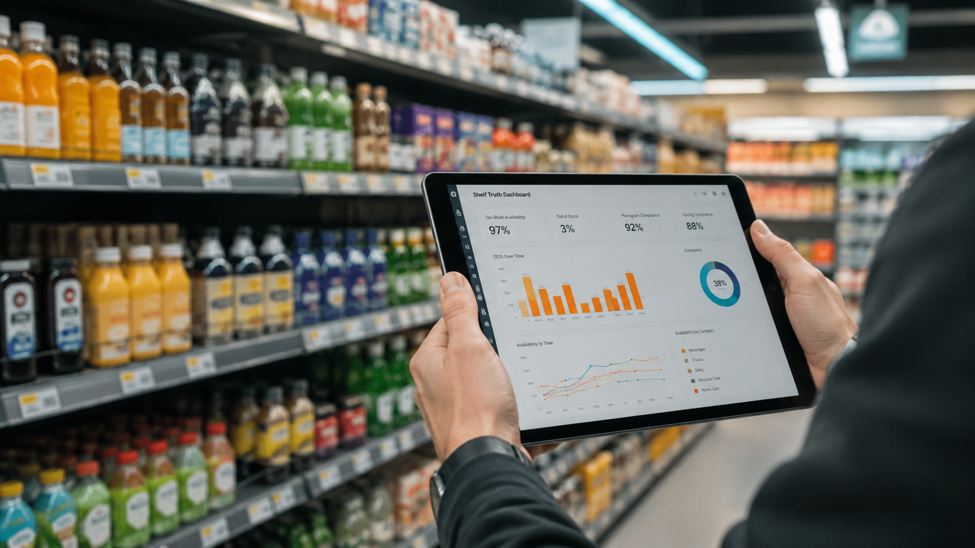
For CPG brands, this shift isn’t about futuristic robots or retail gadgets. These AI-driven systems process shelf images, identify issues like out-of-stock items or misplaced SKUs, and surface corrective recommendations in moments, helping teams respond faster during store visits.

For many leading CPG brands, even a modest 5% improvement in on-shelf availability can lift sales by nearly 3%. With this shift, competitiveness in the CPG sector is being redefined by one key capability: how effectively a brand uses AI agents to optimize retail execution and shelf visibility.

Key Highlights:

  • Smarter Retail Execution: AI agents in retail monitor shelves in real time to detect stockouts, misplaced products, and ensure accurate planogram compliance.
  • Faster Decisions: They turn shelf images into instant insights, helping teams act quickly and improve in-store execution.
  • Unified Market Visibility: By integrating diverse data sources, AI agents provide a single, consistent view of retail performance.
  • Automated Efficiency: Automation reduces manual store audits, minimizes reporting errors, and frees field teams to focus on high-impact retail execution activities.

What Are AI Agents?

AI agents are autonomous systems that can sense their surroundings, analyze information, make decisions, and perform tasks with minimal human intervention. In the CPG industry, these agents are transforming how brands monitor, interpret, and act on in-store retail shelves and store environments across large retail networks.

AI agents differ from traditional automation tools because they don’t just execute pre-programmed tasks; they learn and adapt. They recognize patterns, detect anomalies, and continuously refine their responses based on new data.

Key Components of CPG AI Agents

The intelligence of AI agents relies on several interconnected components that allow them to perceive, reason, and act. Each component plays a distinct role in converting shelf data into meaningful insights for retail execution.

1. Perception Layer (Data Collection): The foundation of any AI agent lies in its ability to perceive its surroundings. For CPG use cases, this means analyzing shelf images captured by field representatives or smart devices. Through AI shelf scanning and retail image recognition, models can identify SKUs, detect stockouts, and validate shelf conditions.

2. Reasoning and Learning: Once the data is captured, AI agents use machine learning and computer vision algorithms to process and interpret it. They can recognize whether products are in the correct place, detect misplaced items, or identify missing promotional displays.

3. Action and Feedback Loop: The final step involves taking action. AI agents send actionable insights to sales teams or dashboards in real time. This feedback loop ensures CPG teams can correct execution errors instantly, refine their market strategies, and ensure every store visit adds measurable value.

By combining these layers, AI agents form a self-learning system that ensures every shelf is optimized, every planogram is verified, and every opportunity for product visibility is captured.

Types of CPG AI Agents

Types of CPG AI Agents

AI agents in the CPG sector come in several forms, each designed to support a specific part of the retail execution process. Here are the most common types:

  • Visual Recognition Agents: These agents analyze shelf images to track stock levels, product placement, and planogram compliance. These agents feed into broader retail execution insights, which are discussed in the benefits section.
  • Execution Monitoring Agents: Focused on tracking retail execution performance, these agents verify whether promotions, displays, and pricing are correctly implemented across outlets, offering reliable, store-level performance insights.
  • Data Integration Agents: These combine inputs from multiple data streams, like in-store shelf images and retailer reports, to create a unified picture of shelf conditions, ensuring brands make decisions based on accurate, synchronized information.
  • Predictive Insights Agents: By analyzing visual shelf data patterns, these agents predict potential stockouts or compliance gaps, allowing CPG teams to act proactively rather than reactively.
  • Performance Optimization Agents: These agents monitor trends across regions and retail partners, providing insights into which execution strategies yield a higher share of shelf or planogram compliance rates, helping teams focus on what drives the most impact.

Together, these agents create a connected intelligence framework that gives CPG companies complete visibility into how their products perform in stores.

Benefits of Using AI Agents in the CPG Industry

Benefits of Using AI Agents in the CPG Industry

The integration of AI agents has redefined how CPG brands approach retail execution. Instead of relying on delayed reports, brands can now access instant insights into what’s happening on every shelf. 

Below are the key benefits AI agents bring to CPG brands today.

1. Improved Retail Execution and On-Shelf Availability

AI agents play a crucial role in improving in-store execution by ensuring that every SKU is available and correctly placed on the shelf. They continuously process visual shelf data to detect stockouts and compliance gaps in real time.

  • Proactive AI Stockout Detection: AI agents flag when a product is missing from the shelf, helping field teams respond faster before sales are lost.
  • Accurate Planogram Monitoring: They compare actual shelf layouts with the approved planogram, highlighting misplaced or missing SKUs instantly.
  • Real-Time Shelf Auditing: CPG teams can track the exact status of on-shelf availability during every store visit without relying on manual audits.

In short, AI agents bridge the execution gap between strategy and shelf presence, ensuring products remain available, visible, and correctly placed in every store.

2. Data-Driven Decision Making in Real Time

Modern CPG environments change quickly; promotions, assortments, and seasonal demand all shift frequently. AI agents give decision-makers the advantage of acting on real-time shelf data instead of waiting for manual reports.

  • Instant Insights from Visual Data: Shelf images are processed and converted into structured data that identifies execution gaps instantly.
  • Dynamic Decision Support: Sales teams can use live metrics such as share of shelf or display compliance to adjust promotions and store strategies immediately.
  • Improved Field Team Productivity: Instead of spending time collecting data, teams focus on taking corrective actions guided by real-time insights.

AI agents bring speed and agility to decision-making, turning every store visit into an opportunity for action rather than a data-gathering exercise.

3. Enhanced Visibility Across Retail Environments

CPG brands operate across thousands of stores, formats, and regions, making visibility a major challenge. AI agents unify shelf execution data from diverse retail environments into a single, accessible dashboard.

  • Centralized Shelf Data Access: Brands can view store-level execution metrics across territories without relying on fragmented regional reports.
  • Market-Level Trend Analysis: AI agents aggregate shelf data to identify performance trends by retailer type, city, or region.
  • Consistent Execution Standards: Real-time comparisons help maintain uniform merchandising quality, regardless of location or store size.

By providing unified visibility across retail stores, AI agents help CPG brands maintain execution consistency, spot underperforming zones, and plan more effectively at scale.

4. Higher ROI Through Intelligent Automation

Manual retail execution processes consume time and budgets without always guaranteeing accuracy. AI agents automate repetitive visual checks and reporting tasks, allowing brands to achieve more with fewer resources.

  • Reduced Audit Costs: Automation eliminates the need for manual data entry and repetitive field audits, cutting operational overhead.
  • Optimized Resource Allocation: Field teams can focus on high-impact stores or regions instead of spreading thin across every outlet.
  • Faster Turnaround for Campaigns: Real-time feedback from AI agents ensures that promotional displays or new product launches are monitored and corrected quickly.

By minimizing human error and improving data accuracy, AI agents enhance productivity and ensure that marketing and trade budgets deliver higher returns on investment.

5. Fraud Detection and Prevention

Execution data integrity is vital for accurate reporting and decision-making. AI agents provide AI validation for retail data integrity, helping CPG brands identify inconsistencies in shelf data that may otherwise go unnoticed.

  • Image Validation: AI systems verify that store photos submitted by field teams are authentic and correspond to the assigned location.
  • Anomaly Detection: Automated systems flag unusual data patterns, such as repeated images or identical compliance scores across multiple stores.
  • Enhanced Data Trustworthiness: Consistent validation ensures that management decisions are based on accurate, verified shelf data.

Through automated fraud prevention, AI agents protect the credibility of retail execution analytics, ensuring that brands act on reliable information across all store levels.

Challenges in Implementing AI Agents in CPG

While AI agents offer immense potential for CPG transformation, deploying them effectively comes with several key challenges:

  • Data Quality and Integration: CPG data often comes from multiple retail partners, each with different formats and quality standards. Ensuring clean, unified datasets for AI agents to analyze remains a key barrier.
  • High Implementation Costs: Deploying AI agents for retail execution can be expensive for mid-sized CPG brands, as it involves setting up data capture systems, model training, and field team integration to ensure accurate shelf-level insights.
  • Change Management and Skill Gaps: Integrating AI into existing workflows demands proper staff training, cultural alignment, and cross-department coordination to ensure seamless adoption.
  • Regulatory and Data Privacy Concerns: As AI agents collect large volumes of shelf data, companies must comply with regional data protection standards to prevent misuse or breaches.

Despite these challenges, the rewards of AI adoption far outweigh the roadblocks. The key is choosing partners who offer reliable, scalable, and easy-to-integrate solutions.

How ParallelDots Empowers CPG Brands with AI Agents?

AI agents may sound futuristic, but ParallelDots is already enabling CPG brands to harness their potential in real-world retail environments. Its AI-driven solutions help the team improve retail execution with real-time shelf data.

Here’s how we can help:

  • Autonomous Shelf Monitoring: ParallelDots’ AI agents automatically scan and interpret shelves using advanced image recognition. This eliminates the need for manual audits and ensures that CPG brands always have access to up-to-date insights on stock availability, product placement, and shelf share.
  • Real-Time On-Shelf Visibility: Instead of waiting for delayed reports from field teams, CPG managers can instantly identify out-of-stock products, misplaced items, or empty facings. This visibility helps brands respond quickly to execution gaps and maintain a strong shelf presence across multiple retail partners.
  • Planogram Compliance Verification: The platform uses AI vision to verify whether products are placed according to the approved planogram. Any deviation, such as missing SKUs, incorrect facings, or brand displacement, is immediately flagged, helping sales teams ensure compliance and consistency across every store.
  • Promotion Execution Tracking: With AI agents capturing visual proof of promotional displays and offers, CPG brands can confirm whether in-store campaigns are correctly executed. This helps maximize promotional ROI and ensures every marketing initiative reaches the consumer as intended.
  • Data Integration for Smarter Decisions: The collected shelf data can be easily integrated into existing business dashboards or BI systems. This ensures CPG teams have a unified view of retail execution metrics, empowering better collaboration between marketing, sales, and trade teams.

With these capabilities, paralleldots helps CPG brands achieve smarter, faster, and more consistent retail execution. To see how ParallelDots can transform your in-store execution with AI-powered precision, request a demo today.

Frequently Asked Questions

1. How do AI agents integrate with existing ERP and CRM systems in CPG?

AI agents seamlessly integrate with existing brand systems and retail execution platforms through APIs and data connectors. They enhance workflows by automating shelf data analysis, generating insights, and providing real-time recommendations, without disrupting current processes.

2. What skills and resources are needed for CPG companies to adopt AI agents?

CPG companies need teams familiar with data management, field execution analytics, and performance measurement. Partnering with AI solution providers like ParallelDots simplifies deployment, ensuring smooth integration, employee training, and ongoing support to improve retail execution outcomes.

3. How do AI agents support compliance and risk management in CPG?

AI agents ensure retail compliance by verifying planogram accuracy, promotional consistency, and pricing adherence across stores. This helps CPG brands maintain brand standards and reduce operational risks related to execution gaps, rather than production or supply chain processes.
From Shelf Photos to Execution Intelligence

AI image recognition only creates value when it’s embedded into everyday execution workflows. ShelfWatch helps teams move from delayed audits to real-time shelf visibility across formats, regions, and SKUs.

Book a ShelfWatch Demo
 
Used by leading FMCG and retail teams across global markets

The consumer packaged goods (CPG) industry is evolving quickly as brands compete for limited shelf space and struggle to keep products visible inside stores. Technology has supported retail execution for years, but AI agents represent the next major shift, offering autonomous systems that can observe conditions, learn from patterns, and take action with minimal manual effort.

For CPG brands, this shift isn’t about futuristic robots or retail gadgets. These AI-driven systems process shelf images, identify issues like out-of-stock items or misplaced SKUs, and surface corrective recommendations in moments, helping teams respond faster during store visits.

For many leading CPG brands, even a modest 5% improvement in on-shelf availability can lift sales by nearly 3%. With this shift, competitiveness in the CPG sector is being redefined by one key capability: how effectively a brand uses AI agents to optimize retail execution and shelf visibility.

Key Highlights:

  • Smarter Retail Execution: AI agents in retail monitor shelves in real time to detect stockouts, misplaced products, and ensure accurate planogram compliance.
  • Faster Decisions: They turn shelf images into instant insights, helping teams act quickly and improve in-store execution.
  • Unified Market Visibility: By integrating diverse data sources, AI agents provide a single, consistent view of retail performance.
  • Automated Efficiency: Automation reduces manual store audits, minimizes reporting errors, and frees field teams to focus on high-impact retail execution activities.

What Are AI Agents?

AI agents are autonomous systems that can sense their surroundings, analyze information, make decisions, and perform tasks with minimal human intervention. In the CPG industry, these agents are transforming how brands monitor, interpret, and act on in-store retail shelves and store environments across large retail networks.

AI agents differ from traditional automation tools because they don’t just execute pre-programmed tasks; they learn and adapt. They recognize patterns, detect anomalies, and continuously refine their responses based on new data.

Key Components of CPG AI Agents

The intelligence of AI agents relies on several interconnected components that allow them to perceive, reason, and act. Each component plays a distinct role in converting shelf data into meaningful insights for retail execution.

1. Perception Layer (Data Collection): The foundation of any AI agent lies in its ability to perceive its surroundings. For CPG use cases, this means analyzing shelf images captured by field representatives or smart devices. Through AI shelf scanning and retail image recognition, models can identify SKUs, detect stockouts, and validate shelf conditions.

2. Reasoning and Learning: Once the data is captured, AI agents use machine learning and computer vision algorithms to process and interpret it. They can recognize whether products are in the correct place, detect misplaced items, or identify missing promotional displays.

3. Action and Feedback Loop: The final step involves taking action. AI agents send actionable insights to sales teams or dashboards in real time. This feedback loop ensures CPG teams can correct execution errors instantly, refine their market strategies, and ensure every store visit adds measurable value.

By combining these layers, AI agents form a self-learning system that ensures every shelf is optimized, every planogram is verified, and every opportunity for product visibility is captured.

Types of CPG AI Agents

Types of CPG AI Agents

AI agents in the CPG sector come in several forms, each designed to support a specific part of the retail execution process. Here are the most common types:

  • Visual Recognition Agents: These agents analyze shelf images to track stock levels, product placement, and planogram compliance. These agents feed into broader retail execution insights, which are discussed in the benefits section.
  • Execution Monitoring Agents: Focused on tracking retail execution performance, these agents verify whether promotions, displays, and pricing are correctly implemented across outlets, offering reliable, store-level performance insights.
  • Data Integration Agents: These combine inputs from multiple data streams, like in-store shelf images and retailer reports, to create a unified picture of shelf conditions, ensuring brands make decisions based on accurate, synchronized information.
  • Predictive Insights Agents: By analyzing visual shelf data patterns, these agents predict potential stockouts or compliance gaps, allowing CPG teams to act proactively rather than reactively.
  • Performance Optimization Agents: These agents monitor trends across regions and retail partners, providing insights into which execution strategies yield a higher share of shelf or planogram compliance rates, helping teams focus on what drives the most impact.

Together, these agents create a connected intelligence framework that gives CPG companies complete visibility into how their products perform in stores.

Benefits of Using AI Agents in the CPG Industry

Benefits of Using AI Agents in the CPG Industry

The integration of AI agents has redefined how CPG brands approach retail execution. Instead of relying on delayed reports, brands can now access instant insights into what’s happening on every shelf. 

Below are the key benefits AI agents bring to CPG brands today.

1. Improved Retail Execution and On-Shelf Availability

AI agents play a crucial role in improving in-store execution by ensuring that every SKU is available and correctly placed on the shelf. They continuously process visual shelf data to detect stockouts and compliance gaps in real time.

  • Proactive AI Stockout Detection: AI agents flag when a product is missing from the shelf, helping field teams respond faster before sales are lost.
  • Accurate Planogram Monitoring: They compare actual shelf layouts with the approved planogram, highlighting misplaced or missing SKUs instantly.
  • Real-Time Shelf Auditing: CPG teams can track the exact status of on-shelf availability during every store visit without relying on manual audits.

In short, AI agents bridge the execution gap between strategy and shelf presence, ensuring products remain available, visible, and correctly placed in every store.

2. Data-Driven Decision Making in Real Time

Modern CPG environments change quickly; promotions, assortments, and seasonal demand all shift frequently. AI agents give decision-makers the advantage of acting on real-time shelf data instead of waiting for manual reports.

  • Instant Insights from Visual Data: Shelf images are processed and converted into structured data that identifies execution gaps instantly.
  • Dynamic Decision Support: Sales teams can use live metrics such as share of shelf or display compliance to adjust promotions and store strategies immediately.
  • Improved Field Team Productivity: Instead of spending time collecting data, teams focus on taking corrective actions guided by real-time insights.

AI agents bring speed and agility to decision-making, turning every store visit into an opportunity for action rather than a data-gathering exercise.

3. Enhanced Visibility Across Retail Environments

CPG brands operate across thousands of stores, formats, and regions, making visibility a major challenge. AI agents unify shelf execution data from diverse retail environments into a single, accessible dashboard.

  • Centralized Shelf Data Access: Brands can view store-level execution metrics across territories without relying on fragmented regional reports.
  • Market-Level Trend Analysis: AI agents aggregate shelf data to identify performance trends by retailer type, city, or region.
  • Consistent Execution Standards: Real-time comparisons help maintain uniform merchandising quality, regardless of location or store size.

By providing unified visibility across retail stores, AI agents help CPG brands maintain execution consistency, spot underperforming zones, and plan more effectively at scale.

4. Higher ROI Through Intelligent Automation

Manual retail execution processes consume time and budgets without always guaranteeing accuracy. AI agents automate repetitive visual checks and reporting tasks, allowing brands to achieve more with fewer resources.

  • Reduced Audit Costs: Automation eliminates the need for manual data entry and repetitive field audits, cutting operational overhead.
  • Optimized Resource Allocation: Field teams can focus on high-impact stores or regions instead of spreading thin across every outlet.
  • Faster Turnaround for Campaigns: Real-time feedback from AI agents ensures that promotional displays or new product launches are monitored and corrected quickly.

By minimizing human error and improving data accuracy, AI agents enhance productivity and ensure that marketing and trade budgets deliver higher returns on investment.

5. Fraud Detection and Prevention

Execution data integrity is vital for accurate reporting and decision-making. AI agents provide AI validation for retail data integrity, helping CPG brands identify inconsistencies in shelf data that may otherwise go unnoticed.

  • Image Validation: AI systems verify that store photos submitted by field teams are authentic and correspond to the assigned location.
  • Anomaly Detection: Automated systems flag unusual data patterns, such as repeated images or identical compliance scores across multiple stores.
  • Enhanced Data Trustworthiness: Consistent validation ensures that management decisions are based on accurate, verified shelf data.

Through automated fraud prevention, AI agents protect the credibility of retail execution analytics, ensuring that brands act on reliable information across all store levels.

Challenges in Implementing AI Agents in CPG

While AI agents offer immense potential for CPG transformation, deploying them effectively comes with several key challenges:

  • Data Quality and Integration: CPG data often comes from multiple retail partners, each with different formats and quality standards. Ensuring clean, unified datasets for AI agents to analyze remains a key barrier.
  • High Implementation Costs: Deploying AI agents for retail execution can be expensive for mid-sized CPG brands, as it involves setting up data capture systems, model training, and field team integration to ensure accurate shelf-level insights.
  • Change Management and Skill Gaps: Integrating AI into existing workflows demands proper staff training, cultural alignment, and cross-department coordination to ensure seamless adoption.
  • Regulatory and Data Privacy Concerns: As AI agents collect large volumes of shelf data, companies must comply with regional data protection standards to prevent misuse or breaches.

Despite these challenges, the rewards of AI adoption far outweigh the roadblocks. The key is choosing partners who offer reliable, scalable, and easy-to-integrate solutions.

How ParallelDots Empowers CPG Brands with AI Agents?

AI agents may sound futuristic, but ParallelDots is already enabling CPG brands to harness their potential in real-world retail environments. Its AI-driven solutions help the team improve retail execution with real-time shelf data.

Here’s how we can help:

  • Autonomous Shelf Monitoring: ParallelDots’ AI agents automatically scan and interpret shelves using advanced image recognition. This eliminates the need for manual audits and ensures that CPG brands always have access to up-to-date insights on stock availability, product placement, and shelf share.
  • Real-Time On-Shelf Visibility: Instead of waiting for delayed reports from field teams, CPG managers can instantly identify out-of-stock products, misplaced items, or empty facings. This visibility helps brands respond quickly to execution gaps and maintain a strong shelf presence across multiple retail partners.
  • Planogram Compliance Verification: The platform uses AI vision to verify whether products are placed according to the approved planogram. Any deviation, such as missing SKUs, incorrect facings, or brand displacement, is immediately flagged, helping sales teams ensure compliance and consistency across every store.
  • Promotion Execution Tracking: With AI agents capturing visual proof of promotional displays and offers, CPG brands can confirm whether in-store campaigns are correctly executed. This helps maximize promotional ROI and ensures every marketing initiative reaches the consumer as intended.
  • Data Integration for Smarter Decisions: The collected shelf data can be easily integrated into existing business dashboards or BI systems. This ensures CPG teams have a unified view of retail execution metrics, empowering better collaboration between marketing, sales, and trade teams.

With these capabilities, paralleldots helps CPG brands achieve smarter, faster, and more consistent retail execution. To see how ParallelDots can transform your in-store execution with AI-powered precision, request a demo today.

Frequently Asked Questions

1. How do AI agents integrate with existing ERP and CRM systems in CPG?

AI agents seamlessly integrate with existing brand systems and retail execution platforms through APIs and data connectors. They enhance workflows by automating shelf data analysis, generating insights, and providing real-time recommendations, without disrupting current processes.

2. What skills and resources are needed for CPG companies to adopt AI agents?

CPG companies need teams familiar with data management, field execution analytics, and performance measurement. Partnering with AI solution providers like ParallelDots simplifies deployment, ensuring smooth integration, employee training, and ongoing support to improve retail execution outcomes.

3. How do AI agents support compliance and risk management in CPG?

AI agents ensure retail compliance by verifying planogram accuracy, promotional consistency, and pricing adherence across stores. This helps CPG brands maintain brand standards and reduce operational risks related to execution gaps, rather than production or supply chain processes.