Shelf Monitoring

5 Effective Strategies for CPG Business Models to Improve Shelf Performance

Ankit Singh
January 29, 2026
##
mins read
Ready to get Started?
request Demo

The CPG industry is changing faster than ever, projected to reach $3.1 billion by 2028, driven by shifting consumer needs, rising competition, and the ongoing race for shelf visibility. For CPG brands, the challenge isn’t just about having great products; it’s about ensuring they’re visible, available, and correctly placed where purchase decisions happen.

In this environment, poor shelf execution has a direct and measurable cost. Missed stock, misplaced SKUs, or planogram deviations can result in lost sales, delayed corrective actions, and inconsistent brand visibility across retail locations. Developing an effective business model strategy is crucial for protecting revenue, maintaining market share, and ensuring that every store visit delivers its intended return.

Key Highlights:

  • Resilient CPG Models: Success depends on adaptable strategies that focus on consumer demand, visibility, and consistent retail execution.
  • Data-Led Decisions: Real-time shelf insights help brands take faster, smarter actions to improve product availability and boost in-store performance.
  • Innovation & Partnerships: Shelf data drives smarter product innovation and builds stronger collaborations with retailers for sustained growth.
  • Continuous Improvement: Ongoing performance tracking enables brands to refine strategies, close execution gaps, and stay competitive.

What is a CPG Business Model?


A CPG business model defines how a brand creates, delivers, and captures value in the packaged goods market. For most CPG companies, success is shaped less by direct consumer data and more by how reliably products are executed inside physical retail stores.

At its core, an effective CPG business model connects brand strategy to what actually happens on the shelf. It focuses on whether products are available, placed correctly, priced as planned, and supported by the right promotions across stores.

When brands have visibility into these shelf-level realities, they can identify execution gaps early and ensure that their commercial strategy translates into consistent in-store performance.

Key Components of a Resilient CPG Business Model

A strong CPG business model balances adaptability, visibility, and execution excellence. Below are key components that make it resilient and growth-oriented:

  • In-Store Demand and Shelf Visibility Focus: Build strategies around what is happening on the shelf, not consumer behavior tracking. Clear visibility into on-shelf availability and placement helps ensure products are present and positioned as planned in stores.
  • Data-Driven Decision-Making: Use real-time shelf data to identify gaps in on-shelf availability, monitor compliance, and track share of shelf. This helps teams act quickly and confidently, taking evidence-based action instead of relying on guesswork.
  • Operational Agility: Flexibility in execution helps brands respond quickly to market changes, competitor activity, and promotional shifts across multiple retail environments.
  • Effective Channel Execution: Consistent retail execution across different store formats ensures product visibility, correct placement, and planogram compliance, which directly impacts sales performance.
  • Performance Tracking and Optimization: Continuously measure KPIs like on-shelf stock availability and planogram compliance to fine-tune strategies and maintain execution quality.

A resilient CPG business model thrives on visibility, consistency, and responsiveness, turning real-time shelf insights into smarter decisions.

5 Key Strategies of CPG Business Models
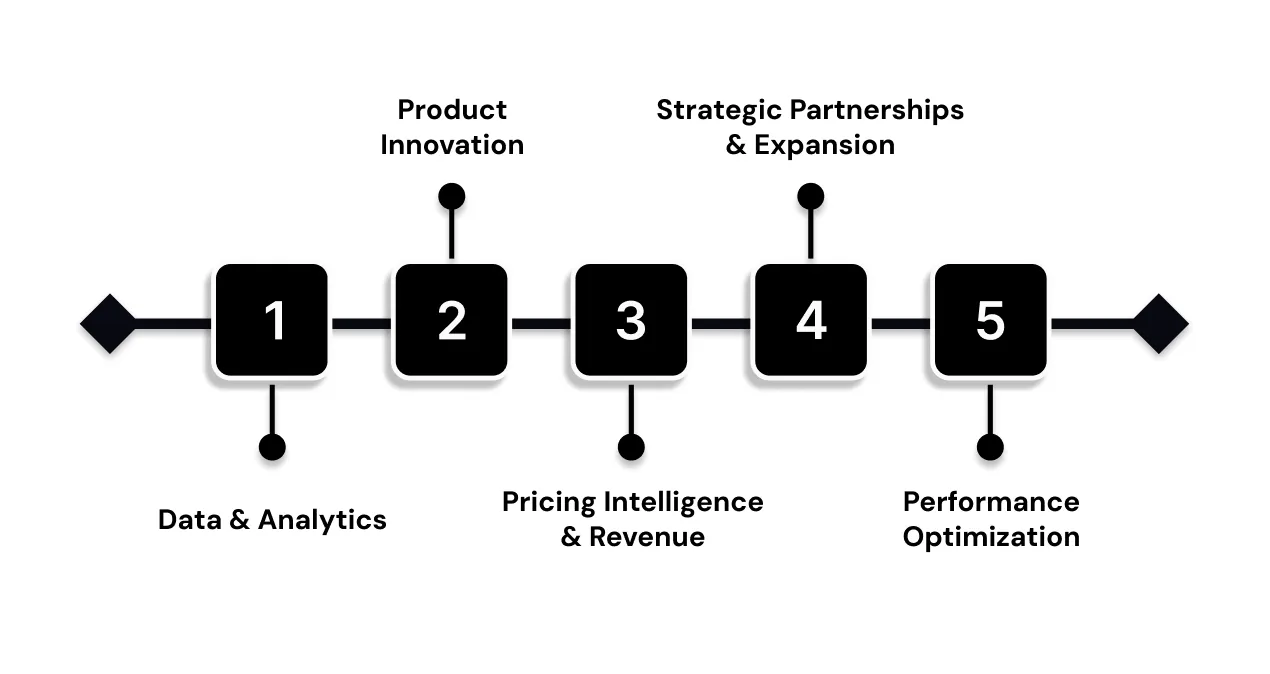
A strong CPG business model depends on strategies that balance innovation, visibility, and execution excellence. Let’s look at the key strategies leading CPG brands use today.

1. Utilize Data and Analytics to Drive Growth

Data and analytics play a critical role in helping CPG brands understand what is actually happening on the shelf. When used correctly, they provide visibility into execution, rather than directly influencing sales or growth outcomes.

  • Real-Time Shelf Insights: Access to accurate store-level data helps brands monitor stock levels, share of shelf, and planogram compliance. This allows teams to act quickly and avoid sales loss.
  • Performance Tracking at Scale: Analytics platforms like ParallelDots allow CPG teams to assess thousands of stores simultaneously, providing a unified view of product visibility and shelf conditions.
  • Actionable Intelligence for Field Teams: Data helps sales teams focus where improvements are needed, driving better execution and brand consistency.

In short, CPG brands that use AI-powered shelf analytics can shift from reacting to issues to managing retail execution proactively.

2. Prioritize Product Innovation and Differentiation

Innovation keeps CPG brands competitive in a crowded market. It’s about developing products backed by real shelf insights, not just new ideas.

  • Visibility Into New SKU Execution: Shelf data helps brands confirm whether new or existing SKUs are placed correctly and visible as intended across stores. This ensures that innovation efforts are supported by proper execution.
  • Faster Go-to-Market Decisions: With instant access to shelf execution data, brands can test promotional or packaging strategies more effectively and make timely adjustments.
  • Differentiation at the Shelf Level: Consistent placement and visibility across stores strengthen consumer recognition, allowing innovative products to gain faster traction.

By combining innovation with data-backed execution, brands can ensure that new products don’t just launch, they succeed in stores.

3. Pricing Intelligence and Revenue Optimization

Pricing remains one of the most dynamic levers in the CPG industry. However, true pricing intelligence goes beyond tracking competitors—it relies on visibility into actual shelf conditions and promotional execution.

  • Promotion Execution Accuracy: Brands can verify if in-store promotions are executed and priced correctly, reducing revenue loss.
  • Real-Time Market Comparisons: Data from multiple stores helps teams identify inconsistencies between planned and actual shelf prices.
  • Optimize Revenue from Shelf Performance: Brands can link pricing and shelf share to see which strategies deliver stronger returns.

When pricing decisions rely on live shelf execution data, CPG companies can protect margins and maintain brand consistency across partners.

4. Pursue Strategic Partnerships and Portfolio Expansion

Partnerships help CPG brands strengthen market reach without spreading resources thin. When guided by shelf insights, these partnerships become more targeted and effective.

  • Retailer Collaboration: Sharing shelf data with retail partners builds trust and ensures alignment on promotions and product placement.
  • Category Performance Visibility: Identifying underperforming SKUs helps brands decide which categories to expand or streamline with distributors.
  • Data-Backed Negotiations: Insights empower teams during shelf space discussions, ensuring better visibility for key products.

Data-driven partnerships help CPGs expand efficiently while sustaining long-term growth.

5. Performance Analytics and Continuous Optimization

Success in CPG depends on how well brands measure, monitor, and identify gaps in retail execution. Continuous analytics support this by providing ongoing visibility into real store conditions.

  • Measuring Execution Quality: Visual analytics assesses planogram compliance, on-shelf availability, and share of shelf to pinpoint weak areas.
  • Quick Feedback Loops: Real-time shelf data helps teams act fast, improving execution across markets.
  • Benchmarking and Refinement: Tracking performance against goals turns every campaign into a learning opportunity.

By adopting continuous analytics, CPG brands evolve from static reports to data-driven decision-making that keeps them competitive.

These strategies help CPG brands stay competitive and ensure consistent market performance.

Challenges in Implementing CPG Strategies

Even with the right strategy in place, many CPG companies face execution challenges that limit scalability and performance. Below are the most common obstacles impacting modern CPG operations:


  • Fragmented Data Sources: Many CPG brands operate across diverse geographies and retailer networks, leading to inconsistent reporting systems. Without unified data, identifying performance trends becomes difficult and time-consuming.
  • Limited Field Visibility: Traditional audits are slow and expensive. Field agents can’t monitor every store frequently enough, leaving visibility gaps that affect decision-making.
  • Execution Gaps at Store Level: Even well-planned campaigns can fail if execution on the shelf isn’t monitored. Issues like misplaced SKUs, missing promotions, or incorrect pricing can go unnoticed for weeks.
  • Slow Feedback Loops: Without real-time shelf data, corrective actions take too long. This delay impacts both brand performance and the ability to adapt strategies quickly.
  • Resistance to Technology Adoption: Some teams still rely on manual processes and traditional audits. Transitioning to automated shelf intelligence requires cultural and operational adaptation.

Each of these challenges directly impacts how effectively a CPG brand executes its strategy. The key lies in building systems that deliver reliable, actionable shelf-level insights to every decision-maker in the organization.

How ParallelDots Empowers Smarter CPG Strategy Execution?

ParallelDots helps CPG companies bridge the gap between strategy and shelf execution. Its Image Recognition-based solutions give real-time visibility into retail conditions, allowing brands to track planogram compliance, on-shelf availability, and promotional accuracy with precision.

Here’s how we can support you:

  • Accurate On-Shelf Stock Tracking: ParallelDots provides CPG brands with real-time visual shelf data to identify stockouts directly at the shelf level. This allows sales and field teams to take corrective actions faster, ensuring products are always visible and available where consumers make purchase decisions.
  • Share of Shelf Visibility: CPG companies can monitor how much shelf space their brand occupies compared to competitors. This helps category and sales teams understand in-store performance, negotiate better with retailers, and ensure merchandising efforts align with business goals.
  • Planogram Compliance Monitoring: Using AI-powered image recognition, ParallelDots ensures products are placed according to planograms. This helps maintain consistent brand presentation across stores and reduces the time field reps spend on manual audits.
  • Promotional Execution Tracking: Brands can confirm whether in-store promotions are implemented correctly — from promotional displays to product placement during campaign periods. This ensures marketing investments deliver the intended in-store impact.
  • Performance Analytics for Retail Execution: With visual data captured from shelves, CPG companies can identify recurring gaps in retail execution. Insights into shelf availability, compliance rates, and promotional visibility help brands refine their go-to-market strategy and improve operational efficiency.

By combining automation with precision, ParallelDots transforms retail execution visibility into a strategic advantage.

Request a demo to see how ParallelDots can help your brand achieve better in-store visibility and smarter retail execution.

Frequently Asked Questions

1. What metrics help evaluate the performance of a CPG business model?

CPG performance is best measured at the shelf level using on-shelf stock availability, share of shelf, planogram compliance, and promotional execution. Visual shelf data highlights execution gaps, helping brands track whether products are correctly placed and available across stores in real time.

2. What role does product innovation play in sustaining CPG growth?

Product innovation succeeds only if new SKUs are visible and correctly executed on shelves. Tracking placement and compliance with real-time shelf data ensures new products reach stores as planned, enabling innovation to translate into actual consumer availability and in-store brand impact.

3. How do pricing strategies impact profitability in the CPG industry?

Pricing and promotions drive revenue only when executed accurately on shelves. Shelf-level monitoring ensures price tags, offers, and displays are correctly implemented across stores, protecting brand value, maximizing promotional effectiveness, and preventing revenue loss caused by inconsistent retail execution.

4. What role does brand loyalty play in long-term CPG success?

Brand loyalty drives repeat purchases and consistent shelf movement. Loyal customers help sustain sales momentum and give brands an advantage when launching new in-store promotions or products, strengthening overall profitability.

The CPG industry is changing faster than ever, projected to reach $3.1 billion by 2028, driven by shifting consumer needs, rising competition, and the ongoing race for shelf visibility. For CPG brands, the challenge isn’t just about having great products; it’s about ensuring they’re visible, available, and correctly placed where purchase decisions happen.

In this environment, poor shelf execution has a direct and measurable cost. Missed stock, misplaced SKUs, or planogram deviations can result in lost sales, delayed corrective actions, and inconsistent brand visibility across retail locations. Developing an effective business model strategy is crucial for protecting revenue, maintaining market share, and ensuring that every store visit delivers its intended return.

Key Highlights:

  • Resilient CPG Models: Success depends on adaptable strategies that focus on consumer demand, visibility, and consistent retail execution.
  • Data-Led Decisions: Real-time shelf insights help brands take faster, smarter actions to improve product availability and boost in-store performance.
  • Innovation & Partnerships: Shelf data drives smarter product innovation and builds stronger collaborations with retailers for sustained growth.
  • Continuous Improvement: Ongoing performance tracking enables brands to refine strategies, close execution gaps, and stay competitive.

What is a CPG Business Model?


A CPG business model defines how a brand creates, delivers, and captures value in the packaged goods market. For most CPG companies, success is shaped less by direct consumer data and more by how reliably products are executed inside physical retail stores.

At its core, an effective CPG business model connects brand strategy to what actually happens on the shelf. It focuses on whether products are available, placed correctly, priced as planned, and supported by the right promotions across stores.

When brands have visibility into these shelf-level realities, they can identify execution gaps early and ensure that their commercial strategy translates into consistent in-store performance.

Key Components of a Resilient CPG Business Model

A strong CPG business model balances adaptability, visibility, and execution excellence. Below are key components that make it resilient and growth-oriented:

  • In-Store Demand and Shelf Visibility Focus: Build strategies around what is happening on the shelf, not consumer behavior tracking. Clear visibility into on-shelf availability and placement helps ensure products are present and positioned as planned in stores.
  • Data-Driven Decision-Making: Use real-time shelf data to identify gaps in on-shelf availability, monitor compliance, and track share of shelf. This helps teams act quickly and confidently, taking evidence-based action instead of relying on guesswork.
  • Operational Agility: Flexibility in execution helps brands respond quickly to market changes, competitor activity, and promotional shifts across multiple retail environments.
  • Effective Channel Execution: Consistent retail execution across different store formats ensures product visibility, correct placement, and planogram compliance, which directly impacts sales performance.
  • Performance Tracking and Optimization: Continuously measure KPIs like on-shelf stock availability and planogram compliance to fine-tune strategies and maintain execution quality.

A resilient CPG business model thrives on visibility, consistency, and responsiveness, turning real-time shelf insights into smarter decisions.

5 Key Strategies of CPG Business Models

A strong CPG business model depends on strategies that balance innovation, visibility, and execution excellence. Let’s look at the key strategies leading CPG brands use today.

1. Utilize Data and Analytics to Drive Growth

Data and analytics play a critical role in helping CPG brands understand what is actually happening on the shelf. When used correctly, they provide visibility into execution, rather than directly influencing sales or growth outcomes.

  • Real-Time Shelf Insights: Access to accurate store-level data helps brands monitor stock levels, share of shelf, and planogram compliance. This allows teams to act quickly and avoid sales loss.
  • Performance Tracking at Scale: Analytics platforms like ParallelDots allow CPG teams to assess thousands of stores simultaneously, providing a unified view of product visibility and shelf conditions.
  • Actionable Intelligence for Field Teams: Data helps sales teams focus where improvements are needed, driving better execution and brand consistency.

In short, CPG brands that use AI-powered shelf analytics can shift from reacting to issues to managing retail execution proactively.

2. Prioritize Product Innovation and Differentiation

Innovation keeps CPG brands competitive in a crowded market. It’s about developing products backed by real shelf insights, not just new ideas.

  • Visibility Into New SKU Execution: Shelf data helps brands confirm whether new or existing SKUs are placed correctly and visible as intended across stores. This ensures that innovation efforts are supported by proper execution.
  • Faster Go-to-Market Decisions: With instant access to shelf execution data, brands can test promotional or packaging strategies more effectively and make timely adjustments.
  • Differentiation at the Shelf Level: Consistent placement and visibility across stores strengthen consumer recognition, allowing innovative products to gain faster traction.

By combining innovation with data-backed execution, brands can ensure that new products don’t just launch, they succeed in stores.

3. Pricing Intelligence and Revenue Optimization

Pricing remains one of the most dynamic levers in the CPG industry. However, true pricing intelligence goes beyond tracking competitors—it relies on visibility into actual shelf conditions and promotional execution.

  • Promotion Execution Accuracy: Brands can verify if in-store promotions are executed and priced correctly, reducing revenue loss.
  • Real-Time Market Comparisons: Data from multiple stores helps teams identify inconsistencies between planned and actual shelf prices.
  • Optimize Revenue from Shelf Performance: Brands can link pricing and shelf share to see which strategies deliver stronger returns.

When pricing decisions rely on live shelf execution data, CPG companies can protect margins and maintain brand consistency across partners.

4. Pursue Strategic Partnerships and Portfolio Expansion

Partnerships help CPG brands strengthen market reach without spreading resources thin. When guided by shelf insights, these partnerships become more targeted and effective.

  • Retailer Collaboration: Sharing shelf data with retail partners builds trust and ensures alignment on promotions and product placement.
  • Category Performance Visibility: Identifying underperforming SKUs helps brands decide which categories to expand or streamline with distributors.
  • Data-Backed Negotiations: Insights empower teams during shelf space discussions, ensuring better visibility for key products.

Data-driven partnerships help CPGs expand efficiently while sustaining long-term growth.

5. Performance Analytics and Continuous Optimization

Success in CPG depends on how well brands measure, monitor, and identify gaps in retail execution. Continuous analytics support this by providing ongoing visibility into real store conditions.

  • Measuring Execution Quality: Visual analytics assesses planogram compliance, on-shelf availability, and share of shelf to pinpoint weak areas.
  • Quick Feedback Loops: Real-time shelf data helps teams act fast, improving execution across markets.
  • Benchmarking and Refinement: Tracking performance against goals turns every campaign into a learning opportunity.

By adopting continuous analytics, CPG brands evolve from static reports to data-driven decision-making that keeps them competitive.

These strategies help CPG brands stay competitive and ensure consistent market performance.

Challenges in Implementing CPG Strategies

Even with the right strategy in place, many CPG companies face execution challenges that limit scalability and performance. Below are the most common obstacles impacting modern CPG operations:


  • Fragmented Data Sources: Many CPG brands operate across diverse geographies and retailer networks, leading to inconsistent reporting systems. Without unified data, identifying performance trends becomes difficult and time-consuming.
  • Limited Field Visibility: Traditional audits are slow and expensive. Field agents can’t monitor every store frequently enough, leaving visibility gaps that affect decision-making.
  • Execution Gaps at Store Level: Even well-planned campaigns can fail if execution on the shelf isn’t monitored. Issues like misplaced SKUs, missing promotions, or incorrect pricing can go unnoticed for weeks.
  • Slow Feedback Loops: Without real-time shelf data, corrective actions take too long. This delay impacts both brand performance and the ability to adapt strategies quickly.
  • Resistance to Technology Adoption: Some teams still rely on manual processes and traditional audits. Transitioning to automated shelf intelligence requires cultural and operational adaptation.

Each of these challenges directly impacts how effectively a CPG brand executes its strategy. The key lies in building systems that deliver reliable, actionable shelf-level insights to every decision-maker in the organization.

How ParallelDots Empowers Smarter CPG Strategy Execution?

ParallelDots helps CPG companies bridge the gap between strategy and shelf execution. Its Image Recognition-based solutions give real-time visibility into retail conditions, allowing brands to track planogram compliance, on-shelf availability, and promotional accuracy with precision.

Here’s how we can support you:

  • Accurate On-Shelf Stock Tracking: ParallelDots provides CPG brands with real-time visual shelf data to identify stockouts directly at the shelf level. This allows sales and field teams to take corrective actions faster, ensuring products are always visible and available where consumers make purchase decisions.
  • Share of Shelf Visibility: CPG companies can monitor how much shelf space their brand occupies compared to competitors. This helps category and sales teams understand in-store performance, negotiate better with retailers, and ensure merchandising efforts align with business goals.
  • Planogram Compliance Monitoring: Using AI-powered image recognition, ParallelDots ensures products are placed according to planograms. This helps maintain consistent brand presentation across stores and reduces the time field reps spend on manual audits.
  • Promotional Execution Tracking: Brands can confirm whether in-store promotions are implemented correctly — from promotional displays to product placement during campaign periods. This ensures marketing investments deliver the intended in-store impact.
  • Performance Analytics for Retail Execution: With visual data captured from shelves, CPG companies can identify recurring gaps in retail execution. Insights into shelf availability, compliance rates, and promotional visibility help brands refine their go-to-market strategy and improve operational efficiency.

By combining automation with precision, ParallelDots transforms retail execution visibility into a strategic advantage.

Request a demo to see how ParallelDots can help your brand achieve better in-store visibility and smarter retail execution.

Frequently Asked Questions

1. What metrics help evaluate the performance of a CPG business model?

CPG performance is best measured at the shelf level using on-shelf stock availability, share of shelf, planogram compliance, and promotional execution. Visual shelf data highlights execution gaps, helping brands track whether products are correctly placed and available across stores in real time.

2. What role does product innovation play in sustaining CPG growth?

Product innovation succeeds only if new SKUs are visible and correctly executed on shelves. Tracking placement and compliance with real-time shelf data ensures new products reach stores as planned, enabling innovation to translate into actual consumer availability and in-store brand impact.

3. How do pricing strategies impact profitability in the CPG industry?

Pricing and promotions drive revenue only when executed accurately on shelves. Shelf-level monitoring ensures price tags, offers, and displays are correctly implemented across stores, protecting brand value, maximizing promotional effectiveness, and preventing revenue loss caused by inconsistent retail execution.

4. What role does brand loyalty play in long-term CPG success?

Brand loyalty drives repeat purchases and consistent shelf movement. Loyal customers help sustain sales momentum and give brands an advantage when launching new in-store promotions or products, strengthening overall profitability.