Share it with your network.


The Retail Execution Gap: Why Fragmented Tools Are Costing Brands Billions
The retail shelf is the ultimate moment of truth for any consumer goods brand. After months of planning, manufacturing, and logistics, it all comes down to one question: Is your product in the right place, at the right time, with the right pricing and promotion?
According to NielsenIQ, out-of-stock products alone cost the global retail industry $82 billion annually. Meanwhile, the Image Recognition (IR) market is projected to grow from its current base to $8.33 billion by 2032, driven by an 18% CAGR as brands race to automate shelf intelligence (MarketsandMarkets, 2024).
Yet despite massive investment in IR technology, most brands still struggle to get a clear, actionable picture of their retail execution. The reason? Fragmentation.
The Problem with Point Solutions
The IR vendor landscape is crowded with specialists. Some vendors have built compelling AR-based capture tools but stop at the camera - they offer no on-device recognition, no analytics layer, and no way to close the loop with field teams. Others have pioneered synthetic data pipelines for rapid SKU training but remain pure recognition engines without an integrated mobile app, IoT infrastructure, or field management portal. Still others offer planogram compliance dashboards but require you to bring your own data capture hardware and separately procure an MDM solution for master data management.
The result is a patchwork of vendors, integrations, and dashboards that slows execution, inflates costs, and leaves brands with incomplete data. A 2024 Gartner report predicts that by 2028, 15% of retail operational decisions will be made autonomously by AI agents - but that's only possible when the underlying data pipeline is unified and reliable.
Introducing ParallelDots ShelfWatch: The Only True All-in-One IR Platform
ParallelDots has spent years building not just an IR engine, but an end-to-end platform that covers every layer of the retail execution stack. Deployed across 50+ countries, ShelfWatch brings together 10 integrated capabilities that no other single vendor offers today.
1. AR-Based Shelf Capture
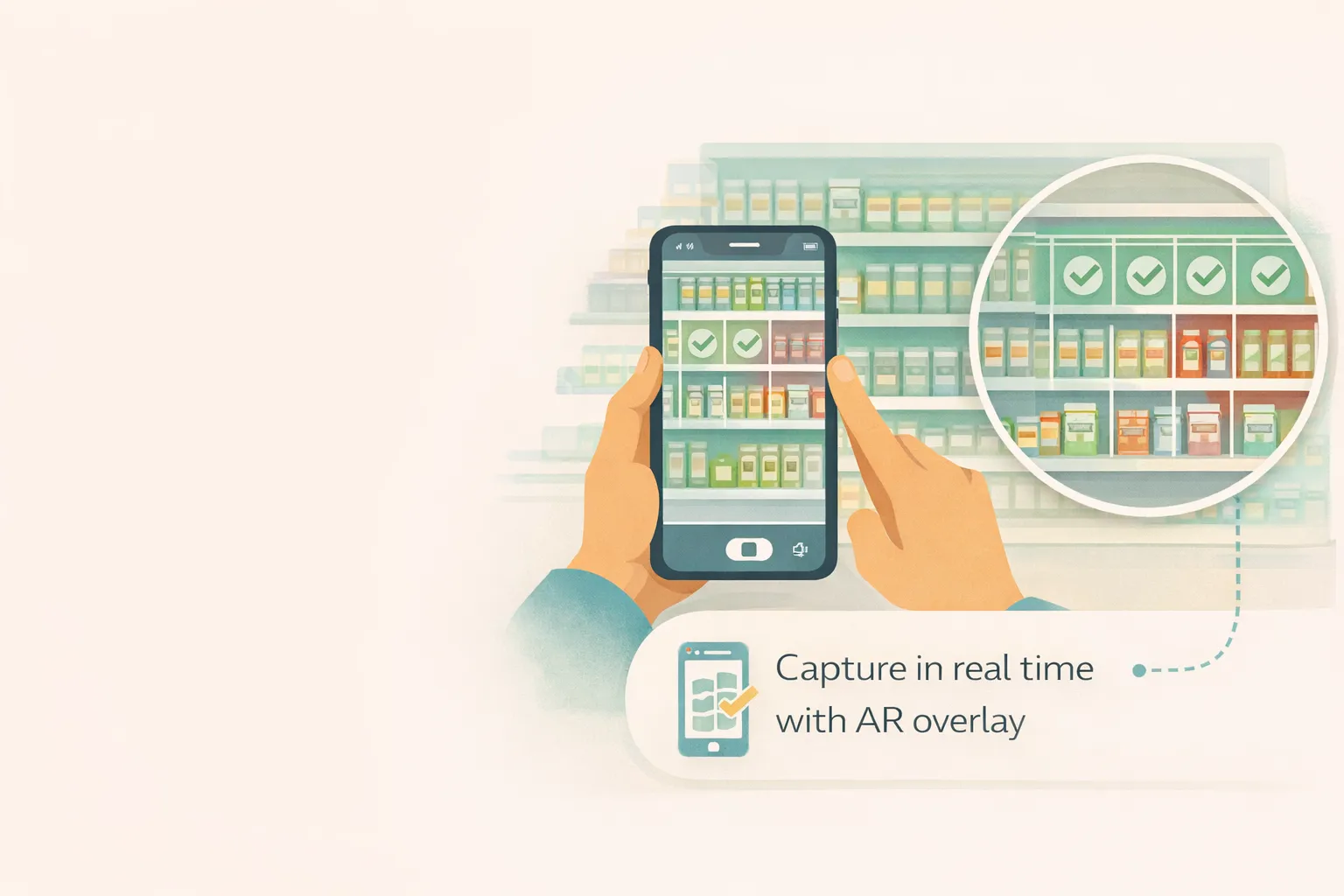
Traditional shelf photography can be slow and cumbersome for field reps in case of long aisles typically seen in hypermarkets. ShelfWatch's Augmented Reality (AR) capture overlay guides the user in real time - showing exactly which shelves have been captured and flagging gaps instantly. This technology ensures complete, standardized coverage every visit without requiring specialized hardware.
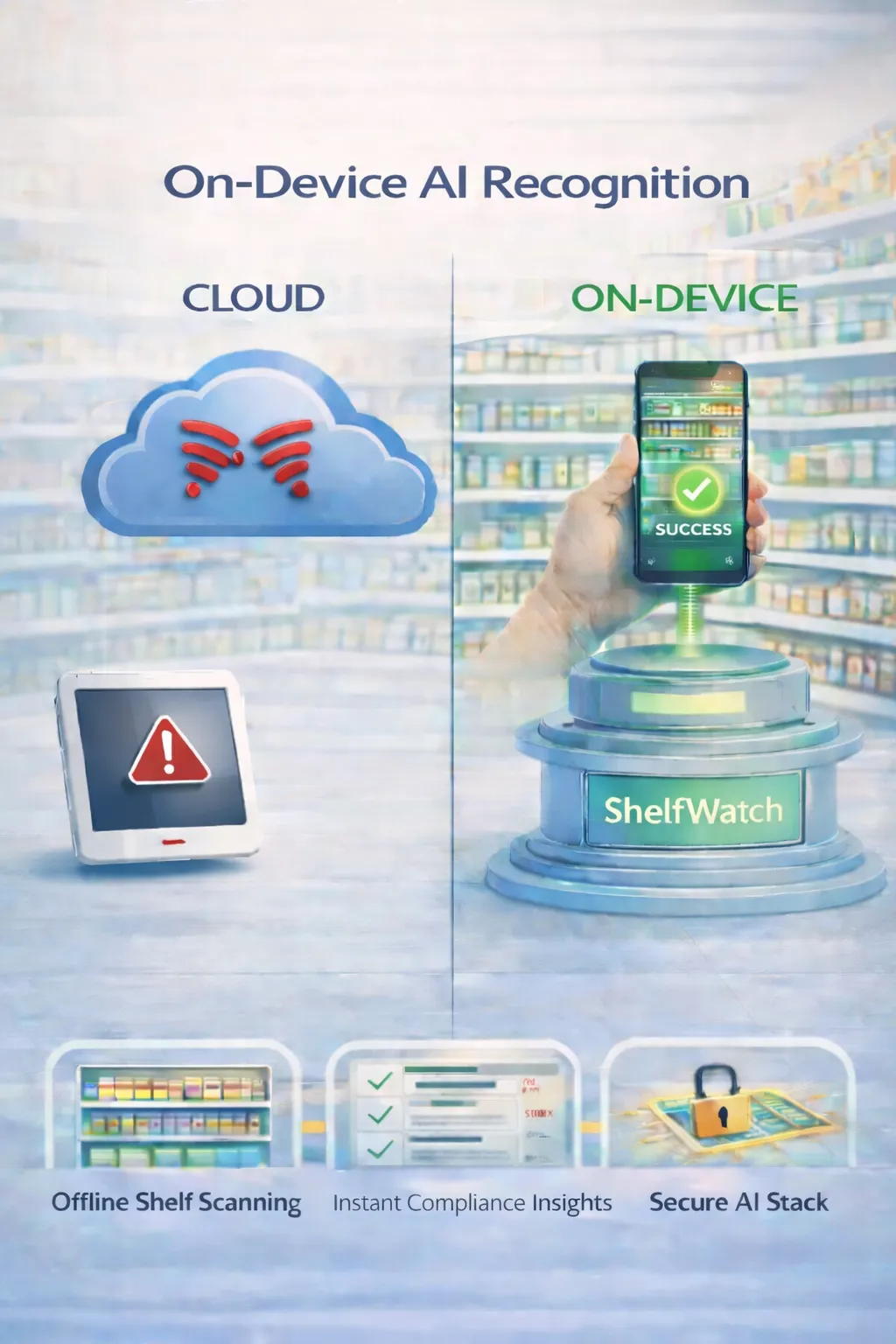
2. On-Device AI Recognition
In modern retail environments, connectivity is never guaranteed. ShelfWatch runs recognition models directly on the device, processing shelf images and delivering compliance insights - even in remote stores with no internet connection. This isn't a cloud-dependent system with latency spikes; it's a purpose-built on-device AI stack that works where your field teams actually operate.
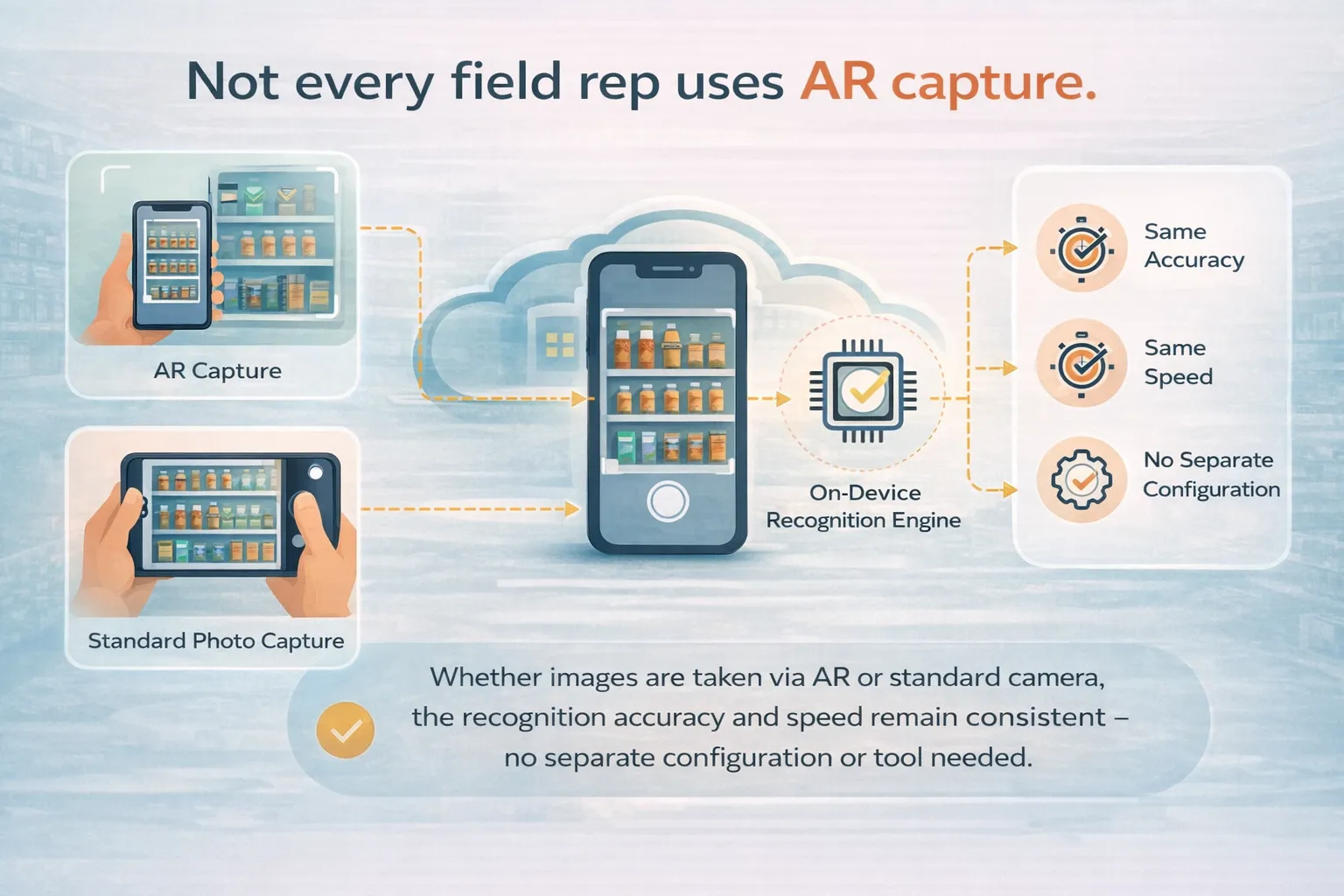
3. Static Image Capturing with On-Device Recognition
Not every field rep uses AR capture. ShelfWatch supports standard photo capture workflows with the same on-device recognition engine running in the background. Whether images are taken via AR or standard camera, the recognition accuracy and speed remain consistent - no separate configuration or tool needed.
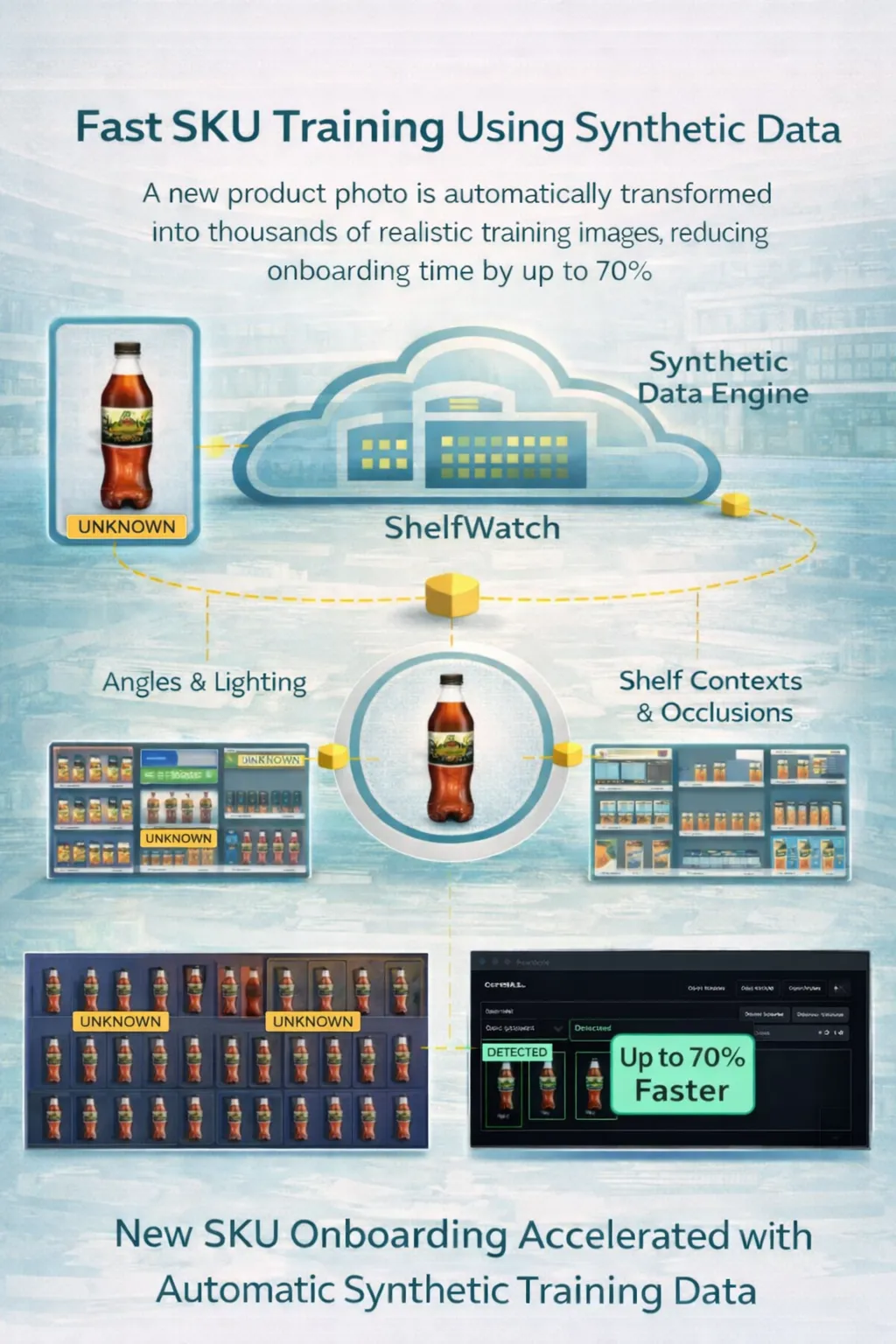
4. Fast SKU Training Using Synthetic Data
Adding a new SKU to an IR system traditionally takes weeks of real-world image collection. ShelfWatch's synthetic data engine generates thousands of realistic training images from a single product photo - capturing different angles, lighting conditions, occlusions, and shelf contexts automatically. This reduces new SKU onboarding time by up to 70%, keeping your recognition model as current as your product catalog.
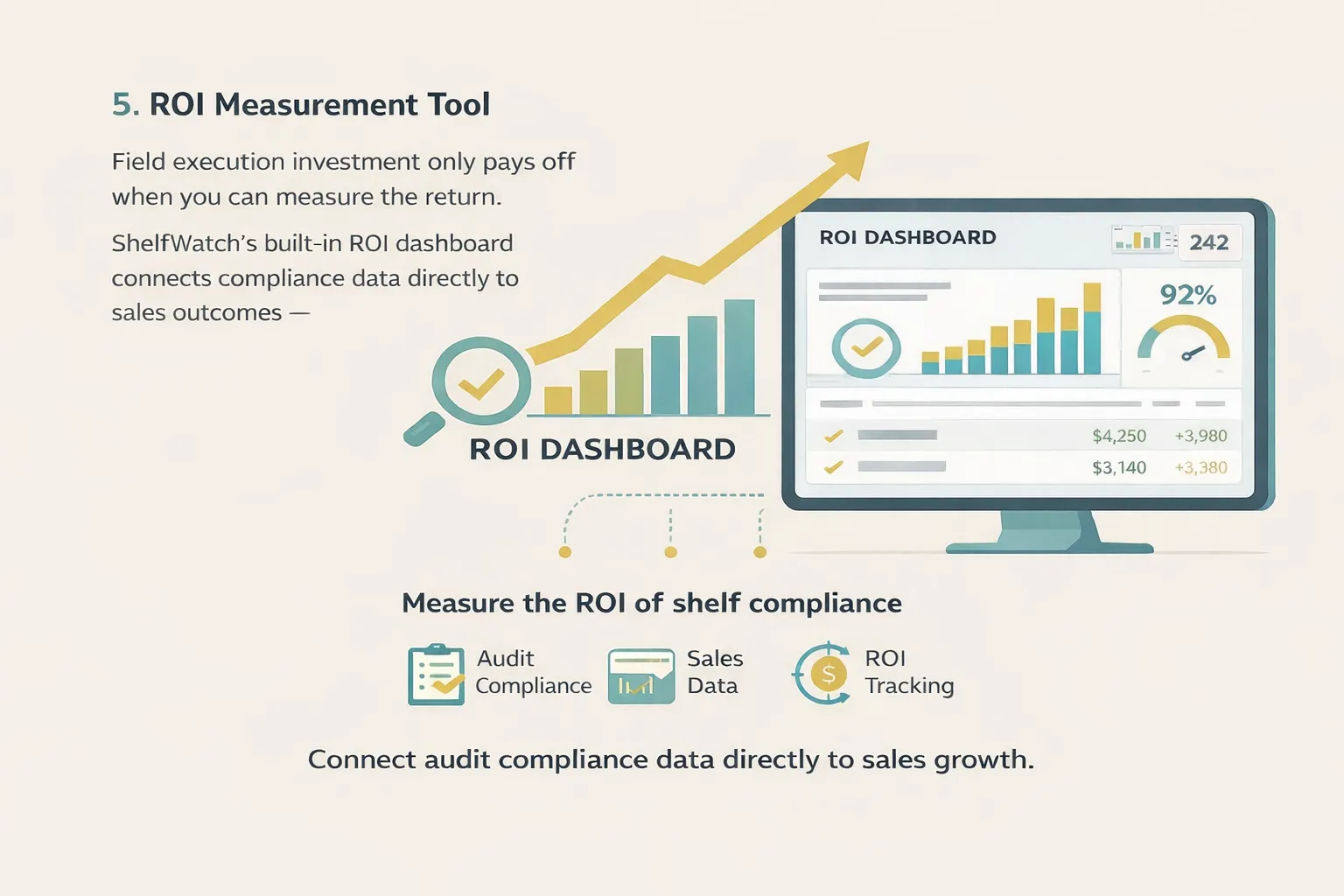
5. ROI Measurement Tool
Field execution investment only pays off when you can measure the return. ShelfWatch's built-in ROI dashboard connects compliance data directly to sales outcomes - showing how improvements in on-shelf availability, share of shelf, and planogram compliance translate to revenue. Brands using automated compliance tools report 60% faster audits and compliance rate improvements from roughly 50% to over 90%.
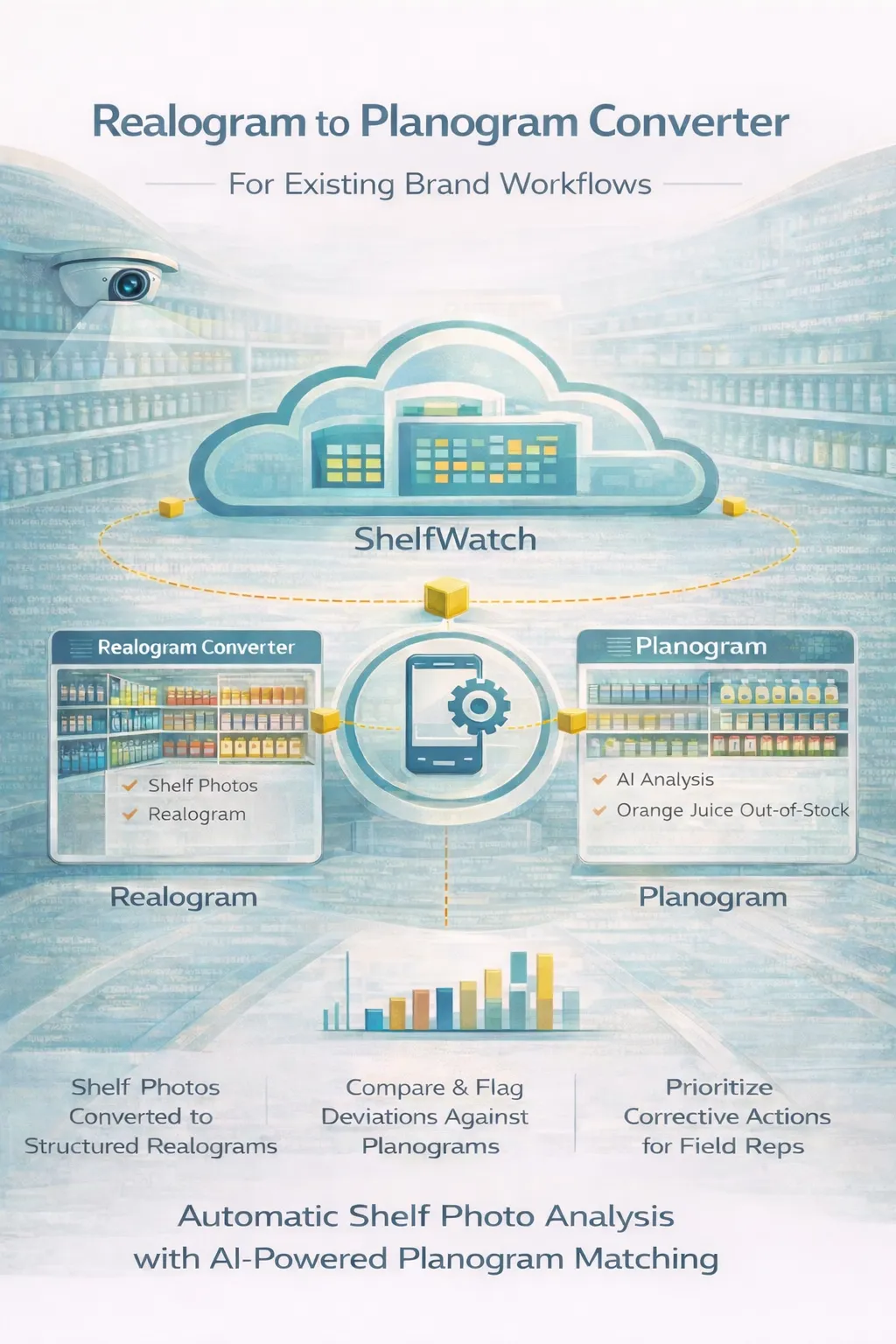
6. Realogram to Planogram Converter
Planogram compliance is only meaningful when you can compare what's actually on shelf to what should be there - at speed and scale. ShelfWatch automatically converts shelf photos into structured realograms and maps them against your planograms, flagging deviations, calculating share of shelf, and prioritizing corrective actions for field reps. No manual annotation required.
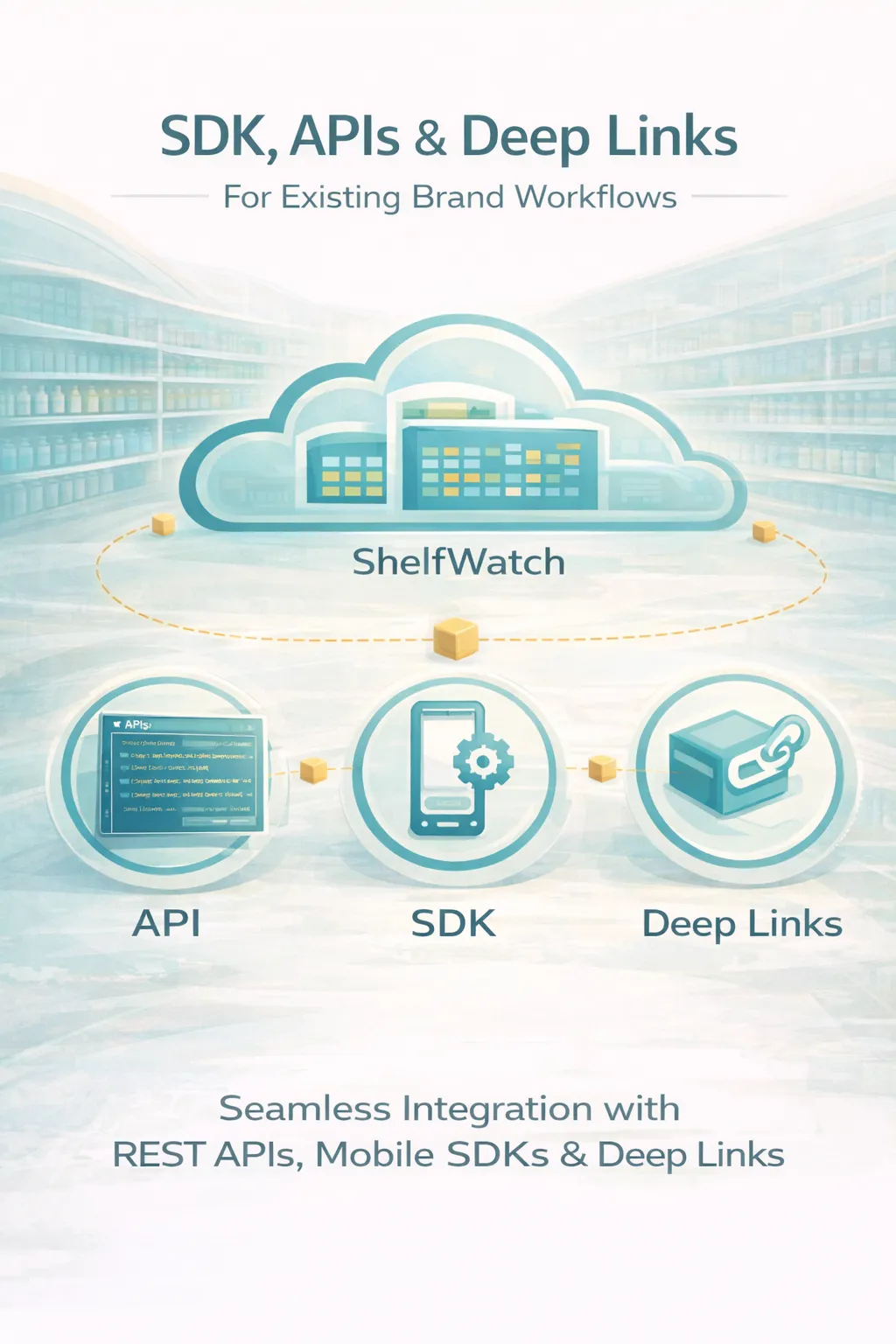
7. SDK, APIs & Deep Links
For brands that already have field force apps, CRM systems, or trade promotion tools, ShelfWatch offers a full developer toolkit - REST APIs, mobile SDKs, and deep link support - to embed IR capabilities directly into existing workflows. You get the power of ShelfWatch's recognition engine without forcing field reps to switch tools.
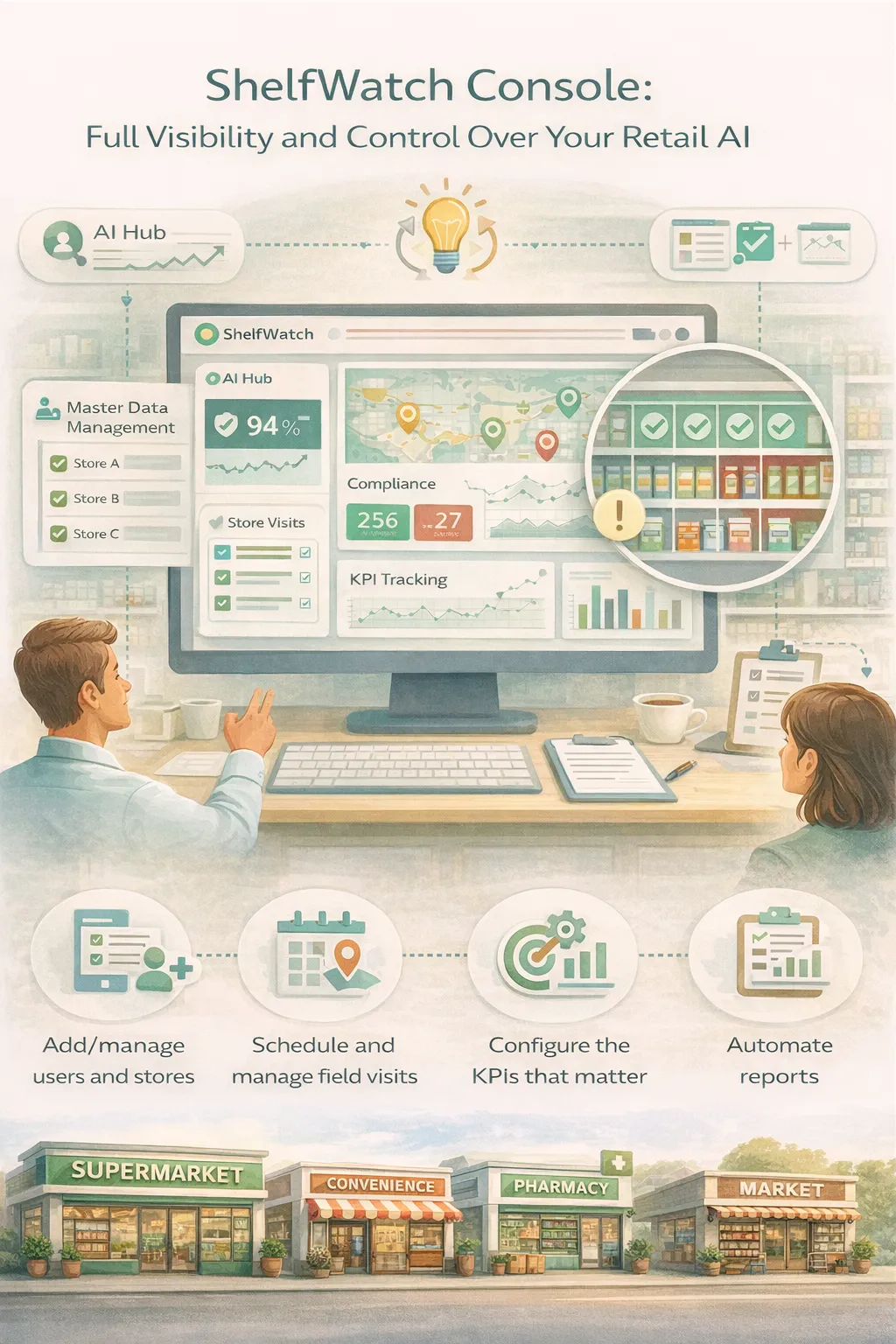
8. ShelfWatch Console: Full Visibility and Control Over Your Retail AI
Deploying AI on the retail shelf is only half the battle - knowing whether it's working, and having the power to act on that knowledge, is what separates a pilot from a scalable program. The ShelfWatch Console is the operational command center that puts your team in the driver's seat. Rather than treating AI recognition as a black box managed by a vendor, the Console gives your business direct visibility into every layer of the pipeline - from how field visits are being executed, to how accurately your SKUs are being detected, to how performance is trending over time across stores, regions, and product categories.
At its core, the Console bridges the gap between AI capability and day-to-day business operations. Your team can monitor recognition accuracy in real time through the AI Hub, review detections against actual shelf images, and flag corrections that feed back into model retraining - so accuracy improves continuously based on your real-world data, not generic benchmarks. When a new SKU is added to your portfolio, the Master Data Management module ensures it's reflected across recognition, reporting, and KPI tracking without waiting on vendor-side updates.
Beyond AI oversight, the Console centralizes everything your team needs to run a retail execution program through a Master Data Management Portal: adding new users and stores, scheduling and managing field visits, configuring the KPIs that matter to your business, building custom dashboards for different stakeholders, and automating the reports your commercial and operations teams rely on. Role-based access controls mean the right people see the right data - nothing more, nothing less.
The result is an organization that doesn't just consume AI outputs, but owns them. Your team can answer the questions that matter: Is our recognition model performing well on our new launch? Which stores are driving compliance gaps? What does shelf execution actually look like in our top accounts this week?
9. IoT Cameras for Continuous Monitoring
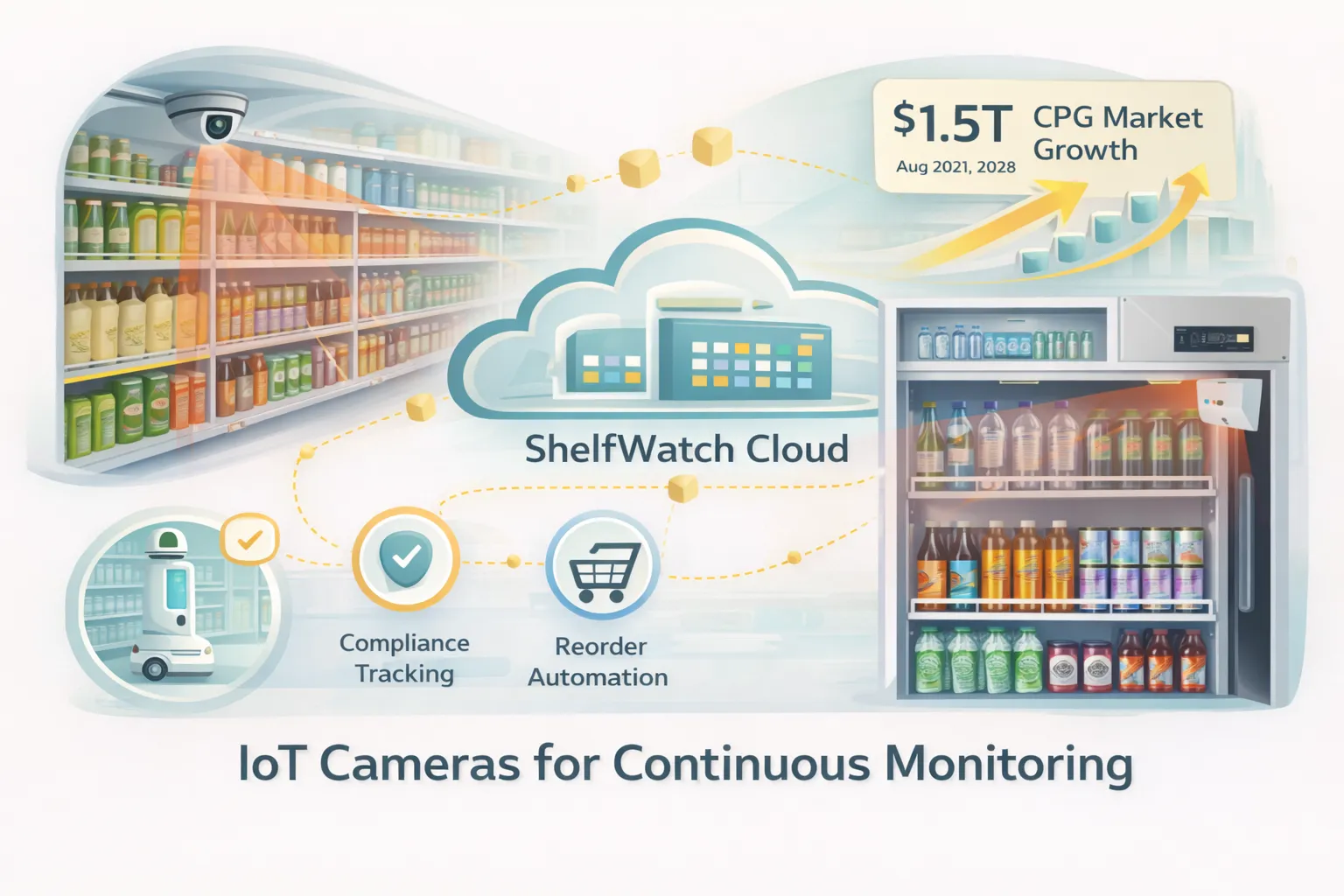
Field visits happen once a week at best. But shelf conditions change by the hour. ShelfWatch's IoT camera integration brings always-on shelf monitoring to high-value fixtures - enabling continuous compliance tracking, real-time out-of-stock alerts, and automated reorder triggers without any human intervention. The CPG market, projected to grow by $1.5 trillion between 2024 and 2029, is increasingly demanding this level of real-time shelf intelligence.
10. Robotics Integration
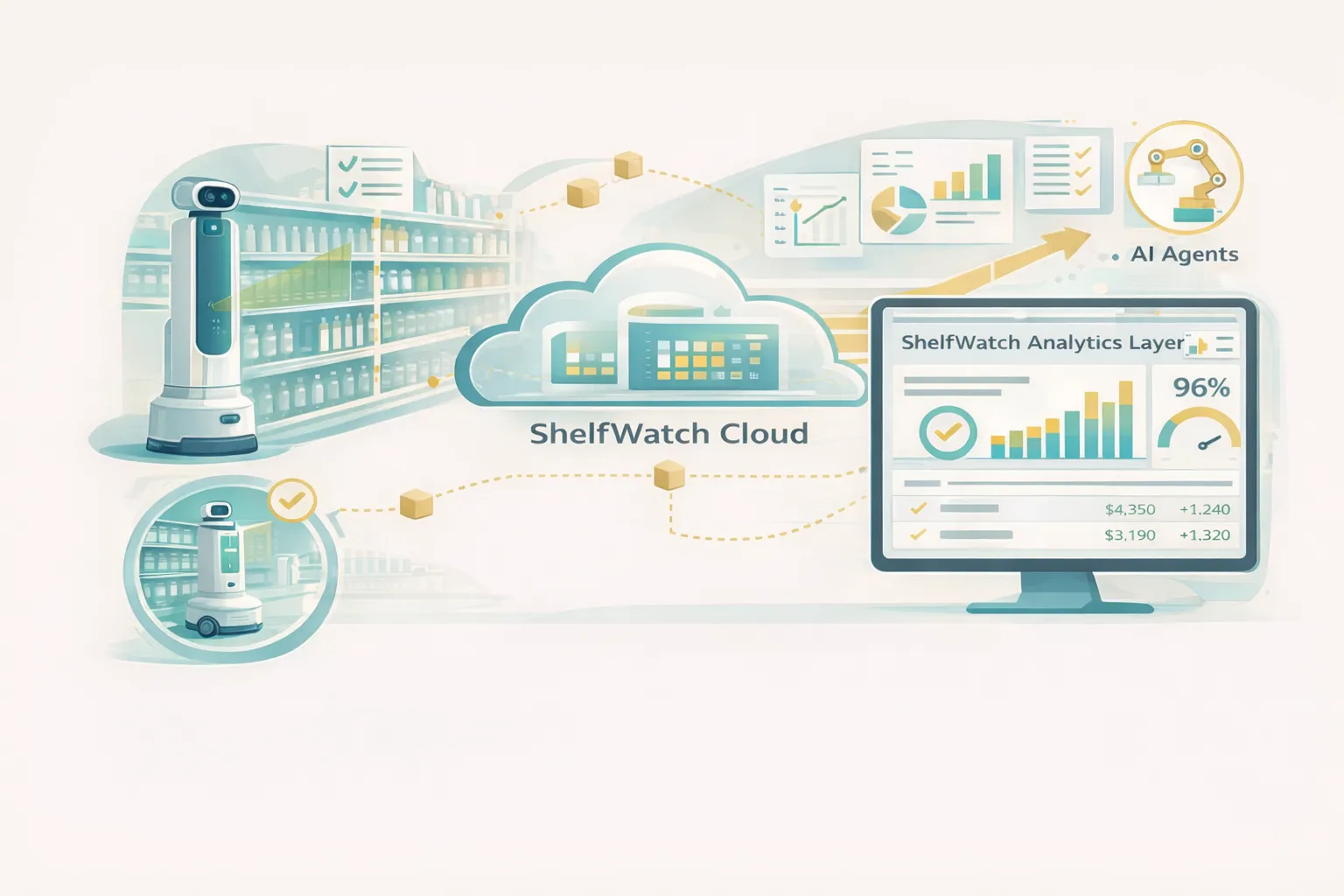
The frontier of retail execution is autonomous. ShelfWatch's robotics integration connects with in-store shelf-scanning robots, enabling automated audit cycles, high-frequency SKU detection, and seamless data ingestion into the ShelfWatch analytics layer. As Gartner anticipates a world where AI agents make autonomous operational decisions, ShelfWatch is already building the infrastructure to support that future.
Why Integration Matters More Than Features
Each of these 10 capabilities could be sourced from a different specialist vendor. But that's precisely the problem. When your AR capture tool doesn't talk to your recognition engine, which doesn't connect to your planogram system, which isn't linked to your ROI dashboard, you end up with data silos, manual reconciliation, and execution gaps that competitors exploit.
ShelfWatch is designed from the ground up as a unified platform. Capture data flows automatically into recognition. Recognition outputs feed the planogram converter. Compliance data connects to the ROI dashboard. IoT and robotics data streams into the same analytics layer as field rep submissions. All this is connected to the MDM portal which is fully self-serve, so teams can instantly update master data themselves without relying on Excel sheets, email chains, or waiting 2–3 days for vendor turnaround.
This is not just a bunch of integrations stitched together, it is built so that each capability makes the others stronger.
Proven at Global Scale
ShelfWatch is live in 50+ countries, supporting some of the world's largest CPG brands in their retail execution programs. From Southeast Asia's fragmented trade to Europe's modern trade channels, the platform has been stress-tested across the full spectrum of retail environments, connectivity conditions, and device types.
The Bottom Line
The retail execution challenge isn't going away. With $82 billion in annual OOS losses, a CPG market growing toward $1.5 trillion, and consumers less forgiving than ever of empty shelves and planogram failures, the pressure on field teams has never been higher.
The brands that win won't be the ones with the most vendors. They'll be the ones with the most integrated, intelligent, and actionable retail execution platform.
ParallelDots ShelfWatch is that platform.
.png)
.png)
.png)