Share it with your network.


The modern retail shelf is highly competitive. For CPG brands, every inch of shelf space matters. Misplaced products, empty shelves, and inconsistent product displays can directly impact both sales and brand perception.
Despite meticulous planning, manual audits and traditional checks often fail to provide a clear and timely picture of shelf conditions across multiple stores. Field teams can only cover a limited number of outlets, and human error is inevitable.
The global image recognition market for CPG is projected to reach nearly USD 22.99 billion by 2035, driven largely by the need for accurate, scalable visibility into what is actually happening on shelves. By capturing and analyzing visual shelf data, brands can accurately track product placement, monitor stock levels, and ensure compliance with planograms and promotions.
This shift helps brands make quicker decisions, respond to gaps on the shelves, and maintain a competitive edge in crowded retail environments.
At a Glance:
- Shelf Monitoring: Image recognition provides clear visibility into on-shelf availability, helping CPG brands identify stockouts and monitor product presence across stores.
- Planogram Compliance: Automated detection highlights misplaced or missing SKUs, allowing teams to monitor whether products are placed according to the agreed planogram.
- Share of Shelf Tracking: Brands can track the amount of shelf space their products occupy compared to competitors and monitor changes at the SKU level.
- Retail Execution Visibility: Real-time shelf data helps field teams monitor in-store conditions, verify promotional implementation, and identify execution gaps during store visits.
What is Image Recognition and How it Works for CPG Brands?
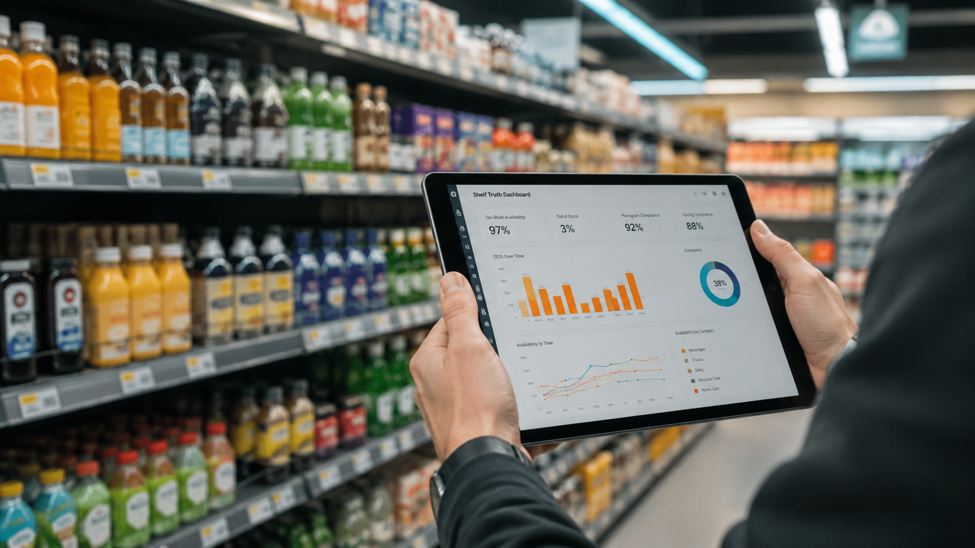
Image recognition is a type of artificial intelligence that identifies objects in images. For CPG brands, it’s most valuable in physical stores, where it can analyze in-store shelves and provide real-time insights on stock levels, share of shelf, and planogram compliance.
Here’s how image recognition works for CPG brands:
- Shelf Imaging: High-resolution images of store shelves are captured using mobile apps or in-store cameras, creating a visual record of product placement on the shelves.
- SKU Detection: Advanced computer vision identifies individual products on the shelf, including their facing, position, and arrangement according to the planogram.
- Stock Availability Monitoring: The software detects out-of-stock items or low-stock situations on the shelf, allowing teams to respond quickly and maintain product availability.
- Planogram Compliance Verification: Image recognition highlights products that are misplaced or not aligned with the brand’s predefined shelf layout, ensuring consistent merchandising across stores.
- Share of Shelf Analysis: The technology measures the proportion of shelf space occupied by each brand and SKU, helping CPG teams track visibility against competitors in real time.
- Real-Time Data Processing: Large volumes of shelf images are analyzed rapidly, providing near real-time insights that allow teams to take corrective action at the store level.
By automating the capture and analysis of shelf data, image recognition allows CPG brands to maintain accurate, up-to-date information about product placement and visibility. This ensures correct product presentation, reduces manual audit time, and drives more effective retail execution strategies.
Key Ways CPG Brands Are Using Image Recognition for In-Store Execution and Shelf Visibility
.jpg)
Image recognition technology helps CPG brands tackle several challenges in physical stores. Here are the primary applications:
1. Monitoring On-Shelf Stock Levels
Ensuring products are consistently available on the shelf is critical for driving sales. Image recognition helps brands detect shelf gaps and stockouts in real time.
- Detect Stockouts: Quickly identify products that are out of stock, allowing field teams to replenish shelves without delay.
- Monitor Low Stock: Highlight items with limited availability to maintain on-shelf presence and consistent display.
- Ensure Consistency: Maintain a full and consistent presentation across all locations, reducing revenue loss from unavailable products.
By continuously monitoring stock, brands can address issues proactively and ensure products are always ready for purchase.
2. Tracking Share of Shelf
Share of shelf determines how much physical space a brand occupies compared to competitors. Maintaining a strong presence increases product discoverability and purchase likelihood.
- Space Measurement: Accurately calculate the percentage of shelf space your products occupy versus competitors.
- Gap Identification: Highlight areas where shelf share is below target, allowing corrective action.
- Prioritize Key Products: Ensure high-priority SKUs get adequate space to maximize visibility.
By monitoring the share of shelf, brands can optimize their presence in stores and strengthen their overall in-store performance strategy.
3. Ensuring Planogram Compliance
Correct product placement according to planograms is essential for brand consistency and effective retail execution. Image recognition provides precise insights into compliance across locations.
- Deviation Detection: Identify misplaced items, incorrect facings, or wrong shelf locations.
- Corrective Actions: Enable field teams to fix planogram errors promptly.
- Maintain Brand Standards: Ensure every store presents products consistently, reinforcing marketing strategies.
Maintaining planogram compliance helps brands avoid execution gaps and ensures in-store presentation aligns with marketing objectives.
4. Monitoring Promotion Implementation
Promotional campaigns require precise execution to deliver expected outcomes. Image recognition helps verify that promotions are displayed as intended.
- Promotion Verification: Confirm that promotional materials and signage are correctly positioned.
- Consistency Across Stores: Ensure campaigns are executed uniformly across multiple locations.
- Accurate Implementation Tracking: Quickly identify stores where promotions are not displayed correctly, enabling timely corrective action.
Effective promotion monitoring helps brands maximize the impact of marketing initiatives and safeguard their investment.
5. Improving Field Force Productivity
Limited visibility into shelf conditions can make it challenging for field agents to prioritize their store visits. With image recognition, CPG teams gain clear, real-time insights into shelf stock, planogram compliance, and promotional gaps, helping them focus on the stores and issues that matter most.
- Automated Data Capture: Field agents can capture shelf images quickly, reducing time spent on manual checks while maintaining control over their work.
- Extended Coverage: With clear visibility of shelf conditions, teams can visit more stores per day, addressing the most critical gaps first.
- Actionable Insights: Reports highlight planogram deviations and stockouts that require attention, helping agents focus their efforts where they matter most.
By improving productivity, CPG brands can optimize their field operations while ensuring the timely resolution of shelf-level issues.
6. Multi-Store Coverage
Reaching multiple retail locations efficiently is a key challenge for CPG brands. Image recognition scales shelf monitoring, allowing comprehensive coverage without increasing labor costs.
- Broader Reach: Collect shelf images from hundreds of stores simultaneously without overloading field teams.
- Consistent Insights: Standardize data collection and analysis across all locations for reliable benchmarking.
- Time and Cost Efficiency: Reduce the need for frequent store visits, allowing teams to focus on strategic activities.
Scalable monitoring ensures brands maintain consistent shelf visibility across all locations, helping teams respond quickly and confidently.
Overall, image recognition enables CPG brands to maintain optimal shelf visibility, uphold planogram standards, and execute promotions effectively. It provides actionable insights that streamline operations and enhance retail execution without replacing human oversight.
Challenges CPG Brands Face When Implementing Image Recognition
.jpg)
While image recognition offers significant advantages, CPG brands often face hurdles when adopting the technology. Recognizing and addressing these issues early helps ensure smooth deployment and stronger ROI.
- Integrating with Field Workflows: Ensuring that field agents can capture shelf images efficiently without disrupting store visits is essential for smooth adoption.
- Maintaining Data Accuracy: AI models must be trained to recognize diverse SKUs and packaging variations. Any misidentification can result in inaccurate shelf insights.
- Processing Large Volumes of Images: Brands generate vast amounts of shelf data across stores. Efficient AI systems are needed to analyze images quickly and deliver actionable results.
- Adoption Resistance: Some teams may prefer traditional audits. Clear training, communication, and evidence of benefits help overcome hesitation.
- Mantener actualizados los planogramas: Los cambios frecuentes en el planograma requieren que los sistemas reflejen las actualizaciones con prontitud para mantener un seguimiento preciso del cumplimiento.
- Consideraciones sobre costos y recursos: La implementación de soluciones basadas en inteligencia artificial implica invertir en software, capacitación y procesos, por lo que las marcas deben sopesar cuidadosamente los costos frente a las ganancias de eficiencia.
¿Cómo ayuda ParallelDots a los CPG a transformar la visibilidad de las estanterías con el reconocimiento de imágenes?
Puntos paralelos proporciona a las marcas de productos de consumo envasados una solución integral para abordar los desafíos de la visibilidad de los estantes en las tiendas. Al aprovechar la tecnología avanzada de reconocimiento de imágenes, proporciona datos visuales en tiempo real sobre las estanterías que permiten a los equipos de ventas y marketing tomar decisiones informadas.
A continuación te explicamos cómo podemos ayudarte:
- Monitorización de existencias en almacén en tiempo real: ParallelDots ShelfWatch captura imágenes de estanterías e identifica al instante los productos faltantes o con poco stock. Los equipos de ventas pueden responder con rapidez y garantizar que los productos estén siempre disponibles y visibles para los compradores.
- Porcentaje de Shelf Tracking: La plataforma mide la presencia de tu marca en relación con la competencia. Estos datos ayudan a los equipos de ventas y marketing a priorizar las intervenciones en las tiendas y a maximizar la visibilidad de los productos en las redes minoristas.
- Cumplimiento del planograma: ParallelDots ShelfWatch comprueba que cada SKU se coloca de acuerdo con el planograma establecido. Las desviaciones se detectan inmediatamente, lo que permite a los equipos de campo corregir los errores y mantener unos estándares de comercialización coherentes.
- Verificación de ejecución promocional: La plataforma garantiza que las promociones, la señalización y las exhibiciones se implementen correctamente en todas las tiendas. Las marcas pueden realizar un seguimiento visual del cumplimiento de las promociones, lo que aumenta la eficacia de las campañas.
- Reconocimiento rápido de SKU con Saarthi: Saarthi, de ParallelDots, entrena a los modelos de IA para que detecten nuevos SKU en las estanterías en 48 horas. La anotación automatizada y los KPI de alta precisión mantienen la supervisión actualizada, lo que reduce el esfuerzo manual y permite una rápida toma de decisiones.
Con ParallelDots, las marcas de bienes de consumo envasados obtienen una visibilidad completa del rendimiento de sus estanterías en las tiendas, lo que permite una ejecución minorista precisa y basada en datos. Solicita una demostración hoy para ver cómo Shelfwatch puede optimizar la visibilidad de sus estantes.
Preguntas frecuentes
1. ¿Qué datos puede recopilar el reconocimiento de imágenes en las tiendas físicas?
Las marcas pueden recopilar datos sobre la ubicación de los productos, la cuota de venta, los niveles de existencias, el cumplimiento de los precios, el cumplimiento del planograma y la visibilidad de la competencia. También ayuda a identificar los artículos agotados y a realizar un seguimiento de las promociones que se muestran, lo que brinda a las marcas información en tiempo real sobre la ejecución en las tiendas.
2. ¿Cómo protegen las marcas de CPG la privacidad de los datos cuando utilizan herramientas de reconocimiento de imágenes?
Las marcas de CPG utilizan la transmisión de datos cifrada, el procesamiento anónimo de imágenes y el almacenamiento seguro en la nube. Cumplen con las normas de privacidad, como el RGPD, lo que garantiza que no se recopilen ni almacenen datos personales o confidenciales de los compradores, y mantienen toda la información a nivel de productos y estanterías estrictamente centrada en la marca.
3. ¿Qué hardware o software se necesita para implementar el reconocimiento de imágenes a escala?
La implementación requiere teléfonos inteligentes o tabletas con cámaras, una conexión a Internet confiable y acceso a una plataforma de monitoreo de estantes impulsada por inteligencia artificial. Para las implementaciones a gran escala, la infraestructura basada en la nube y las integraciones de API permiten el acceso centralizado a los datos y la visibilidad de la marca en tiempo real.
4. ¿Cómo se puede integrar el reconocimiento de imágenes con los sistemas de ejecución minorista existentes?
Las herramientas de reconocimiento de imágenes se integran a través de API y sincronizan los datos de estantería capturados con los paneles de ejecución de las tiendas minoristas o los sistemas de marketing. Esto permite a las marcas combinar la información de las tiendas con los datos de ventas y distribución para lograr un seguimiento unificado del rendimiento y una toma de decisiones más inteligente.
5. ¿Qué KPI mejoran con el reconocimiento de imágenes en las tiendas?
Los KPI clave, como la disponibilidad de estanterías, el cumplimiento del planograma, la distribución de productos y la precisión de la ejecución de promociones, mejoran. Las marcas también obtienen auditorías minoristas más rápidas, una mejor visibilidad de las estanterías y acciones de comercialización más eficaces gracias a la información basada en datos.
.png)
.png)