Share it with your network.


Did you know that 66% of shoppers switch brands because they are out of stock? For a CPG brand, that's a lost sales opportunity for consumer packaged goods (CPG) brands. In a highly competitive market, having great products isn’t enough. You need to ensure they are always available on retail shelves, correctly placed, and compliant with brand and visibility standards, as this directly impacts sales growth.
This is where CPG retail analytics plays a critical role. From real-time tracking of shelf compliance to understanding pricing accuracy, data-driven insights help brands optimize their in-store strategies and maximize sales.
In this blog, we’ll explore how data analytics can help CPG brands transform their retail execution, preventing revenue losses, and giving brands a competitive edge.
Understanding CPG Retail Analytics in Measuring Retail Execution
CPG retail execution analytics helps find valuable insights from in-store data. CPG brands can track on-shelf availability, measure promotional impact, and optimize retail execution. Unlike generic business intelligence tools, CPG execution analytics focuses specifically on shelf performance, ensuring products are well-stocked, correctly placed, and compliant with in-store standards.
CPG brands receive retail data from sources like distributor reports and market research, but these often lack the real-time shelf-level insights needed to track on-shelf availability, planogram compliance, and promotional execution. Without these insights, brands may miss opportunities to identify stockouts, misplaced products, or poorly executed promotions.
That’s why shelf-level data becomes the missing link between CPG brands’ performance goals and execution on the ground.
Why Real-time Execution of Data Analytics Is a Non-Negotiable for CPG Brands?
A comprehensive study of over 3,000 shoppers found that 82% of purchase decisions happen in-store in front of the retail shelves. CPG retail analytics can help CPG brands make informed decisions by transforming fragmented in-store data into clear, actionable insights. This way, CPG teams can resolve store-level issues more quickly and execute more effectively across retail locations.
Let’s explore why data-driven decision-making is no longer optional for CPG brands looking to succeed in the current competitive market.
Tracking and Optimizing Shelf Performance
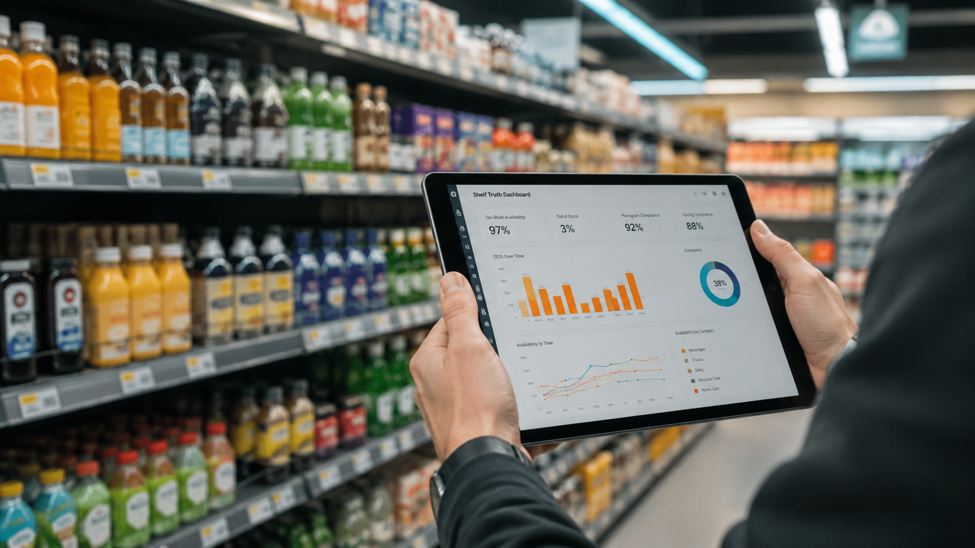
CPG brands must ensure products are always available, correctly positioned, and selling at the right pace. Data analytics enables brands to track key retail execution metrics, such as:
- Sales velocity: Understand how quickly products sell in different locations and adjust inventory accordingly.
- In-stock performance: Identify stockouts before they impact sales and on-shelf stock availability.
- Planogram compliance: Ensure product placements and promotions are executed as planned to maximize on-shelf visibility.
With real-time insights, brands can identify execution gaps, refine their strategies, and ensure that customers always find their products in stock.
Plus, ensuring product placements and promotions are executed as planned is crucial to maximizing visibility.
Gaining a Competitive Edge with Retail Analytics
Data-driven brands outperform competitors by making informed strategic decisions. With real-time shelf data from ParallelDots, CPG companies can:
- Track the share of shelf to identify areas where they may be losing market space to competitors and take action to reclaim it.
- Monitor planogram compliance and ensure that product placements and promotions are executed as planned to maximize visibility and effectiveness.
- Use insights from on-shelf stock availability and promotional implementation to adjust marketing efforts and improve in-store performance.
- Gain actionable insights into competitor performance and market trends to stay ahead, ensuring that your products are always strategically positioned and in line with shopper preferences.
Data-driven brands don’t just react to market trends; they anticipate them. With ParallelDots' ShelfWatch, companies gain instant visibility into share of shelf, promotional effectiveness, and execution gaps, allowing them to stay ahead of the competition.
Reducing Financial Risks and Improving Decision-Making
CPG brands face financial risks from stockouts, misplacements, and ineffective promotions. With data analytics, companies can:
- Predict demand fluctuations and prevent overstocking or lost sales opportunities.
- Monitor shelf performance in real time to adjust strategies quickly.
- Use historical data for future planning, ensuring more precise order fulfillment and in-store shelf conditions.
Implementing data-driven decision-making can help brands minimize costly errors and stay ahead of market shifts.
Boosting Promotional Effectiveness
Data analytics helps CPG brands ensure promotions are executed correctly at the shelf. With visual shelf data, brands can:
- Verify promotional implementation: Check if in-store displays and materials are placed according to the plan.
- Identify execution gaps: Spot stores where promotional setups are missing, misplaced, or delayed.
- Take corrective action quickly: Use real-time shelf images to alert field teams and resolve issues fast.
- Replicate what works: Find high-performing promotions and apply the same execution strategy across other stores.
CPG brands can track in-store execution to maximise the return on their promotional investments.
For CPG brands, success starts with placing products on shelves and continues with ensuring they remain available, visible, and relevant to shoppers. When products are out of stock, misplaced, or poorly presented, purchase decisions are affected. Data analytics helps brands improve execution, maintain availability, and reduce operational risks, ultimately supporting stronger sales performance.
So, what type of data can help? Let’s explore.
Also Read: Real-time Tracking of Retail Store Compliance A Complete Guide
Understanding the Different Types of Data in CPG Analytics
For CPG brands, retail execution relies on access to accurate and timely data. From ensuring products are available on the shelf to tracking planogram compliance, each type of data offers a different piece of the puzzle. When used together, these insights help brands avoid execution gaps and respond quickly at the store level.
Here’s a breakdown of key CPG data types and how they support better in-store performance:
1. Retailer Data: Sales and Inventory Movement
Retailer data includes point-of-sale (POS) scan data and inventory reports from retail partners. It helps brands understand:
- What products are selling, when, and where
- Pricing trends and promotional performance
- General stock levels across store locations
While useful, this data often lacks visibility at the shelf level. Therefore, it won’t show if a product is out of stock or misplaced on the shelf.
2. Syndicated and Panel Data: Market Benchmarks
Third-party firms provide syndicated data to track broader market trends, while panel data is based on consumer surveys and self-reported shopping habits. These sources help CPG brands:
- Benchmark performance against competitors
- Understand household buying frequency and preferences
- Identify top-selling categories by region or channel
This type of data is helpful for long-term strategy but does not provide actionable shelf-level insights for retail execution.
3. Observational Data: The In-Store Reality
Observational data focuses on condiciones en la tienda, incluidas las ubicaciones en las estanterías, la disponibilidad de los productos y la actividad de la competencia. A diferencia de otras fuentes de datos que se basan en las transacciones, estos datos se recopilan mediante auditorías manuales o soluciones como ShelfWatch de ParallelDots, que automatiza la supervisión de las estanterías.
Reloj Shelf automatiza la recopilación de datos de estantería mediante el reconocimiento de imágenes con tecnología de inteligencia artificial. Las marcas pueden rastrear:
- Disponibilidad de stock en las estanterías
- Cumplimiento del planograma
- Porcentaje de implementación promocional y de estanterías
A diferencia de otros tipos de datos, los datos de observación ofrecen precisión en tiempo real y pruebas visuales desde el interior de las tiendas, lo que ayuda a los CPG a actuar con rapidez y corregir las brechas de ejecución.
Cada fuente de datos desempeña un papel a la hora de respaldar la ejecución del comercio minorista, pero solo los datos visuales a nivel de estantería brindan a las marcas de CPG la claridad necesaria para responder rápida y eficazmente a los requisitos de las tiendas. ¿Con Puntos paralelos, las marcas de bienes de consumo envasados obtienen una visión fiable de lo que realmente ocurre en el comercio minorista.
Lea también: Comprender el OOS en el comercio minorista y su impacto en las ventas en las tiendas
Superar los desafíos de ejecución del comercio minorista con ShelfWatch
Las brechas de ejecución del comercio minorista, como la falta de existencias, la mala ubicación de las estanterías y las inconsistencias en los precios, pueden provocar importantes pérdidas de ingresos y oportunidades perdidas para las marcas de bienes de consumo envasados. Además, las empresas de bienes de consumo envasados se enfrentan a desafíos en materia de análisis de datos, como el lento procesamiento de datos, la limitada experiencia analítica y la necesidad de hacer frente a los riesgos de seguridad y cumplimiento. Estos obstáculos dificultan la obtención de información significativa a partir de las enormes cantidades de datos que se generan a diario, lo que dificulta la toma de decisiones eficaces y las respuestas oportunas a los cambios del mercado.
¿Cómo resuelve ShelfWatch los problemas de ejecución del comercio minorista?
Reloj Shelf analiza las imágenes de las estanterías para ofrecer información basada en datos que ayude a las marcas a:
- Garantice el cumplimiento del planograma: Verifica que la colocación de los productos se alinee con los diseños de las tiendas.
- Mejore la disponibilidad en las estanterías: Detecta las existencias agotadas y los SKU faltantes en tiempo real.
- Mida la cuota de estantería: Realiza un seguimiento de la visibilidad de la marca en comparación con la de la competencia en tiendas.
- Garantice la precisión de los precios y las promociones: Supervisa los materiales POSM y las etiquetas de precios.
- Optimice los espacios de estantería de primera calidad: Evalúe la ejecución de la tapa terminal y la góndola.
Resultados comprobados: ShelfWatch en acción
Las principales marcas de CPG que utilizan Reloj Shelf han informado:
- UN 30-40% reducción de las existencias, lo que lleva a un aumento de las ventas.
- Hasta 50% tiempos de auditoría más rápidos con la supervisión automatizada de las estanterías.
- Consistentemente por encima 95% Precisión de la IA, incluso en entornos minoristas desafiantes.
Toma el control de tu estrategia de tienda perfecta con información en tiempo real. Solicita una demostración para ver cómo Reloj Shelf ¡puede transformar su ejecución minorista hoy mismo!
Lea también: Transformar el rendimiento del comercio minorista con análisis de datos e información
Reflexiones finales
El futuro del éxito del CPG reside en la ejecución basada en datos. Las marcas que se basan en conjeturas o en informes anticuados corren el riesgo de perder espacio en las estanterías, perder oportunidades de ingresos y quedar rezagadas con respecto a la competencia. El análisis del sector minorista de productos de consumo envasados consiste en transformar la información en acción. Desde el seguimiento de la velocidad de las ventas hasta la garantía de una ubicación perfecta en las estanterías, el uso de las herramientas adecuadas puede marcar la diferencia entre dominar el mercado o quedarse atrás.
Navegar por entornos minoristas complejos requiere más que datos sin procesar. La información sobre la ejecución en tiempo real es la clave para obtener una verdadera rentabilidad. Ahí es donde ShelfWatch de ParallelDots entra. Gracias a la monitorización de estanterías basada en inteligencia artificial, la precisión a nivel de SKU y el seguimiento instantáneo de las ejecuciones, las marcas pueden optimizar el rendimiento del comercio minorista como nunca antes.
No dejes que la pérdida de ventas o el cumplimiento deficiente frenen tu marca. Tome el control de su negocio minorista con ParallelDots. Reserve una demostración hoy!
.png)
.png)